1.Kaya, Chikitsa and Kayachikitsa - Nirukti, Paribhasha, Paryaya and Bheda
Term ILH 1NLHT 1NLHP 0
- Explanation of Kaya, Chikitsa and Kayachikitsa according to different Classical texts

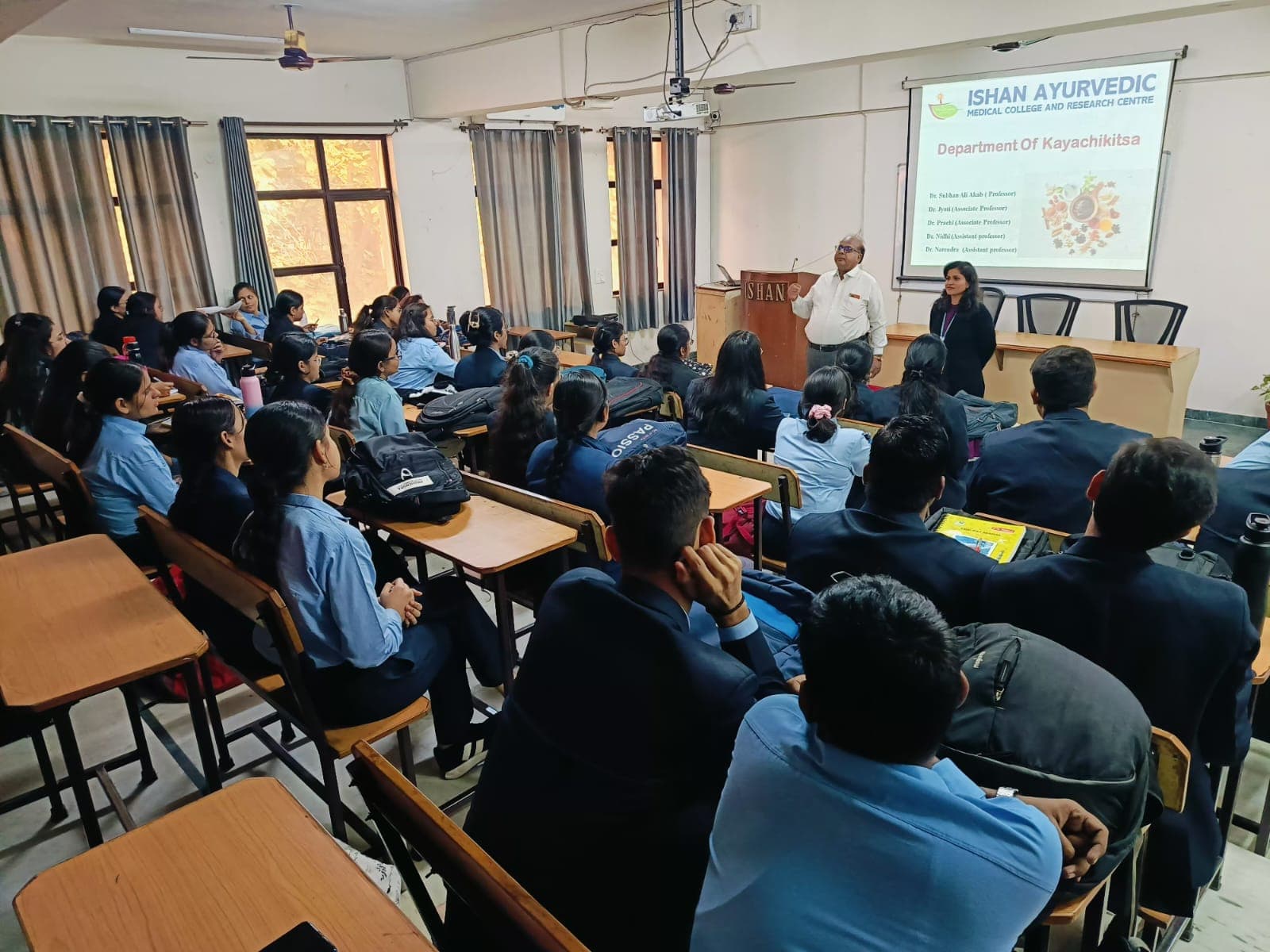
NCISM curriculum for Kayachikitsa including Manasa Roga, Rasayana and Vajikarana (Internal Medicine including Psychiatry, Rejuvenative Medicine, Reproductive Medicine and Epigenetics) — paper-wise topics with teaching hours, practicals, assessment pattern and reference books.
Department of Kaya Chikitsa covers Kayachikitsa including Manasa Roga, Rasayana and Vajikarana (AyUG-KC) in the Third Professional year of BAMS (Ayurvedacharya). The syllabus below follows the curriculum prescribed by the National Commission for Indian System of Medicine (NCISM): the topic list of every paper with its teaching hours, followed by practicals, the assessment pattern and reference books.
Kayachikitsa including Manasa Roga, Rasayana and Vajikarana (Internal Medicine including Psychiatry, Rejuvenative Medicine, Reproductive Medicine and Epigenetics)
The evolving landscape of healthcare necessitates a dynamic and integrative approach to medical education, particularly in Ayurveda. Kayachikitsa, the branch of internal medicine in Ayurveda, forms the clinical foundation for understanding, diagnosing, and managing diseases based on Ayurvedic principles. This revised competency-based syllabus ensures that students gain a holistic understanding of disease processes, blending traditional wisdom with modern advancements to provide effective, patient-centered care.
| Subject | Kayachikitsa including Manasa Roga, Rasayana and Vajikarana (Internal Medicine including Psychiatry, Rejuvenative Medicine, Reproductive Medicine and Epigenetics) |
|---|---|
| NCISM subject code | AyUG-KC |
| Professional year | III BAMS (Third Professional) |
| Theory papers | 3 (300 marks) |
| Teaching hours | 450 hours (Lecture 150, Non-lecture theory 90, Non-lecture practical 210) |
| Total marks | 500 (Theory 300 + Practical/clinical assessment 200) |
| Applicability | Applicable from 2021-22 batch, from the academic year 2024-25 onwards for 5 batches or until further notification by NCISM, whichever is earlier |
| Source | NCISM curriculum document (160 pages) |
Papers in Kayachikitsa including Manasa Roga, Rasayana and Vajikarana
Paper I – Vyadhi Vishesha Chikitsa – 1 of Kayachikitsa including Manasa Roga, Rasayana and Vajikarana (AyUG-KC) has 10 topics with 61 lecture hours as listed in Table 2 of the NCISM curriculum (PDF page 6).
LH – lecture hours; NLHT – non-lecture hours (theory); NLHP – non-lecture hours (practical).
Paper II – Vyadhi Vishesha Chikitsa – 2 of Kayachikitsa including Manasa Roga, Rasayana and Vajikarana (AyUG-KC) has 6 topics with 43 lecture hours as listed in Table 2 of the NCISM curriculum (PDF page 9).
LH – lecture hours; NLHT – non-lecture hours (theory); NLHP – non-lecture hours (practical).
Paper III – Vyadhi Vishesha Chikitsa Evam Rasayana, Vajikarana of Kayachikitsa including Manasa Roga, Rasayana and Vajikarana (AyUG-KC) has 9 topics with 46 lecture hours as listed in Table 2 of the NCISM curriculum (PDF page 11).
LH – lecture hours; NLHT – non-lecture hours (theory); NLHP – non-lecture hours (practical).
List of Practicals
59 practicals are listed in the NCISM curriculum, grouped by the topic they belong to.
Clinical ethics in the practice of Kayachikitsa
Samprapti vighatana, Chikitsa sutra, Chikitsa, Aushadha yoga and Pathyaapathya of Jvara (SP51/TM2)
Anuktaroga treatment principles based on Doshadushyadi vivechana
Chikitsa of Sankramika jvara
Chikitsa of Rasa pradoshaja vikara
Chikitsa of Rakta pradoshaja vikara
Chikitsa of Kshudra roga
Chikitsa of Mamsapradoshaja and Medopradoshaja vikara
Shuddha-Ashuddha chikitsa, Chikitsajanita vikara
Chikitsa of Vatavyadhi
Chikitsa of Asthi-Majja pradoshaja vikara (SR54) (SR55)
Chikitsa of Pranavaha Srotodushti Vikara (TM2:SL40-SL4Z)
Chikitsa of Udakavaha srotodushti vikara
Chikitsa of Mootravaha srotodushti vikara
Chikitsa of Purishavaha srotodushti vikara (SR5A)
Chikitsa of Annavaha srotodushti vikara
Chikitsa of Manovaha srotas dushti vikara
Chikitsa of of Antahsravi Granthi vyadhi
Chikitsa of Vyadhikshamatva vikara
Chikitsa of Shukravaha srotasa vikara
Chikitsa of Guhya roga
Vajikarana
Rasayana
Chikitsa of Jarajanya vikara and Indriyapradoshaja vikara
Non-Lecture Activities (Theory)
89 non-lecture theory activities — seminars, case discussions, projects and similar — are listed topic-wise.
Kaya, Chikitsa and Kayachikitsa - Nirukti, Paribhasha, Paryaya and Bheda
Samprapti vighatana, Chikitsa sutra, Chikitsa, Aushadha yoga and Pathyaapathya of Jvara (SP51/TM2)
Anuktaroga treatment principles based on Doshadushyadi vivechana
Chikitsa of Sankramika jvara
Chikitsa of Rasa pradoshaja vikara
Chikitsa of Rakta pradoshaja vikara
Chikitsa of Kshudra roga
Chikitsa of Mamsapradoshaja and Medopradoshaja vikara
Shuddha-Ashuddha chikitsa, Chikitsajanita vikara
Chikitsa of Vatavyadhi
Chikitsa of Asthi-Majja pradoshaja vikara (SR54) (SR55)
Chikitsa of Pranavaha Srotodushti Vikara (TM2:SL40-SL4Z)
Chikitsa of Udakavaha srotodushti vikara
Chikitsa of Mootravaha srotodushti vikara
Chikitsa of Purishavaha srotodushti vikara (SR5A)
Chikitsa of Annavaha srotodushti vikara
Chikitsa of Manovaha srotas dushti vikara
Chikitsa of of Antahsravi Granthi vyadhi
Chikitsa of Vyadhikshamatva vikara
Chikitsa of Shukravaha srotasa vikara
Chikitsa of Guhya roga
Vajikarana
Rasayana
Chikitsa of Jarajanya vikara and Indriyapradoshaja vikara
Papers and Marks Distribution
| Papers | Theory | Practical | Viva | Elective | Internal Assessment | Total |
|---|---|---|---|---|---|---|
| 3 | 300 | 100 | 70 | — | 30 | 500 |
Theory carries 300 marks and the practical/clinical assessment (practical, viva, elective and internal assessment) carries 200 marks, for a total of 500 marks.
Theory Question Paper Pattern (per paper)
| Question Type | Questions | Marks Each | Total |
|---|---|---|---|
| Multiple Choice Questions (MCQ) | 20 | 1 | 20 |
| Short Answer Questions (SAQ) | 8 | 5 | 40 |
| Long Answer Questions (LAQ) | 4 | 10 | 40 |
The head-wise distribution of the 200-mark practical examination is given in Table 6H of the NCISM document. Open page 148 of the PDF
Topic-wise learning objectives — with domain, must/desirable/nice-to-know level, teaching–learning methods and assessment methods — are tabulated in Table 3 of the NCISM document. Open pages 15–129
43 books and resources are recommended in the NCISM AyUG-KC curriculum (PDF page 150).
The syllabus on this page is taken from the official NCISM curriculum document. Download the PDF for the complete learning objectives, activity details, question paper blueprint and practical examination guidelines.
Syllabus of Other BAMS Departments
Kayachikitsa including Manasa Roga, Rasayana and Vajikarana (Internal Medicine including Psychiatry, Rejuvenative Medicine, Reproductive Medicine and Epigenetics) has the NCISM subject code AyUG-KC. It is a Third Professional BAMS (III BAMS) subject, and the curriculum is applicable from 2021-22 batch, from the academic year 2024-25 onwards for 5 batches or until further notification by NCISM, whichever is earlier.
It has 3 theory papers carrying 300 marks and a practical/clinical assessment of 200 marks (100 practical, 70 viva and 30 internal assessment), for a total of 500 marks.
The NCISM curriculum allots Kaya Chikitsa 450 teaching hours: 150 lecture hours, 90 non-lecture theory hours and 210 non-lecture practical hours.
Paper I (Vyadhi Vishesha Chikitsa – 1) has 10 topics, including Clinical ethics in the practice of Kayachikitsa, Anuktaroga treatment principles based on Doshadushyadi vivechana, Chikitsa of Sankramika jvara, Chikitsa of Rasa pradoshaja vikara, Chikitsa of Rakta pradoshaja vikara and Chikitsa of Kshudra roga. Paper II (Vyadhi Vishesha Chikitsa – 2) has 6 topics, including Chikitsa of Vatavyadhi, Chikitsa of Asthi-Majja pradoshaja vikara (SR54) (SR55), Chikitsa of Pranavaha Srotodushti Vikara (TM2:SL40-SL4Z), Chikitsa of Udakavaha srotodushti vikara, Chikitsa of Mootravaha srotodushti vikara and Chikitsa of Purishavaha srotodushti vikara (SR5A). Paper III (Vyadhi Vishesha Chikitsa Evam Rasayana, Vajikarana) has 9 topics, including Chikitsa of Annavaha srotodushti vikara, Chikitsa of Manovaha srotas dushti vikara, Chikitsa of of Antahsravi Granthi vyadhi, Chikitsa of Vyadhikshamatva vikara, Chikitsa of Shukravaha srotasa vikara and Chikitsa of Guhya roga.
The NCISM curriculum lists 43 reference books and resources for Kaya Chikitsa. The complete list is given in the Reference Books section of this page.
Take the first step towards your dream career. Enquire Now or contact us for more information.