Rasa (Taste)
Kashaya, Katu, Tikta.
The primary taste perceived on the tongue.

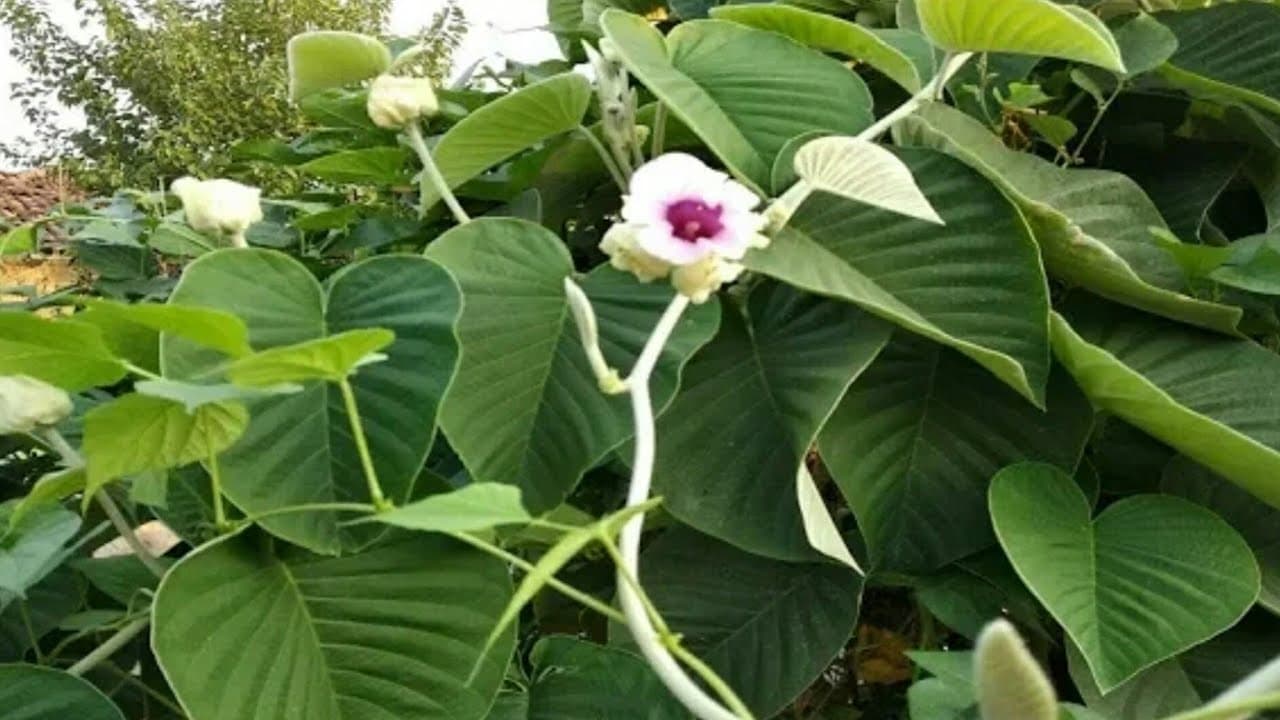
It is a large, twining climber that spreads extensively over supporting trees.
Argyreia speciosa · Convolvulaceae
It is a large, twining climber that spreads extensively over supporting trees.
Scientific Name
Argyreia speciosa
Family
Convolvulaceae
Hindi Name
Bidara
Used Part
Mool (Root)
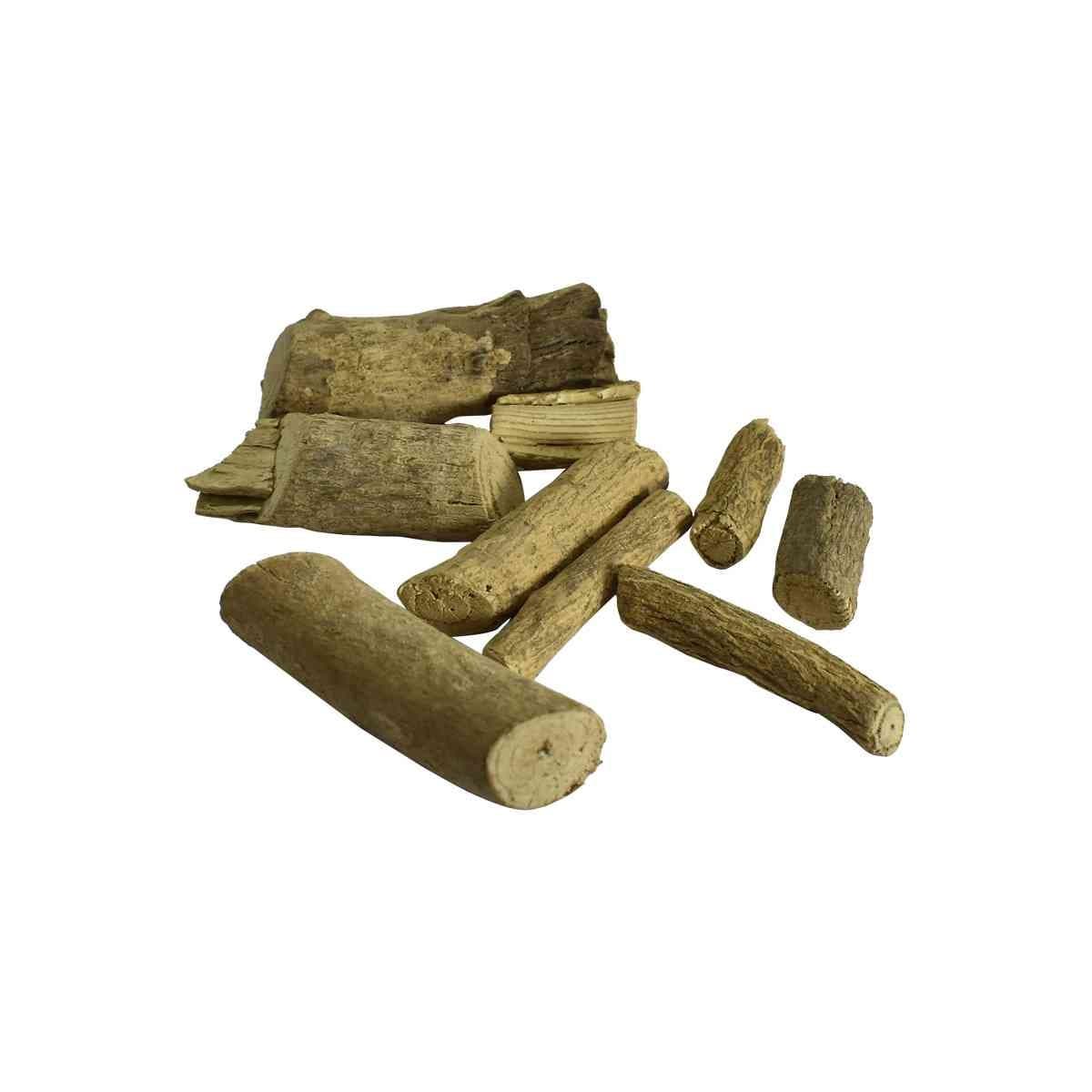
Morphology and field-identification notes as documented in our Dravyaguna library.
It is a large, twining climber that spreads extensively over supporting trees. Leaves are broadly ovate to heart-shaped, measuring about 15–30 cm in width, with a rounded or occasionally pointed apex. The upper surface is smooth and green, whereas the lower surface is characteristically white and velvety due to dense hairs. The flowers are bell-shaped, approximately 5–7.5 cm long, externally whitish and pubescent and internally deep pink to purple. The fruits are ellipsoid, about 12 mm in diameter, greenish when unripe and turning yellowish-brown upon maturation. Seeds are whitish with a brown tinge.
The five-fold framework Ayurveda uses to describe a drug — Rasa, Guna, Vipaka, Veerya and its effect on the doshas.
Kashaya, Katu, Tikta.
The primary taste perceived on the tongue.
Laghu, Snigdha.
Physical and energetic attributes of the dravya.
Madhura
Taste that emerges after complete digestion.
Kaphavata Shamaka
Effect on Vata, Pitta and Kapha doshas.
Ushna
Heating (ushna) or cooling (sheeta) energy.
Rasayan, Vrishya, Balya, Medhya, Agnideepana, Swra-Kantikara, Pramehaghna, Virechanopaga, Jwarahara, Raktashodhana.
How modern science maps onto the classical understanding of this dravya.
Pharmacological Action
Antidiabetic, Anti microbial, Diuretic, Hypotensive, Spasmolytic, Aphrodisiac.
Phytoconstituents
Vidhara contain various metabolites like Ergoline, alkaloids such as Ergine, Ergometrine, Lysergol, Lysergic acid.
Classical Ayurvedic indications drawn directly from the Dravyaguna tradition — paired with the preparations recommended in shastra.
01
Aamavata - root decoction of vruddhadaru is given in rheumatoid arthritis.
02
Vranasotha - leaves paste is applied over the cellultis and inflammation.
03
Swetapradara - vruddhadaru with asvagandha powder is given with milk in leucorrhoea.
Always consult a qualified Ayurvedic physician before using any herb therapeutically. Dose, anupana and Prakriti-specific suitability matter.
Yoga / Kalpana
Common Ayurvedic preparations where Vidhara is a key ingredient.
Shastra Pramana
वृद्धदारुः कषायोष्णः कटुस्तिक्तो रस्यनः | वृष्यो वातामवातार्शहृ शोथमेहकफप्रणुत् || शुक्रायुर्बलमेधाग्निस्वरकान्तिकरः सरः||