Rasa (Taste)
Tikta, Kashaya
The primary taste perceived on the tongue.

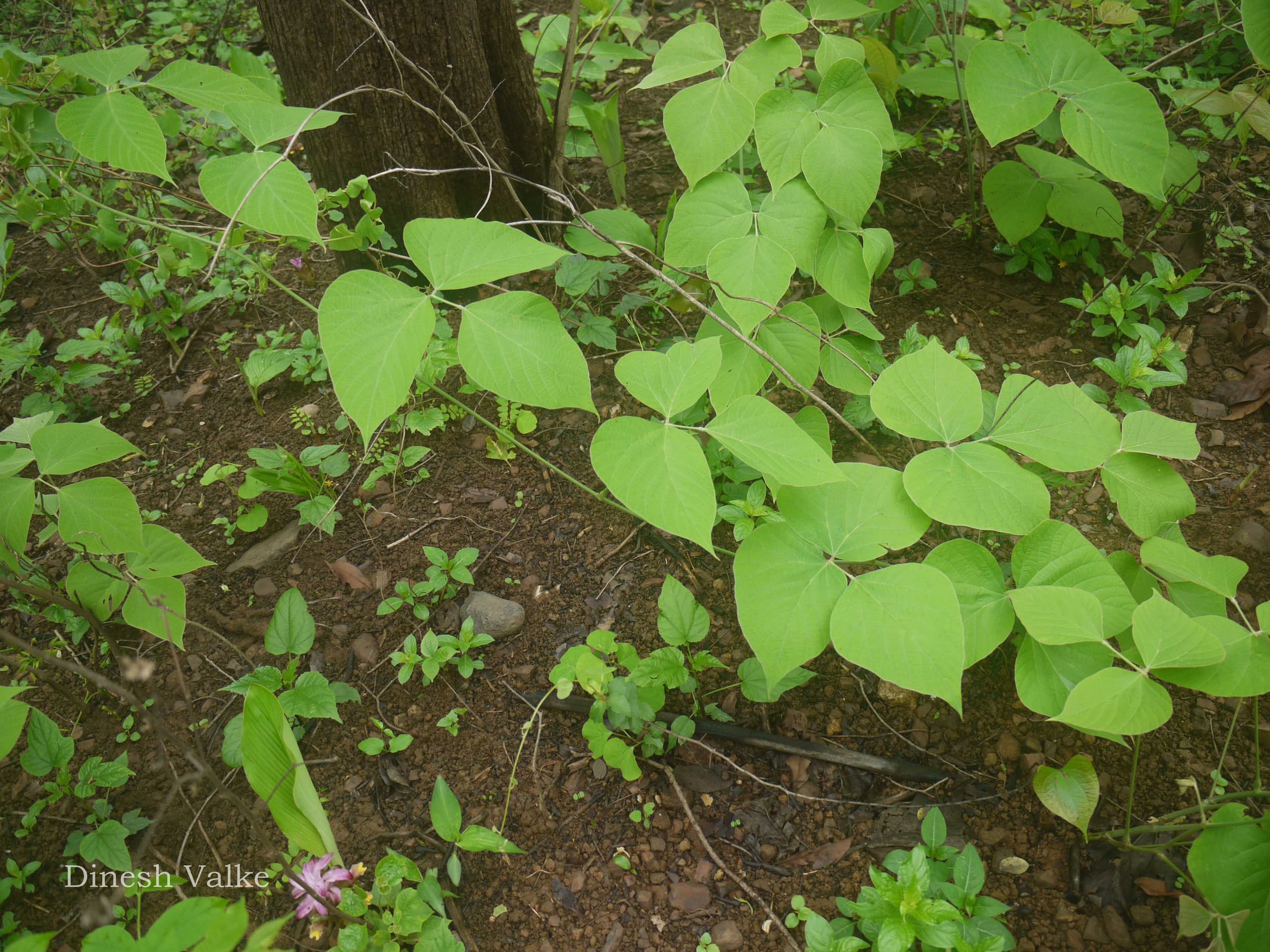
Vidarikanda is a large climber with tuberous roots and stem shrubby.
Pueraria tuberosa · Fabaceae
Vidarikanda is a large climber with tuberous roots and stem shrubby.
Scientific Name
Pueraria tuberosa
Family
Fabaceae
Hindi Name
Bidari Kand
Used Part
Kand (Tuber)
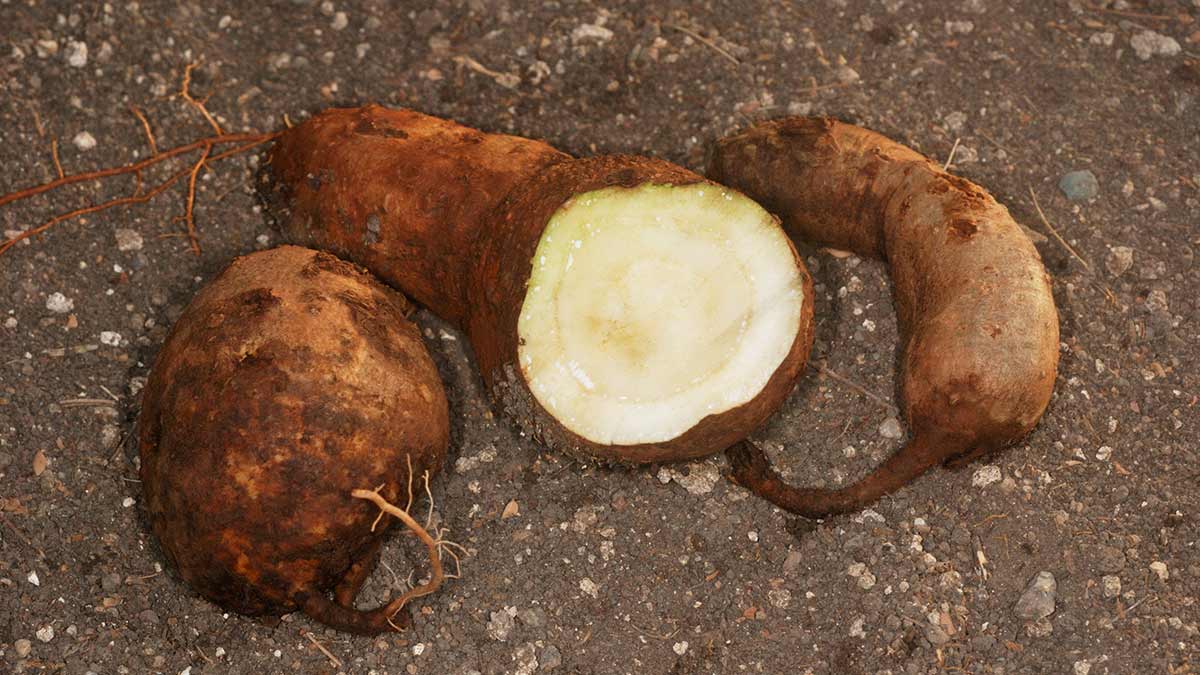
Morphology and field-identification notes as documented in our Dravyaguna library.
Vidarikanda is a large climber with tuberous roots and stem shrubby. The leaves are 3-foliate; petioles 10-15 cm long, more or less pubescent, the stipules 4 mm. long, ovate-oblong, cordate. The leaflets are sub coriaceous, glabrescent above, silky beneath. Flowers are bisexual, around 1.5 cm across and blue or purplish-blue in color. The fruit pods are linear, about 3–5 cm long and constricted densely between the seeds. They have silky, bristly reddish-brown hair. Seeds vary from 3 to 6 in number.
The five-fold framework Ayurveda uses to describe a drug — Rasa, Guna, Vipaka, Veerya and its effect on the doshas.
Tikta, Kashaya
The primary taste perceived on the tongue.
Laghu, Ruksha, Tikshna
Physical and energetic attributes of the dravya.
Katu
Taste that emerges after complete digestion.
Vata Pitta Shamak
Effect on Vata, Pitta and Kapha doshas.
Ushna
Heating (ushna) or cooling (sheeta) energy.
Brimhana, Vrushya, Sheeta, Svarya, Atimutrala, Balya, Stanyada, Shukrada, Balada, Varnada, Asrapittajit .
How modern science maps onto the classical understanding of this dravya.
Pharmacological Action
Analgesic, Anti-inflammatory, Antiviral, Antibacterial .
Phytoconstituents
Puerarin Daidzein Genistein Tuberosin
Classical Ayurvedic indications drawn directly from the Dravyaguna tradition — paired with the preparations recommended in shastra.
01
Tuber powder of vidari is given with cow milk as a galactagogue.
02
Tuber powder with honey and saffron is useful to improve the complexion of the skin.
03
A cold infusion of powder is given in degeneration and diseases of the liver and spleen.
Always consult a qualified Ayurvedic physician before using any herb therapeutically. Dose, anupana and Prakriti-specific suitability matter.
Yoga / Kalpana
Common Ayurvedic preparations where Vidarikanda is a key ingredient.
Shastra Pramana
विदारी मधुरा हृद्या हरीणी स्वर्यशुक्रला। शीता वृष्या रसैला च जीवनी बलवर्धना। गुरुः तिन्सापहवातदाहहन्त्री रसायनी॥ भा. प्र.