Rasa (Taste)
Madhura
The primary taste perceived on the tongue.

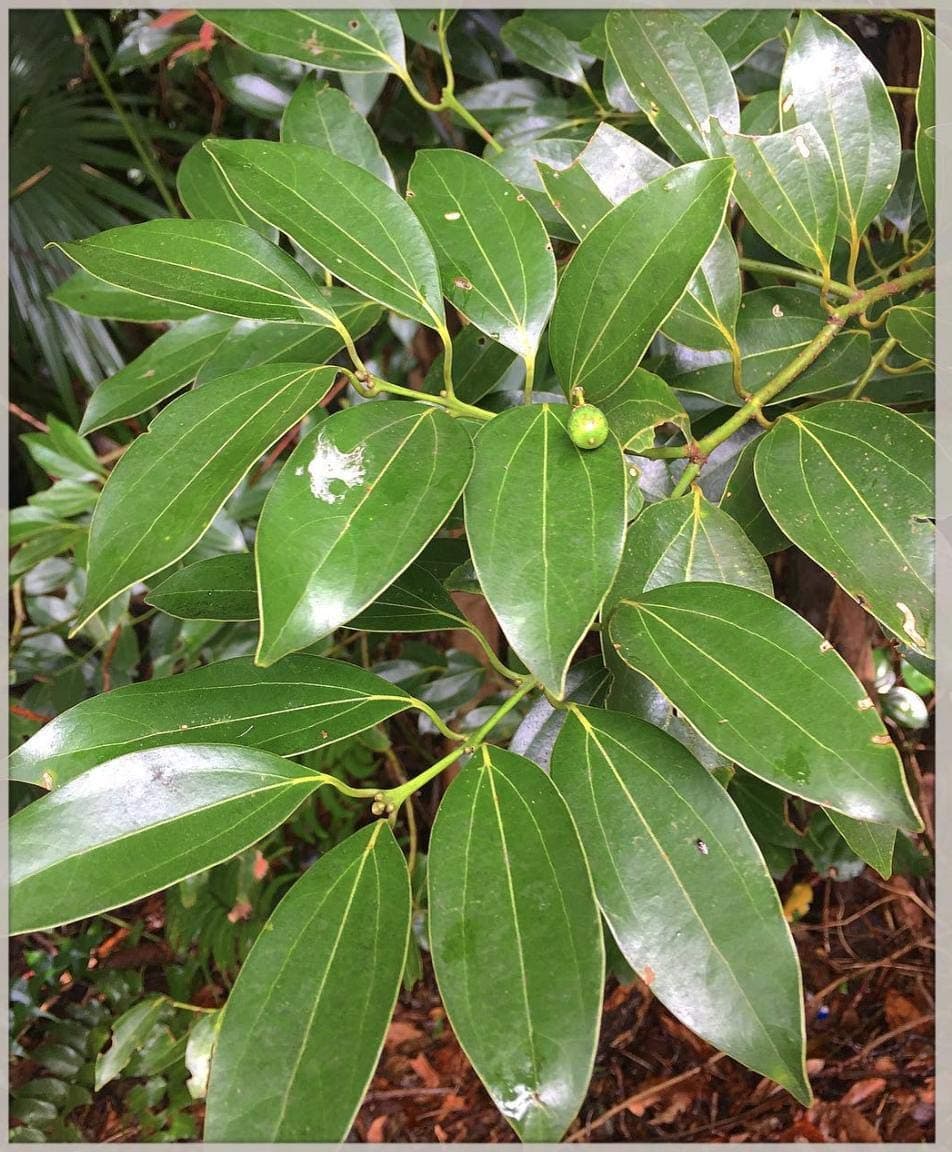
It can grow up to 10-15 meters in height.
Cinnamomum zeylanicum · Lauraceae
It can grow up to 10-15 meters in height.
Scientific Name
Cinnamomum zeylanicum
Family
Lauraceae
Hindi Name
Dalchini
Used Part
Stem bark, Leaf, Cinnamon oil
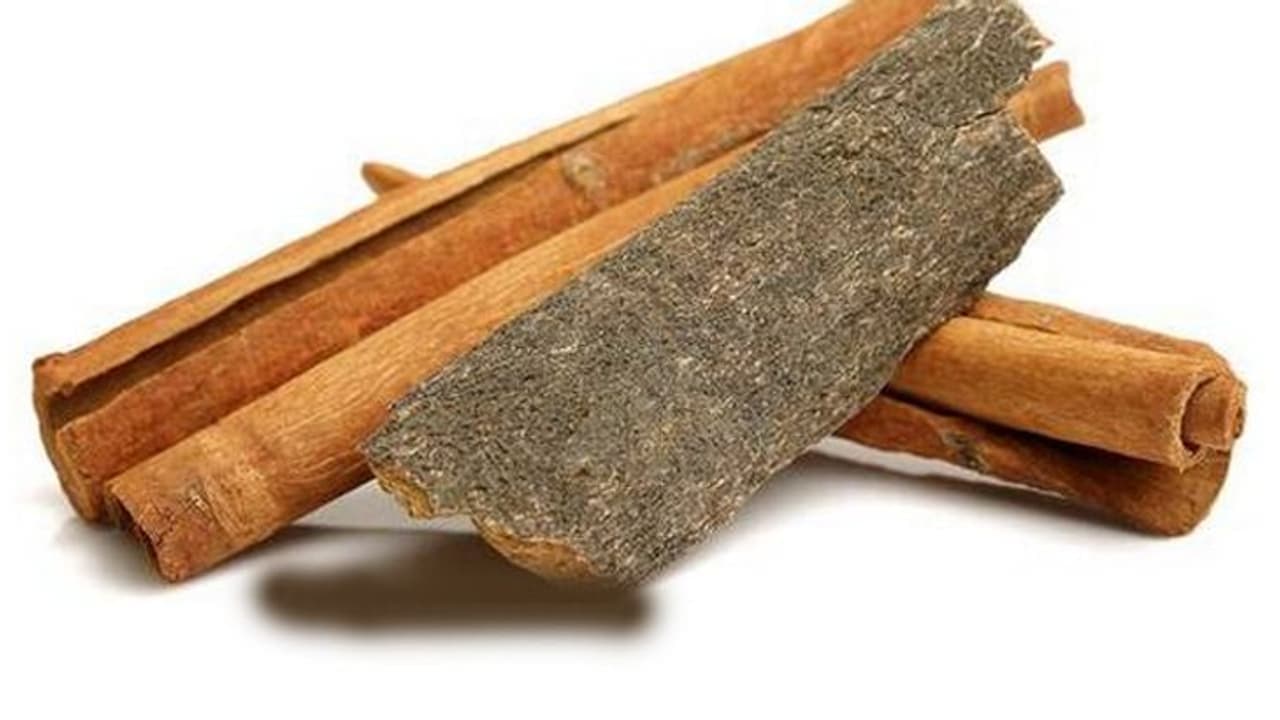
Morphology and field-identification notes as documented in our Dravyaguna library.
It can grow up to 10-15 meters in height. The leaves are oval, opposite, and dark green in color.The inner bark of the tree is what is commonly used as cinnamon. It is harvested by peeling off the outer bark and allowing the inner bark to dry, forming cinnamon sticks or ground cinnamon. The tree produces small, yellowish-white flowers.The fruits are small, dark purple berries.
The five-fold framework Ayurveda uses to describe a drug — Rasa, Guna, Vipaka, Veerya and its effect on the doshas.
Madhura
The primary taste perceived on the tongue.
Laghu, Teekshna, Rooksha.
Physical and energetic attributes of the dravya.
Katu
Taste that emerges after complete digestion.
Vatahara, Kaphahara, Pittavardhini.
Effect on Vata, Pitta and Kapha doshas.
Ushna
Heating (ushna) or cooling (sheeta) energy.
Vishapaha, Kanta Vaktra Rujahara, Basti Shodhana, Pittala, Kandu, Hrut Bastigata Jantujit, Amavatahara, Peenasahara.
How modern science maps onto the classical understanding of this dravya.
Pharmacological Action
Anti-inflammatory, Antioxidant, Antimicrobial , Blood Sugar Regulation, Digestive Aid.
Phytoconstituents
Cinnamaldehyde, Eugenol, Cinnamic acid, Cinnamyl acetate.
Classical Ayurvedic indications drawn directly from the Dravyaguna tradition — paired with the preparations recommended in shastra.
01
Adhman - Hot infusion of twak is beneficial in flatulence.
02
Atisara - Twak powder with bilva, and rock sugar is beneficial in diarrhea.
03
Kasa - Twak powder with ela, pippali, tugakshiri, and sugar is useful to treat cough.
Always consult a qualified Ayurvedic physician before using any herb therapeutically. Dose, anupana and Prakriti-specific suitability matter.
Yoga / Kalpana
Common Ayurvedic preparations where Twak is a key ingredient.
Shastra Pramana
त्वच्यं लघुष्णं कटुकं स्वादु तिक्तञ्च रक्तकम् । पित्तलं कफवातघ्नं कण्डूदामारुचिनाशनम् । हृद्रिस्त्रिदोषवातार्शः कृमिपीनसनाशकृत् ॥