Rasa (Taste)
Tikta, Kashaya
The primary taste perceived on the tongue.

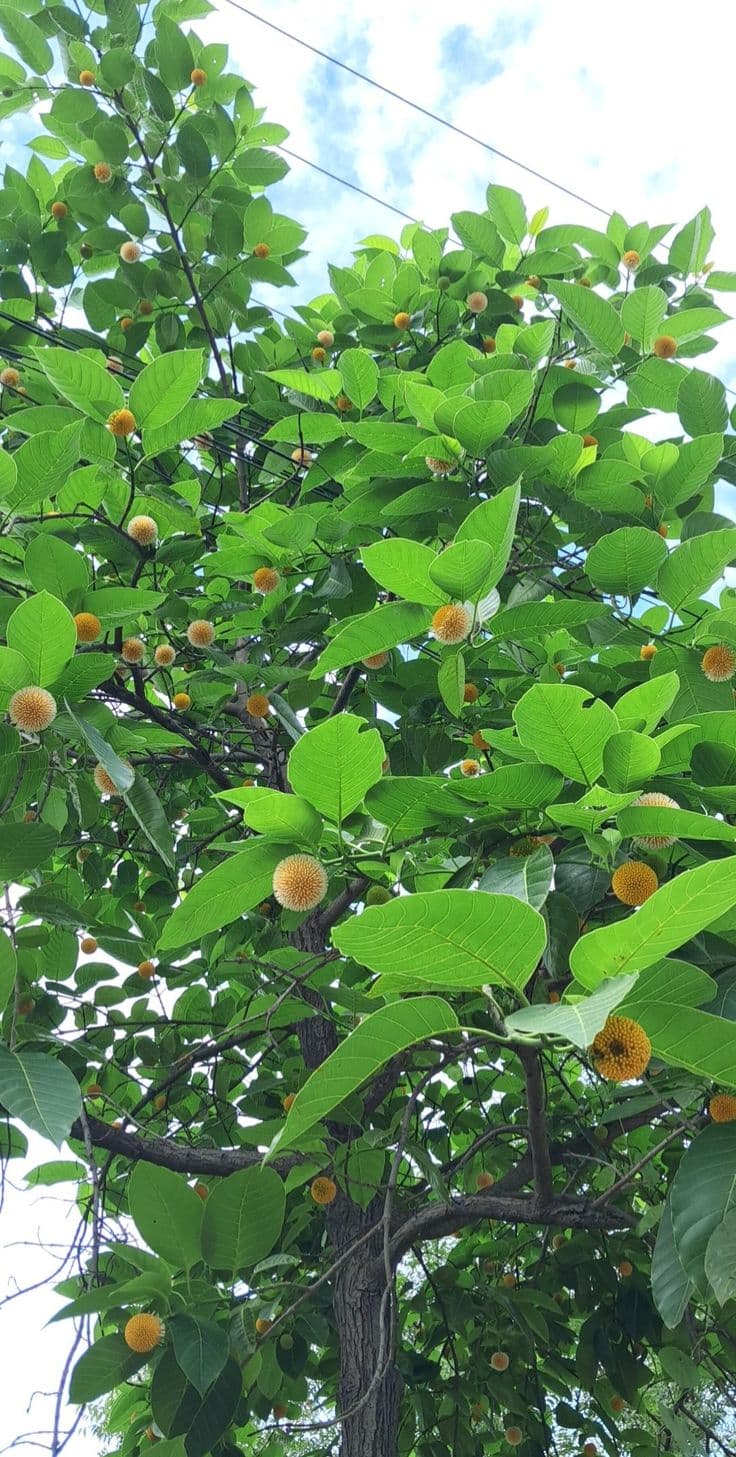
Kadamba is an evergreen, tropical tree native to South and Southeast Asia.
Anthocephalus Indicus · Rubiaceae
Kadamba is an evergreen, tropical tree native to South and Southeast Asia.
Scientific Name
Anthocephalus Indicus
Family
Rubiaceae
Hindi Name
Kadam
Used Part
Bark, Fruit
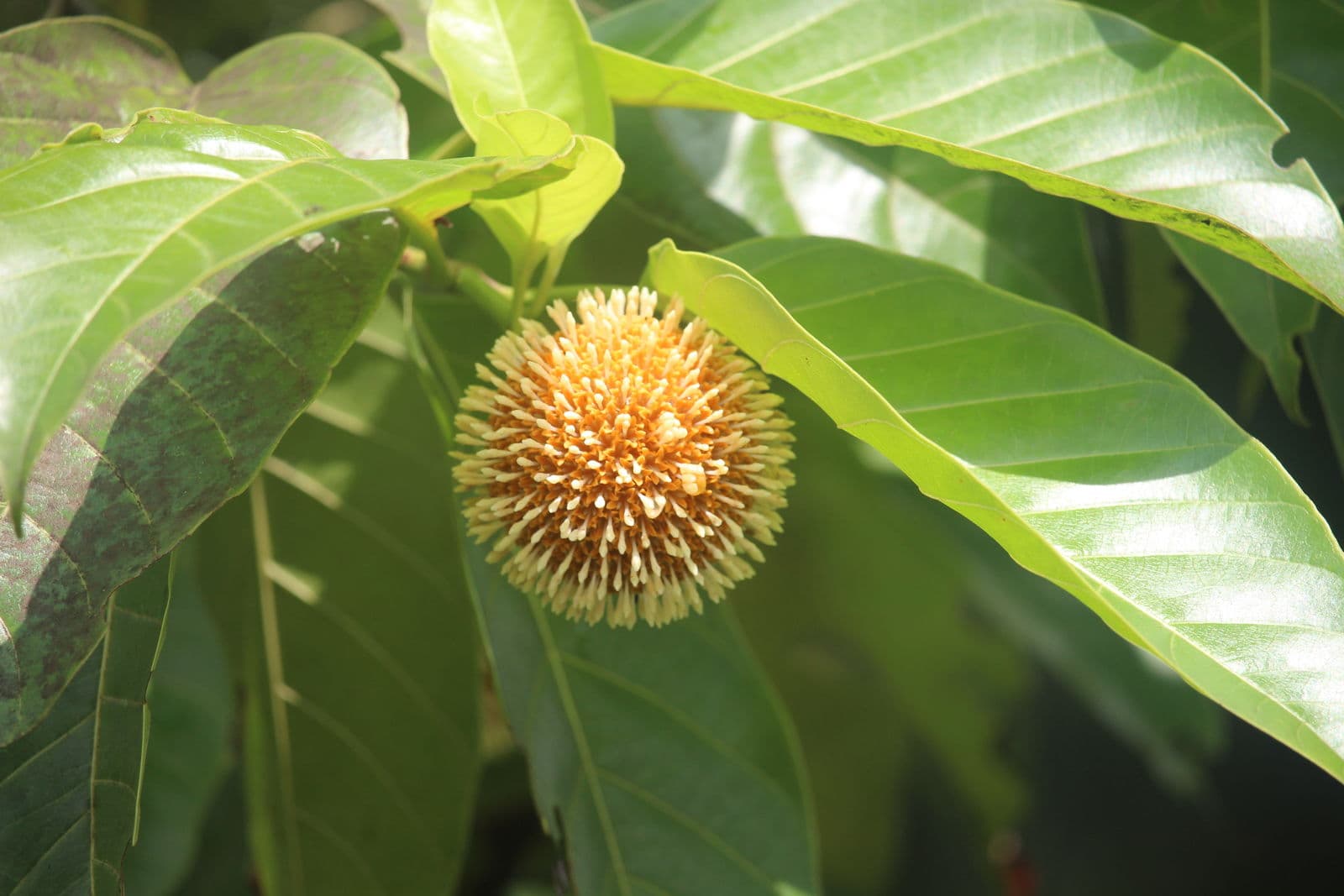
Morphology and field-identification notes as documented in our Dravyaguna library.
Kadamba is an evergreen, tropical tree native to South and Southeast Asia. A fully mature Kadam tree can reach up to 45 m in height. It is a large tree with a broad crown and straight cylindrical bole. Kadam flowers are sweetly fragrant, red to orange in color, occurring in dense, globular heads of approximately 5.5 cm diameter.
The five-fold framework Ayurveda uses to describe a drug — Rasa, Guna, Vipaka, Veerya and its effect on the doshas.
Tikta, Kashaya
The primary taste perceived on the tongue.
Ruksha
Physical and energetic attributes of the dravya.
Katu
Taste that emerges after complete digestion.
Tridosha Shamaka
Effect on Vata, Pitta and Kapha doshas.
Sheeta
Heating (ushna) or cooling (sheeta) energy.
Shishira, Grahi, Vrana Ropaghna, Vishtambhakrut, Shukravardhaka
How modern science maps onto the classical understanding of this dravya.
Pharmacological Action
Analgesic, Anti- pyretic , Anti- inflammatory , Anti- diabetic
Phytoconstituents
Alkaloids, Steroids, Reducing sugars, Cinchoninic acid , Tannins (about 4.6%)
Classical Ayurvedic indications drawn directly from the Dravyaguna tradition — paired with the preparations recommended in shastra.
01
The paste of the leaves of Kadamba are tied over the wound or area affected with localized pain and swelling to reduce the complaints.
02
The decoction of the bark of is used to wash the infected wound.
03
The decoction of the bark of the plant is used for gargling to treat mouth ulcers and inflammation of the gums.
04
The decoction of Kadamba is taken in a dose of 30-40 ml to treat Diarrhea and Irritable Bowel Syndrome.
Always consult a qualified Ayurvedic physician before using any herb therapeutically. Dose, anupana and Prakriti-specific suitability matter.
Yoga / Kalpana
Common Ayurvedic preparations where Kadamba is a key ingredient.
Shastra Pramana
कदम्बो मधुरः शीतः कषायो लवणो गुरुः । सरो विष्टम्भकृद्रक्षः कफस्तन्यानिलप्रदः ||( भा.प्र )