Rasa (Taste)
Madhura,Tikta
The primary taste perceived on the tongue.

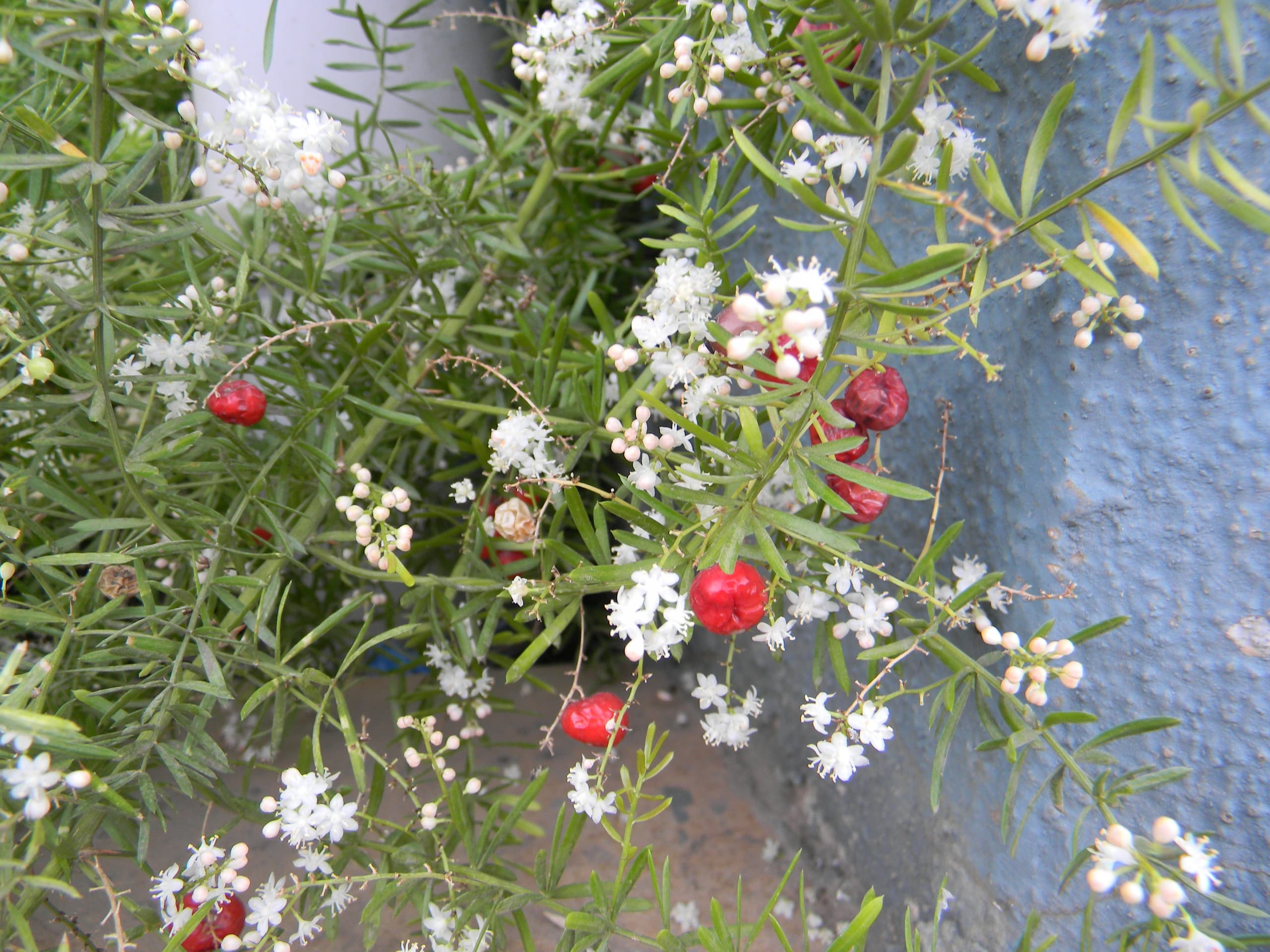
It is a climber having stems up to 4 m long.
Asparagus racemosus · Asparagaceae
It is a climber having stems up to 4 m long.
Scientific Name
Asparagus racemosus
Family
Asparagaceae
Hindi Name
Shatavar, Shatmool
Used Part
Tuberous Roots
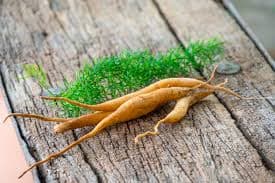
Morphology and field-identification notes as documented in our Dravyaguna library.
It is a climber having stems up to 4 m long. Its roots are both fibrous and tuberous.
Shatavari has small pine-needle-like phylloclades (photosynthetic branches) that are uniform and shiny green. In July, it produces minute, white flowers on short, spiky stems, and in September it fruits, producing blackish-purple, globular berries. It has an adventitious root system with tuberous roots that measure about one metre in length, tapering at both ends, with roughly a hundred on each plant.
The five-fold framework Ayurveda uses to describe a drug — Rasa, Guna, Vipaka, Veerya and its effect on the doshas.
Madhura,Tikta
The primary taste perceived on the tongue.
Snigdha,Guru
Physical and energetic attributes of the dravya.
Madhura
Taste that emerges after complete digestion.
Vatapitta Hara
Effect on Vata, Pitta and Kapha doshas.
Sheeta
Heating (ushna) or cooling (sheeta) energy.
Vrushya, Kshayajit, Asrajit, Ayushya, Vaya Sthapani, Rasayanavara, Shukrala, Stanyada, Medhya.
How modern science maps onto the classical understanding of this dravya.
Pharmacological Action
Adaptogen, Immune-modulator, and Female Reproductive Tonic
Phytoconstituents
Sarsasapogenin and shatavarin I-IV are present in roots, leaves, and fruits of Asparagus species.
Classical Ayurvedic indications drawn directly from the Dravyaguna tradition — paired with the preparations recommended in shastra.
01
For lactation & postpartum support: Shatavari Kalpa is sweet granules formulation used by new mothers to boost breast milk production and regain vitality.
02
For Gastric Ulcers & Acidity: Shatavari Mandur is a classical herbo-mineral formulation that helps heal ulcers and balances excess stomach acid.
03
For general Vata Balancing: Shatavari Guggulu is a potent tablet-based formulation utilized to strengthen muscles, revitalize nerves, and reduce bodily inflammation.
Always consult a qualified Ayurvedic physician before using any herb therapeutically. Dose, anupana and Prakriti-specific suitability matter.
Yoga / Kalpana
Common Ayurvedic preparations where Shatavari is a key ingredient.
Shastra Pramana
शतावरी बहुसुता भीरुरिन्दीवरी बरी | नारायणी शतपदी शतवीर्या च पीवरी ||