Rasa (Taste)
Tikta, Kashaya
The primary taste perceived on the tongue.

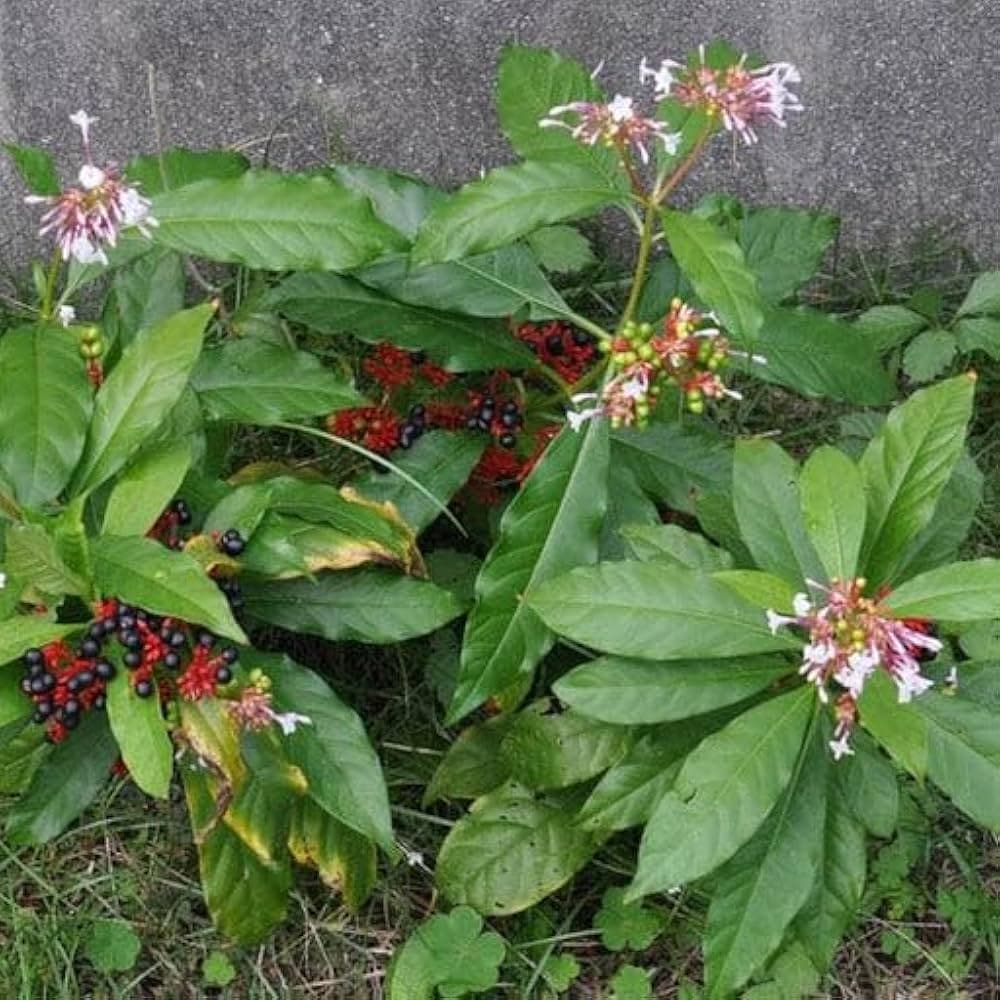
It is an evergreen, perennial, glabrous and erect under shrub.
Rauvolfia serpentina · Apocynaceae
It is an evergreen, perennial, glabrous and erect under shrub.
Scientific Name
Rauvolfia serpentina
Family
Apocynaceae
Hindi Name
Sarpagandha
Used Part
Root and Leaves
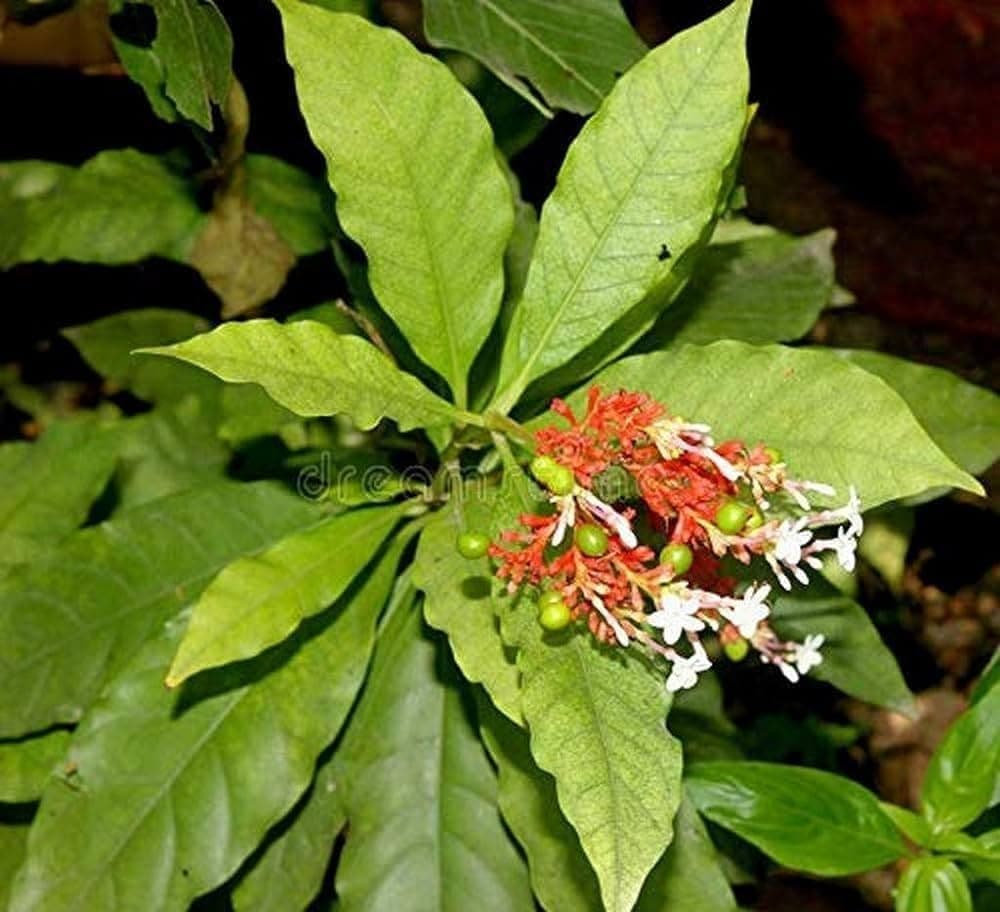
Morphology and field-identification notes as documented in our Dravyaguna library.
It is an evergreen, perennial, glabrous and erect under shrub. The maximum height of the plant is up to 60 cm. Its roots are tuberous with pale brown cork. The leaves of the plant are in whorls of three, elliptic to lanceolate or obovate, bright green above and below pale green and thin. Its flowers are in irregular corymbose cymes, white, often tinged with violet. The flowering time is from March to May in Indian conditions. Its fruits are drupe, single or didymous, shining black, the inflorescence with red pedicels and calyx and white corolla.
The five-fold framework Ayurveda uses to describe a drug — Rasa, Guna, Vipaka, Veerya and its effect on the doshas.
Tikta, Kashaya
The primary taste perceived on the tongue.
Laghu, Snidha
Physical and energetic attributes of the dravya.
Katu
Taste that emerges after complete digestion.
Vata Kapha doshahara
Effect on Vata, Pitta and Kapha doshas.
Ushna
Heating (ushna) or cooling (sheeta) energy.
Nidrajanana, Apasmarahara, Raktachapahara, Vedanasthapana
How modern science maps onto the classical understanding of this dravya.
Pharmacological Action
Antihypertensive, Sedative, Tranquillising, Hypnotic, CNS depressant, Anti anxiety action.
Phytoconstituents
Ajmalicidine, Ajmalicine, Rouhimbine, Indobinine, Reserpiline, Reserpine, Sarpagine, Serpentine, Serpentinine, Yohimbine, Ajmalimine, Ajmaline, Rauwolfinine(Perakenine), Sandwicolidine, Serpinine etc.
Classical Ayurvedic indications drawn directly from the Dravyaguna tradition — paired with the preparations recommended in shastra.
01
Raktachapa (Hypertension) Powder of Sarpagandha (Rauwolfia serpentina) to be given in the quantity of 125 mg to 1 g in case of Raktachapa (Hypertension).
02
Sarpa visha (Snake bite) In Sarpa visha (Snake bite) 1 to 2 Tola (10 to 20 g) of powder of Sarpagandha (Rauwolfia serpentina) is triturated with water and administered.
Always consult a qualified Ayurvedic physician before using any herb therapeutically. Dose, anupana and Prakriti-specific suitability matter.
Yoga / Kalpana
Common Ayurvedic preparations where Sarpagandha is a key ingredient.
Shastra Pramana
नाकुली सर्पगन्धा च स्यात् तिक्ताऽपि परिकीर्तिता । मूषिकस्य विषं हन्ति कृमिदोषविनाशनि ॥ धन्वन्तरि निघण्टु नकुलेष्टा कटुस्तिक्ता कषायोष्णा नियच्छति ॥ व्रणकृमीन् सर्वलूता वृश्चिकाखुविषं गरम् । नाकुली तुवरा तिक्ता कटुकोष्णा विनाशयेत् । भोगि लूता वृश्चिकाखु विषज्वर कृमिव्रणान् ॥ भावप्रकाश Dr JV Hebbar - Fasvayurveda.com कुक्कुटी सर्पगन्धा च तथा कणविषाणिके । नैपाली हरितालञ्च - रक्षोघ्ना ये च कीर्तिताः ॥ सुश्रुत संहिता उत्तर तन्त्र ६०