Rasa (Taste)
Tikta, Madhura
The primary taste perceived on the tongue.

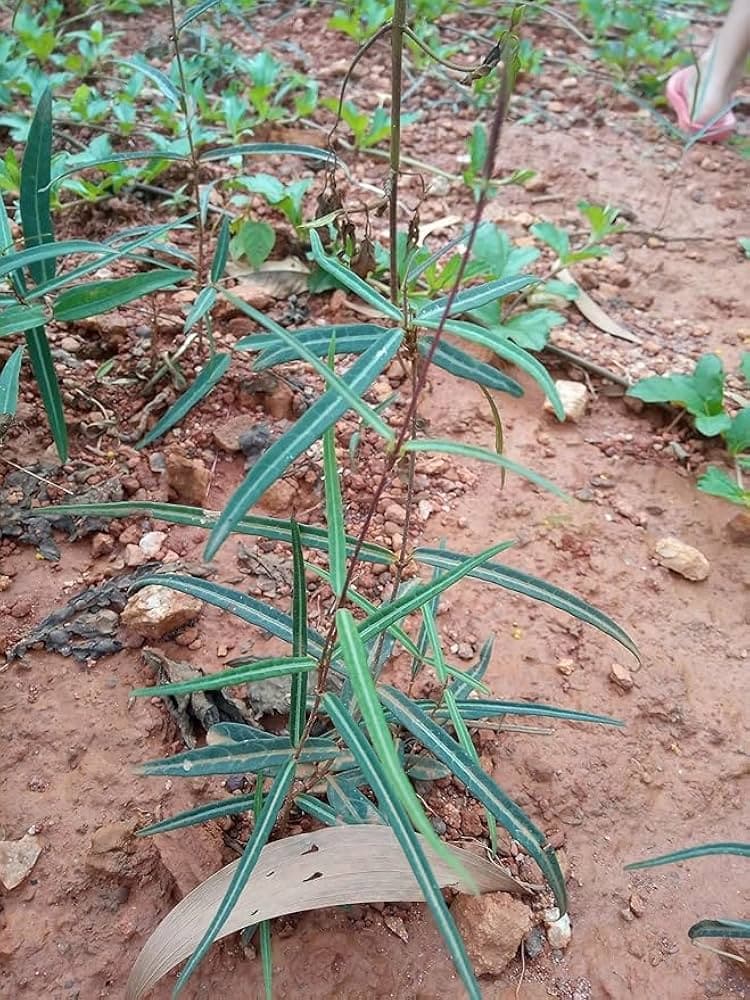
Sariva is one of the most commonly available herbs in India.
Hemidesmus indicus · Asclepidaceae
Sariva is one of the most commonly available herbs in India.
Scientific Name
Hemidesmus indicus
Family
Asclepidaceae
Hindi Name
Sariva, Anantamool
Used Part
Root
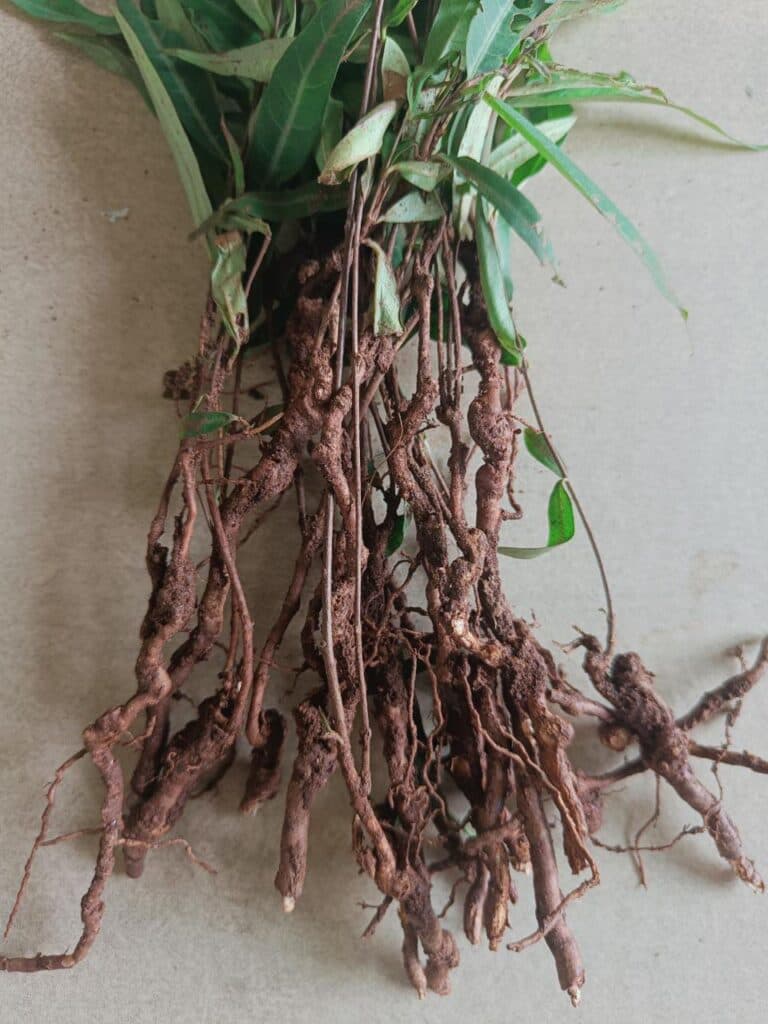
Morphology and field-identification notes as documented in our Dravyaguna library.
Sariva is one of the most commonly available herbs in India. The name Sariva itself means that the plant is found everywhere especially in ground areas as a twinner. Perennial prostate or twinning shrub. Stems are numerous and tender. Leaves are simple, opposite, elliptical oblong shaped. Inflorescence is subsessile cyme. Fruits are follicles. Seeds are ovate oblong.
The five-fold framework Ayurveda uses to describe a drug — Rasa, Guna, Vipaka, Veerya and its effect on the doshas.
Tikta, Madhura
The primary taste perceived on the tongue.
Guru , Snigdha
Physical and energetic attributes of the dravya.
Sheeta
Taste that emerges after complete digestion.
Tridoshahara
Effect on Vata, Pitta and Kapha doshas.
Madhura (Sweet)
Heating (ushna) or cooling (sheeta) energy.
They are used for the treatment of blood diseases, biliousness, dysentery and diarrhoea, respiratory disorders, skin diseases, leprosy, leucorrhoea, leukoderma, itching, syphilis, bronchitis, asthma, eye diseases, epileptic fits in children, lack of appetite, burning sensation, rheumatism, kidney and urinary disorders.
How modern science maps onto the classical understanding of this dravya.
Pharmacological Action
In Skin diseases (Kushta) - The combination of Amalaki and Sariva is used for drinking, bathing, and external application to cure skin diseases In Erysipelas (Visarpa) -Decoction of Sariva and Amalaki is taken internally to alleviate Erysipelsia.
Phytoconstituents
Calogenin acetylcalogenin-3-0-β-D-digitoxopyrannosyl-0-β-D-digitoxopyronsyl-0-β-D-digitoxopyranoside. It also afforded 3-keto-lup-12-en-21 28-olide along with lupanone, Lupeol-3-β-acetate, Hexadecanoic acid, 4-methoxy-3-methoxybenzalaldehyde and 3-methoxy-4-5methoxybenzalaldehydglycosides-indicine and Hemidine.
Classical Ayurvedic indications drawn directly from the Dravyaguna tradition — paired with the preparations recommended in shastra.
01
They are used for the treatment of blood diseases, biliousness, dysentery and diarrhoea, respiratory disorders, skin diseases, leprosy, leucorrhoea, leukoderma, itching, syphilis, bronchitis, asthma, eye diseases, epileptic fits in children, lack of appetite, burning sensation, rheumatism, kidney and urinary disorders.
Always consult a qualified Ayurvedic physician before using any herb therapeutically. Dose, anupana and Prakriti-specific suitability matter.
Yoga / Kalpana
Common Ayurvedic preparations where Sariva is a key ingredient.
Shastra Pramana
सारिवा जम्बूपत्राः दुग्धगर्भा वल्ली स्वनामप्रसिद्धा कृष्णसारिवा. चन्दनगंधा ।' (डल्हण) सारिवायुगलं स्वादु स्निग्धं शुक्रकरं गुरु । अग्निमांद्यारुचिश्वासकासामविषनाशनम् ।। दोषत्रय। स्त्रप्रदरज्वराती सारनाशनम् । (भा. प्र.) ' सारिखे द्वे तु मधुरे पित्तवातास्त्रनाशने । कण्डूकुष्ठज्वरहरे मेहदुर्गन्धनाशने ।।' (ध.नि.)