Rasa (Taste)
Katu
The primary taste perceived on the tongue.

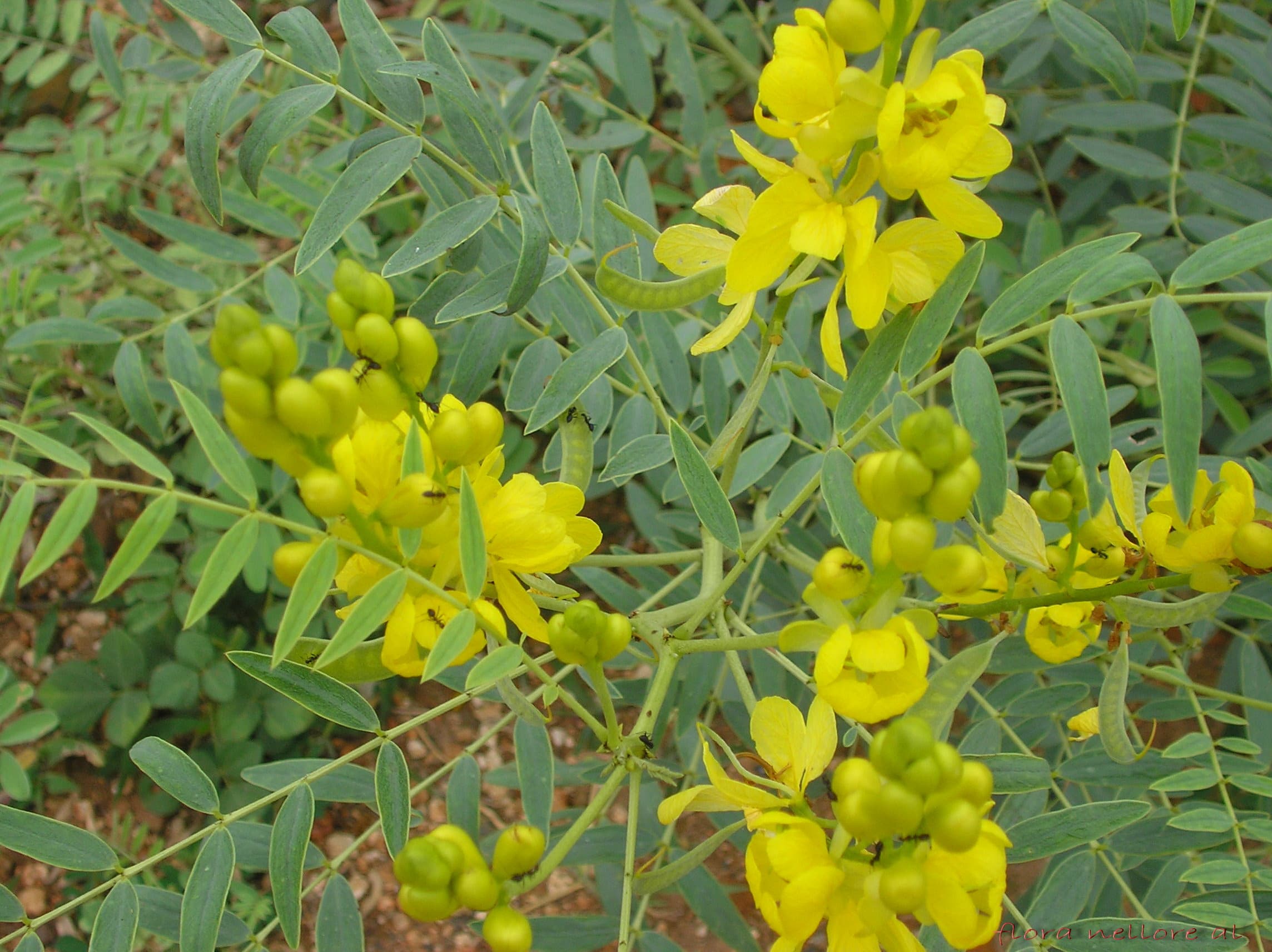
The Sanay plant is a small shrub native to North Africa and the Arabian Peninsula.
Cassia angustifolia · Fabaceae
The Sanay plant is a small shrub native to North Africa and the Arabian Peninsula.
Scientific Name
Cassia angustifolia
Family
Fabaceae
Hindi Name
Sonamukhi, Swarnapatri
Used Part
Leaves
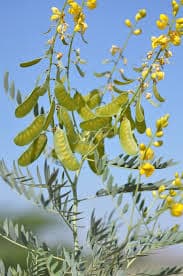
Morphology and field-identification notes as documented in our Dravyaguna library.
The Sanay plant is a small shrub native to North Africa and the Arabian Peninsula. It typically grows up to 1.5 meters in height and has pinnately compound leaves with six to eight pairs of leaflets. The leaves are lance-shaped and green, with a characteristic strong odor. The plant produces yellow, five-petaled flowers in clusters. The fruit of the Sanay plant is a cylindrical pod containing many seeds. It thrives in arid regions and is known for its medicinal properties, particularly its leaves, which are used in various herbal remedies.
The five-fold framework Ayurveda uses to describe a drug — Rasa, Guna, Vipaka, Veerya and its effect on the doshas.
Katu
The primary taste perceived on the tongue.
Laghu and Ruksha
Physical and energetic attributes of the dravya.
Katu
Taste that emerges after complete digestion.
Kapha vata shamak
Effect on Vata, Pitta and Kapha doshas.
Ushna
Heating (ushna) or cooling (sheeta) energy.
Vibandha nashak, Krimihar, Udar rog nashak, Kushthahar
How modern science maps onto the classical understanding of this dravya.
Pharmacological Action
Purgative / Laxative, Anthelmintic, Antimicrobial and Antifungal
Phytoconstituents
Anthraquinone glycosides. contains flavonoids, resins, and tannins. Sennosides
Classical Ayurvedic indications drawn directly from the Dravyaguna tradition — paired with the preparations recommended in shastra.
01
Sanay has been used in traditional medicine for centuries, primarily as a potent natural laxative.
02
It helps relieve constipation by promoting bowel movements and clearing the digestive tract.
03
Sanay is known to have a cooling effect on the body and may help reduce heat-related conditions, such as fever and inflammation. It is also used in detoxification therapies to eliminate accumulated toxins from the body.
04
The plant’s leaves are utilized in Ayurvedic formulations to treat various digestive disorders, including irritable bowel syndrome.
Always consult a qualified Ayurvedic physician before using any herb therapeutically. Dose, anupana and Prakriti-specific suitability matter.
Yoga / Kalpana
Common Ayurvedic preparations where Sanay is a key ingredient.
Shastra Pramana
कल्याणी हेमपत्री च रेचनी स्वर्णपत्रिका । विट्संगं वह्निमांद्यं च यकृद्दाल्खुदरं तथा ।। प्लीहोदरं वद्धगुदमजीर्ण विषमज्वरम् । कामलां पाण्डुरोगं च कल्याणी क्षपयेद् ध्रुवम् ।। (आ. वि.) रूचोष्णा शोधनी वार्ड वातश्लेष्मविरोधिनी। शस्ता सनायकी नाम मनाक् पीततनुच्छदा ।। (सि. भे. म.)