Rasa (Taste)
Amla
The primary taste perceived on the tongue.

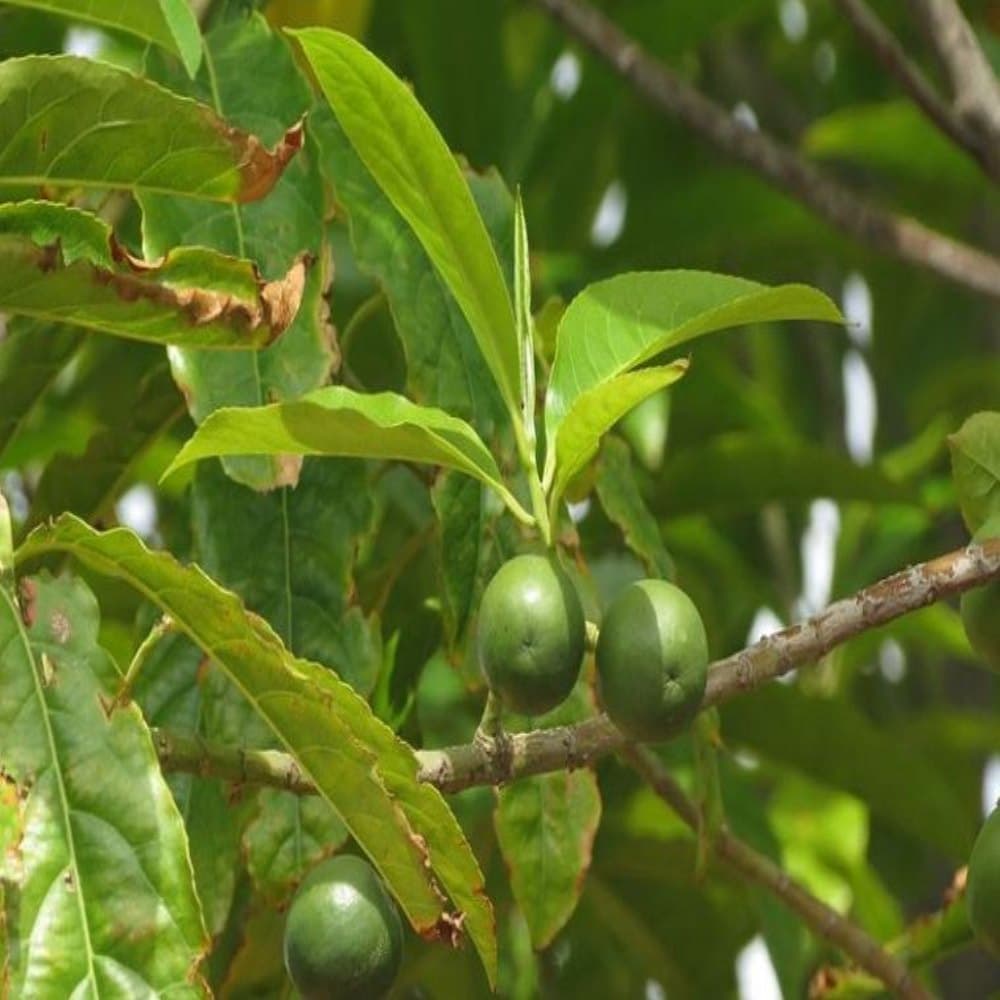
Rudraksha is a large evergreen tree native to the Himalayan region, as well as parts of Southeast Asia, Indonesia, and Malaysia.
Elaeocarpus ganitrus · Elaeocarpaceae
Rudraksha is a large evergreen tree native to the Himalayan region, as well as parts of Southeast Asia, Indonesia, and Malaysia.
Scientific Name
Elaeocarpus ganitrus
Family
Elaeocarpaceae
Hindi Name
Rudraksh, Rudraki.
Used Part
Seed
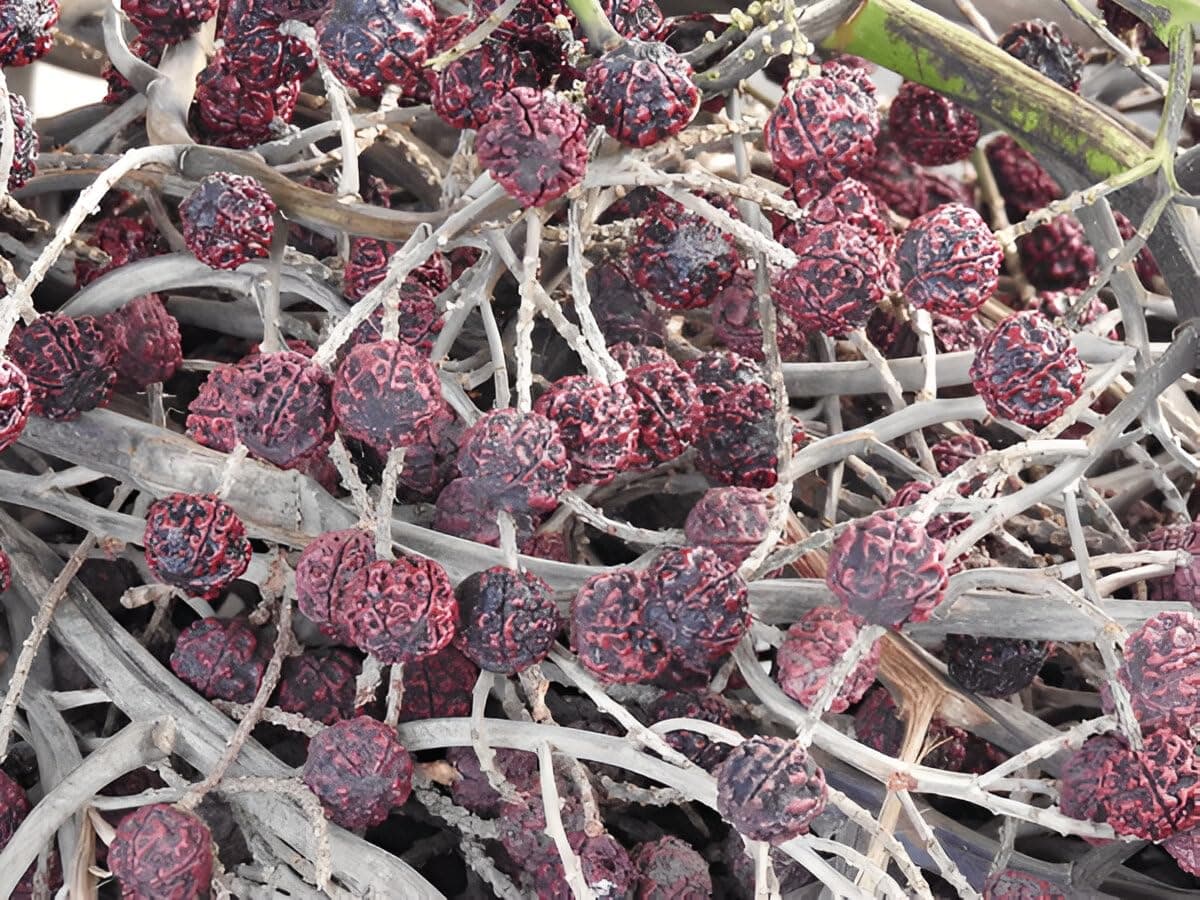
Morphology and field-identification notes as documented in our Dravyaguna library.
Rudraksha is a large evergreen tree native to the Himalayan region, as well as parts of Southeast Asia, Indonesia, and Malaysia.
The main trunk is cylindrical and circular.
Bark is grayish -white and rough in texture with small vertical lenticels and narrow horizontal furrows.
Leaves are shining green above and dull coriaceous below.
These are simple, alternate, 10-15cm long and 2.0-5.0cm broad, oblong-lanceolate, apex acuminate, margins serrulate, nearly glabrous.Flower are hermaphrodite, white, tinted purple in bud. Fruits are drupe, deep or bluish purple, globose or ovoid (1.5-2.5cm in diameter) enclosing a hard, longitudinally grooved and tubercled seed that is commonly called as stone or bead.
Rudraksha seeds are covered by an outer husk of blue colour when fully ripe, and for this reason are also known as blueberry beads. The blue colour is not derived from pigment but is structural.
The five-fold framework Ayurveda uses to describe a drug — Rasa, Guna, Vipaka, Veerya and its effect on the doshas.
Amla
The primary taste perceived on the tongue.
Guru, Snighda
Physical and energetic attributes of the dravya.
Madhura
Taste that emerges after complete digestion.
Vatakapha Shamaka
Effect on Vata, Pitta and Kapha doshas.
Ushna
Heating (ushna) or cooling (sheeta) energy.
Ruchya – improves taste Shiroarthi shamana – relieves headache Bhutagraha vinashanam – wards off evil spirits
How modern science maps onto the classical understanding of this dravya.
Pharmacological Action
Hypnotic, Tranquilization, Anticonvulsive, Antiepileptic, Anti hypertensive, Anti-inflammatory, Analgesic, CNS activities, Antiasthmatic, Hydrocholeretic, Antidepressant, Antidiabetic, Cardio stimulating activities.
Phytoconstituents
Alkaloids such as rudrakine, elaeocarpine and isoelaeocarpine. Flavonoids: Abundant quercetin, catechin and epicatechin. Phenolic Acids: high concentrations of gallic acid, ellagic acid and ferulic acid.
Classical Ayurvedic indications drawn directly from the Dravyaguna tradition — paired with the preparations recommended in shastra.
01
Steroid-free formulations (such as Rudra Compound Capsules) designed to safely manage painful and chronic musculoskeletal disorders.
02
Capsules designed to support diabetes management, improve hemoglobin levels (e.g., Ruhem and Hemofil syrups), and act as overall natural health tonic.
Always consult a qualified Ayurvedic physician before using any herb therapeutically. Dose, anupana and Prakriti-specific suitability matter.
Yoga / Kalpana
Common Ayurvedic preparations where Rudraksha is a key ingredient.
Shastra Pramana
रुद्राक्षश्च शिवाक्षश्च शर्वाक्षो भूतनाशनः । पावनो नीलकण्ठाक्षो हराक्षश्च शिवप्रियः || रुद्राक्षमम्लमुष्णं च वातघ्नं कफनाशनम् | शिरोऽर्तिशमनं रुच्यं भूतग्रहविनाशनम् ||