Rasa (Taste)
Kashaya, Madhura
The primary taste perceived on the tongue.

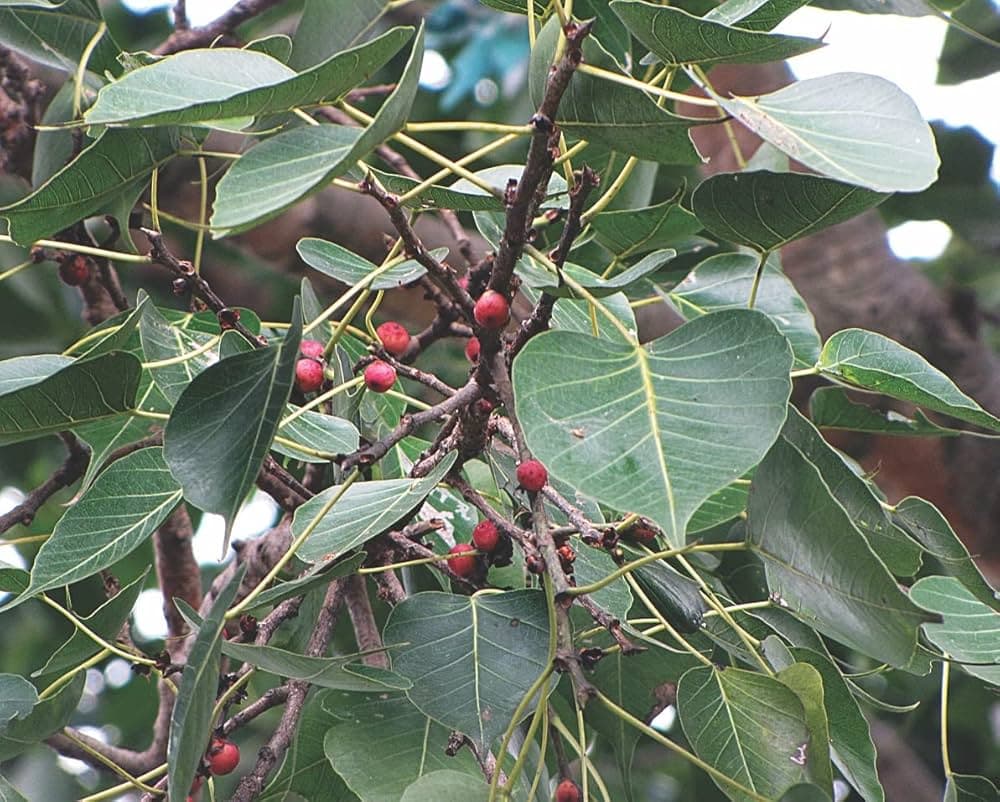
It is a large dry season-deciduous or semi-evergreen tree up to 30 metres (98 ft) tall and with a trunk diameter of up to 3 metres (9.8 ft).
Ficus religiosa · Moraceae
It is a large dry season-deciduous or semi-evergreen tree up to 30 metres (98 ft) tall and with a trunk diameter of up to 3 metres (9.8 ft).
Scientific Name
Ficus religiosa
Family
Moraceae
Hindi Name
Peepal tree
Used Part
Bark, Tender leaf, Latex and Fruit
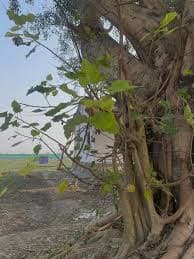
Morphology and field-identification notes as documented in our Dravyaguna library.
It is a large dry season-deciduous or semi-evergreen tree up to 30 metres (98 ft) tall and with a trunk diameter of up to 3 metres (9.8 ft).
The leaves are cordate in shape with a distinctive extended drip tip; they are 10–17 centimetres (3.9–6.7 in) long and 8–12 centimetres (3.1–4.7 in) broad, with a 6–10 centimetres (2.4–3.9 in) petiole. The fruits are small figs 1–1.5 centimetres (0.39–0.59 in) in diameter, green ripening to purple.
The five-fold framework Ayurveda uses to describe a drug — Rasa, Guna, Vipaka, Veerya and its effect on the doshas.
Kashaya, Madhura
The primary taste perceived on the tongue.
Guru, Ruksha
Physical and energetic attributes of the dravya.
Katu
Taste that emerges after complete digestion.
Kaphapittahara
Effect on Vata, Pitta and Kapha doshas.
Sheeta
Heating (ushna) or cooling (sheeta) energy.
Vranaropana, Shothahara, Mutrasangrahaniya, Shukrala, Pramehahara, Yonirogahara .
How modern science maps onto the classical understanding of this dravya.
Pharmacological Action
Potent Antioxidant, Anti-inflammatory and Antimicrobial
Phytoconstituents
The stem bark have reported phytoconstituents of phenols, tannins, steroids, alkaloids and flavonoids, β-sitosteryl-D-glucoside, vitamin K, n-octacosanol, methyl oleanolate, lanosterol, stigmasterol, lupen-3-one. The active constituent from the root bark was found to be β-sitosteryl-D-glucoside, which showed a peroral hypoglycemic effect in fasting and alloxan-diabetic rabbits and in pituitary-diabetic rats. The fruits contain 4.9% protein having the essential amino acids, isoleucine. The seeds contain phytosterolin, β-sitosterol and its glycoside, albuminoids, carbohydrate, fatty matter, coloring matter, caoutchoue 0.7–5.1%. The fruits contain flavonols namely kaempeferol, quercetin and myricetin. Leaves and fruits contain carbohydrate, protein, lipid, calcium, sodium, potassium, and phosphorus.
Classical Ayurvedic indications drawn directly from the Dravyaguna tradition — paired with the preparations recommended in shastra.
01
Dried bark is powdered and used topically (with honey) for wound healing or consumed for general wellness. Juice / Decoction (Kwath): Utilized to soothe Vata and Pitta imbalances, address constipation and calm acidity. Dried fruit preparations are sometimes taken as dietary supplements to boost immunity and aid digestion.
Always consult a qualified Ayurvedic physician before using any herb therapeutically. Dose, anupana and Prakriti-specific suitability matter.
Yoga / Kalpana
Common Ayurvedic preparations where Peepal is a key ingredient.
Shastra Pramana
अश्वत्थः शीतलो रुक्षः कषायो दुर्जरो गुरुः || व्रणपित्तकफास्रघ्नो वर्णो योनिविशोधनः||