Rasa (Taste)
Tikta
The primary taste perceived on the tongue.

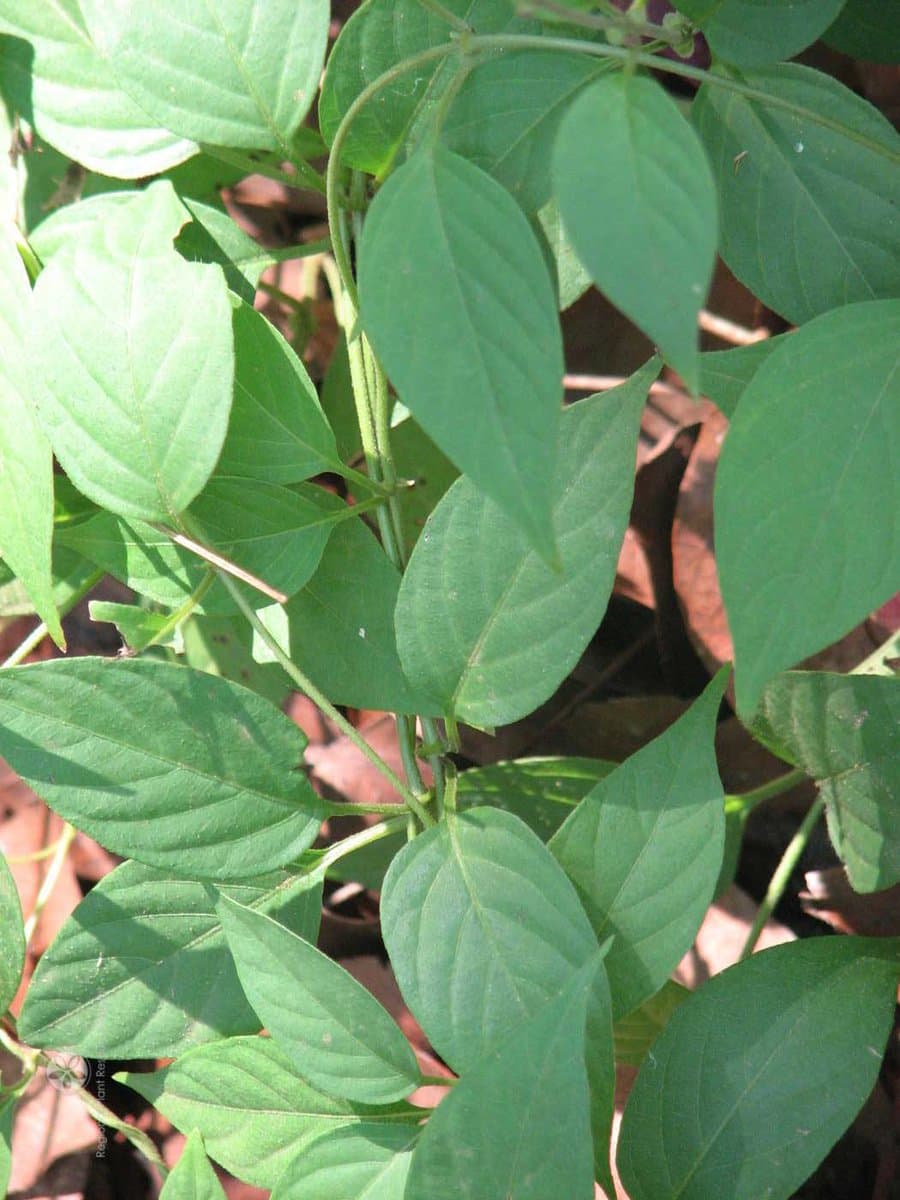
It is a fast-growing, slender, perennial, climbing plant producing stems 1.5 - 7 metres long that twine into other plants for support.
Paederia foetida · Rubiaceae
It is a fast-growing, slender, perennial, climbing plant producing stems 1.5 - 7 metres long that twine into other plants for support.
Scientific Name
Paederia foetida
Family
Rubiaceae
Hindi Name
Gandhaprasarani
Used Part
Root, Leaf.
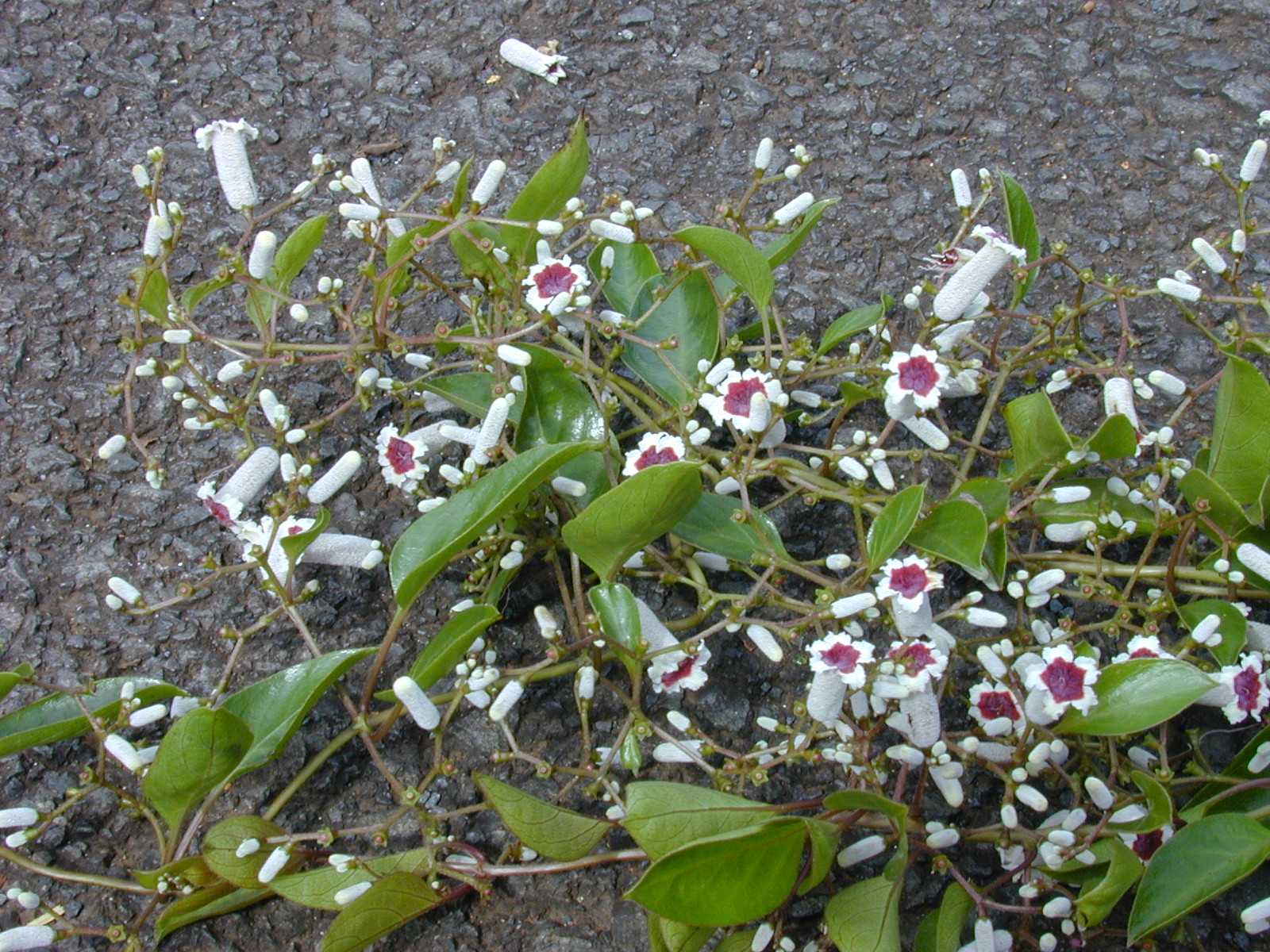
Morphology and field-identification notes as documented in our Dravyaguna library.
It is a fast-growing, slender, perennial, climbing plant producing stems 1.5 - 7 metres long that twine into other plants for support. Leaves are arranged oppositely along the stems. Simple, broadly lanceolate to elongated-ovate or ovate-oblong in shape. They typically measure 2 to 21 cm long and 0.7 to 9 cm wide. Flowers are tubular to funnel-shaped, about 1 cm long. The outside is generally white, pale purple or grayish-pink. The fruit is a small, shiny, compressed berry-like drupe.
The five-fold framework Ayurveda uses to describe a drug — Rasa, Guna, Vipaka, Veerya and its effect on the doshas.
Tikta
The primary taste perceived on the tongue.
Guru,Sara
Physical and energetic attributes of the dravya.
Katu
Taste that emerges after complete digestion.
Kaphavata Shamaka
Effect on Vata, Pitta and Kapha doshas.
Ushna
Heating (ushna) or cooling (sheeta) energy.
Vrushya – Aphrodisiac. Balakrut – Improves Strength and Immunity. Sandhanakrut – useful in wound and bone healing. Useful in Vata disorders. Almost all the massage oils used for Vata balancing contain this herb as an essential ingredient. On external use, this herb relieves pain, inflammation and stiffness. It is useful in Gout and Kapha imbalance disorders. It is also used in treating rheumatoid arthritis. It relieves bloating and abdominal pain. It is usually administered after treatment of fever, to improve strength and immunity.
How modern science maps onto the classical understanding of this dravya.
Pharmacological Action
Anti-inflammatory, Analgesic, Neuromuscular strengthening properties.
Phytoconstituents
Iridoid glycosides, Volatile Oils (which cause its distinct foul odor when crushed) and various triterpenoids.
Classical Ayurvedic indications drawn directly from the Dravyaguna tradition — paired with the preparations recommended in shastra.
01
Oil is indicated in arthritis pain, joint inflammation. Being Tikta in taste it purifies blood, indicated in Raktagatavata (diseases due to vata and rakta origin).
Always consult a qualified Ayurvedic physician before using any herb therapeutically. Dose, anupana and Prakriti-specific suitability matter.
Yoga / Kalpana
Common Ayurvedic preparations where Prasarani is a key ingredient.
Shastra Pramana
प्रसारिणी तिक्ता कटुका स्निग्धोष्णा वातनाशिनी । बल्या वृष्या च मेध्या च शोफामविषनाशिनी ॥ - भावप्रकाश