Rasa (Taste)
Tikta (bitter), Kashaya (Astringent)
The primary taste perceived on the tongue.

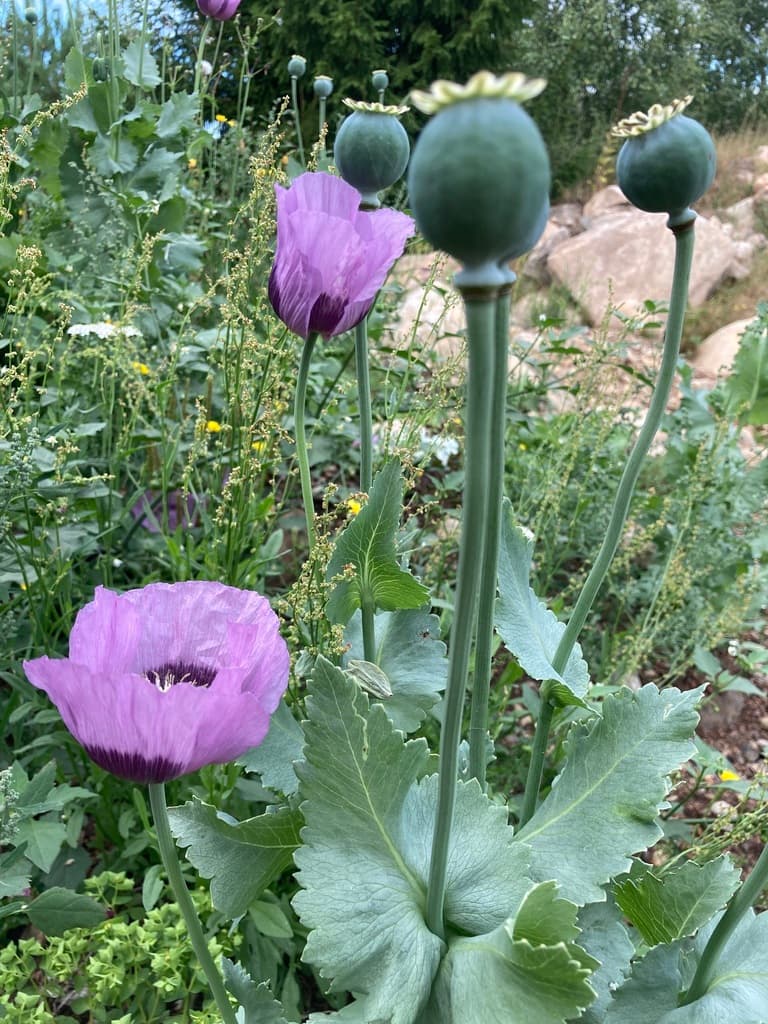
Habit – Annual Herb with latex Root – Tap root, Branched Stem – Erect, green, Cylindrical hairy with latex.
Papaver somniferum · Papaveraceae
Habit – Annual Herb with latex Root – Tap root, Branched Stem – Erect, green, Cylindrical hairy with latex.
Scientific Name
Papaver somniferum
Family
Papaveraceae
Hindi Name
Afeem, Khas Khas
Used Part
1 Raw Opium ( The inspissated juice)It is the dried latex obtained by the incision from the unripe fruit capsules of Papaver somniferum. 2. Poppy Seeds – Seeds are collected from the poppy capsules 3. Poppy Straw – Dried opium poppies are referred as ‘ Poppy Straw’
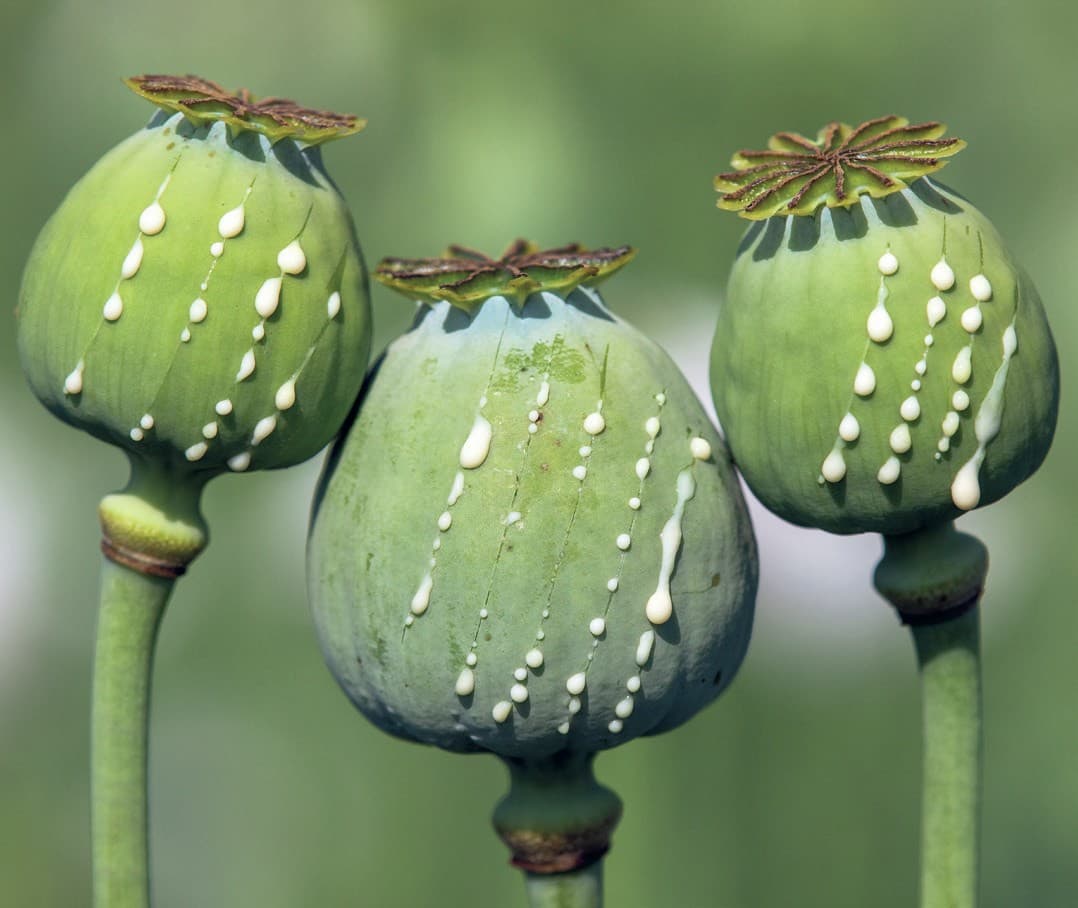
Morphology and field-identification notes as documented in our Dravyaguna library.
Habit – Annual Herb with latex
Root – Tap root, Branched
Stem – Erect, green, Cylindrical hairy with latex. Flowers have 4 petals that are white, pink, red, or mauve, often with a dark spot at their base.
Fruit – Small white or black-leaf – Simple, sessile, lobed
The five-fold framework Ayurveda uses to describe a drug — Rasa, Guna, Vipaka, Veerya and its effect on the doshas.
Tikta (bitter), Kashaya (Astringent)
The primary taste perceived on the tongue.
Laghu (lightness), Rooksha (dryness), Sookshma (minuteness), Vyavayi (spreads to all parts of the body swiftly).
Physical and energetic attributes of the dravya.
Katu
Taste that emerges after complete digestion.
1. Opium latex is Kaphahara 2. Poppy seeds -Vatahara
Effect on Vata, Pitta and Kapha doshas.
Ushna
Heating (ushna) or cooling (sheeta) energy.
Balya, Vrushya, Increases Kapha Dosha and decreases Vata Dosha. Used in neurological disorders, depression, anxiety, neuropathy, neuralgia, muscle pain, spasms etc.
How modern science maps onto the classical understanding of this dravya.
Pharmacological Action
Analgesic, Sedation, Antidiarrheal, Spasmolytic.
Phytoconstituents
Rich source of thiamin, folate, and several essential minerals, including calcium, iron, magnesium, manganese, phosphorus and zinc (table). Poppy seeds are composed of 6% water, 28% carbohydrates, 42% fat, and 21% protein.
Classical Ayurvedic indications drawn directly from the Dravyaguna tradition — paired with the preparations recommended in shastra.
01
A fermented liquid formulation of it is used to treat acute diarrhoea (Atisara), dysentery and irritable bowel issues.
Always consult a qualified Ayurvedic physician before using any herb therapeutically. Dose, anupana and Prakriti-specific suitability matter.
Yoga / Kalpana
Common Ayurvedic preparations where Ahiphena is a key ingredient.
Shastra Pramana
अफूकं तद्रवीभूतमहिफेनमफेनकम् । अफूकं शोधनं ग्राहि श्लेष्मघ्नं वातपित्तलम् ||