Rasa (Taste)
Katu
The primary taste perceived on the tongue.

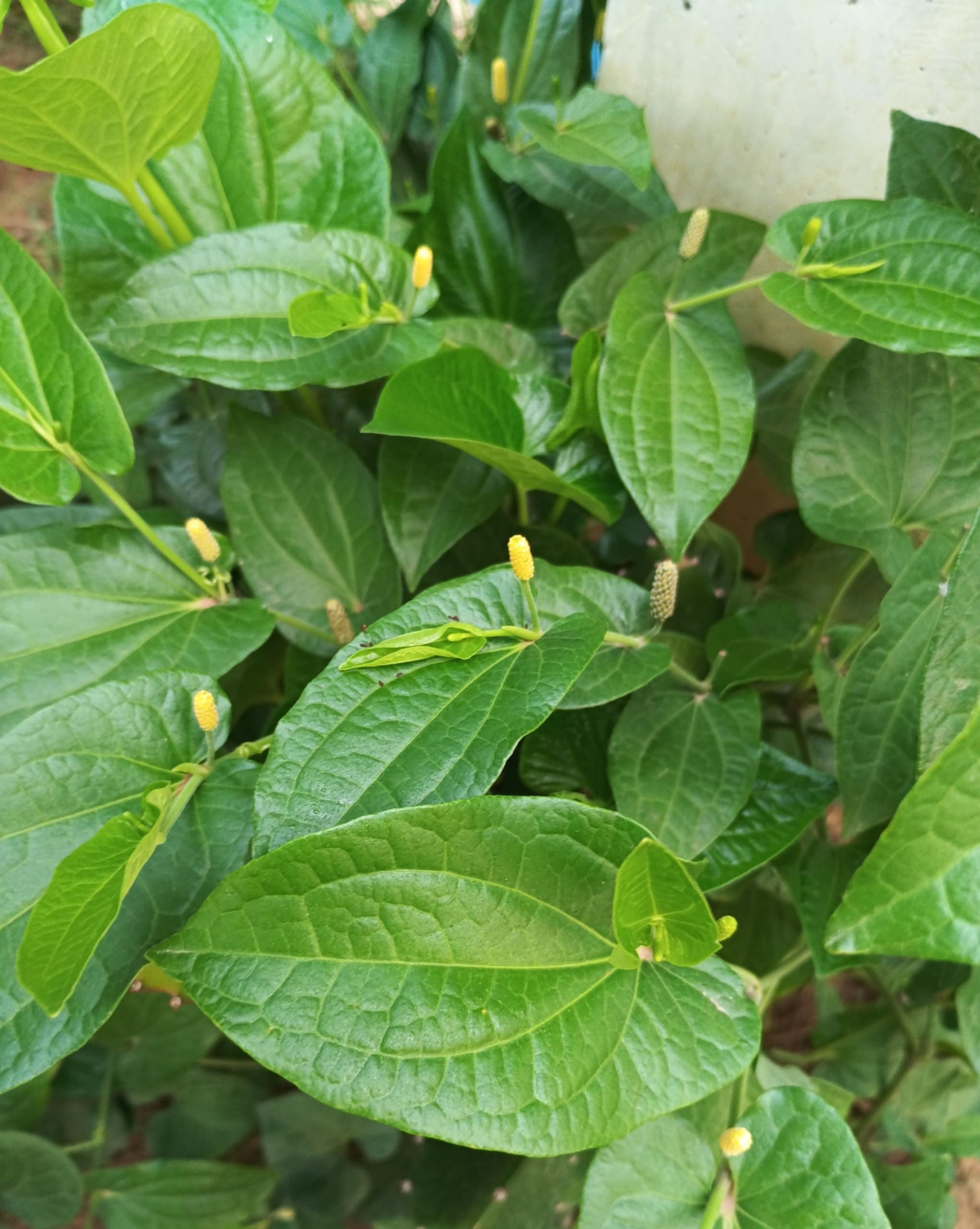
It is a slender climber.
Piper Longum Linn. · Piperaceae
It is a slender climber.
Scientific Name
Piper Longum Linn.
Family
Piperaceae
Hindi Name
Pipala,Pipli
Used Part
Fruit, Root
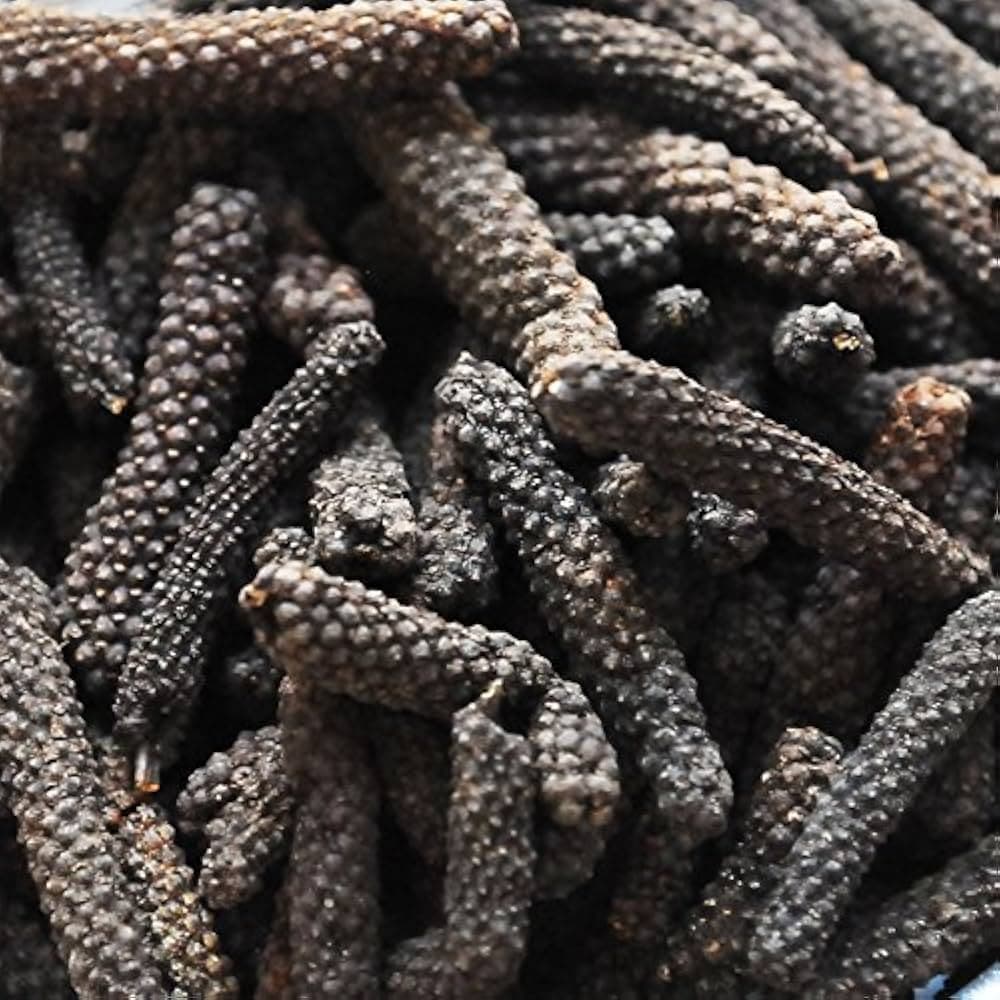
Morphology and field-identification notes as documented in our Dravyaguna library.
It is a slender climber. Leaves are ovate, acute at apex, cordate and strongly oblique at base, 7-nerved, membranous, shining, dark green above, pale and dull beneath. Male and female flowers are distinct, densely arranged in thickly cylindrical pubescent rachis. Fruit is long and fleshy, red in color when ripe and turns black when dried.
The five-fold framework Ayurveda uses to describe a drug — Rasa, Guna, Vipaka, Veerya and its effect on the doshas.
Katu
The primary taste perceived on the tongue.
Laghu,Snigdha,Tikshna.
Physical and energetic attributes of the dravya.
Madhura
Taste that emerges after complete digestion.
Kaphapittahara
Effect on Vata, Pitta and Kapha doshas.
Ushna
Heating (ushna) or cooling (sheeta) energy.
Deepana Pachana Rasayana Kapha-Vatahara Shwasahara Kasa hara Anulomana Krimighna Medhya
How modern science maps onto the classical understanding of this dravya.
Pharmacological Action
Digestive stimulant (Deepana–Pachana), Bioavailability enhancer, Anti-inflammatory action, Antioxidant activity.
Phytoconstituents
Alkaloids, Volatile Oils, Lignans, Resins and Oleoresins, Flavonoids and Phenolic compounds.
Classical Ayurvedic indications drawn directly from the Dravyaguna tradition — paired with the preparations recommended in shastra.
01
Respiratory Support - Often used for cough, cold, asthma, bronchitis and excess mucus. In Ayurveda, it is considered warming and expectorant.
02
Digestive Stimulation- Used to improve appetite, digestion, bloating, indigestion, and sluggish metabolism.
03
Bioavailability Enhancer- Similar to black pepper, compounds in pippali may help improve absorption of certain herbal preparations and nutrients.
04
Liver Support- Traditionally used in some Ayurvedic liver formulations.
05
Rejuvenation Therapy (Rasayana) - Used in long-term strengthening therapies for vitality and immunity.
06
Metabolic Disorders- Sometimes included in traditional management of obesity and metabolic imbalance.
07
Joint and Inflammatory Conditions - Used in certain formulations for pain, stiffness, and inflammatory conditions.
08
Reproductive health - Traditionally used in some male and female reproductive tonic preparations.
Always consult a qualified Ayurvedic physician before using any herb therapeutically. Dose, anupana and Prakriti-specific suitability matter.
Yoga / Kalpana
Common Ayurvedic preparations where Pippali is a key ingredient.
Shastra Pramana
लेष्मला मधुरा चार्दा गुर्वी स्निग्धा च पिप्पली । सा शुष्का कफवातघ्नी कटूष्णा वृष्यसम्मता | | २९७ | | (च.सू.२७) तेषां गुर्वी स्वादुशीता पिप्पल्यार्द्रा कफावहा । शुष्का कफानिलघ्नी सा वृष्या पित्ताविरोधिनी || २२३ || (सु.सू ४६/223) पित्ताविरोधिनी ईषत्पित्तविरोधिनी, ईषत्पित्तशमनीत्यर्थः; 'पित्तप्रकोपणी' इति केचित् पठन्ति, व्याख्यानयन्ति च "सा पित्तशमनी पूर्वं दर्शिता वीर्यवादिना । शास्त्रकारेण निर्दिष्टा सा सत्यं पित्तकोपनी । यद्वाऽऽर्द्रा पित्तशमनी शुष्का पित्तप्रकोपणी" - इति || २२३ || - Dalhana पिप्पलीनात्युपयुञ्जीत..... रसायनाविधिंविना । (चरक) प्लीहामये पिप्पली। (अ.हृ.सू) Dr Hebbar - easyayurveda.com पिप्पल्यो हि कटुकाः सत्यो मधुरविपाका गुर्योनात्यर्थं स्निग्धोष्णाः प्रक्लेदिन्यो भेषजाभिमताश्वताः सद्यः; शुभाशुभकारिण्यो भवन्ति; आपातभद्राः, प्रयोगसमसागुण्यात्; दोषसञ्चयानुबन्धाः;-सततमुपयुज्यमाना हि गुरुप्रक्लेदित्वाच्छलेष्माणमुत्क्लेशयन्ति, औष्ण्यात् पित्तं, न च वातप्रशमनायोपकल्पन्तेऽल्पस्नेहोष्णभावात्; योगवाहिन्यस्तु खलु भवन्ति; तस्मात् पिप्पलीर्नात्युपयुञ्जीत ||१६|| (च. Vi 1/16)