Rasa (Taste)
Kashaya, Amla
The primary taste perceived on the tongue.

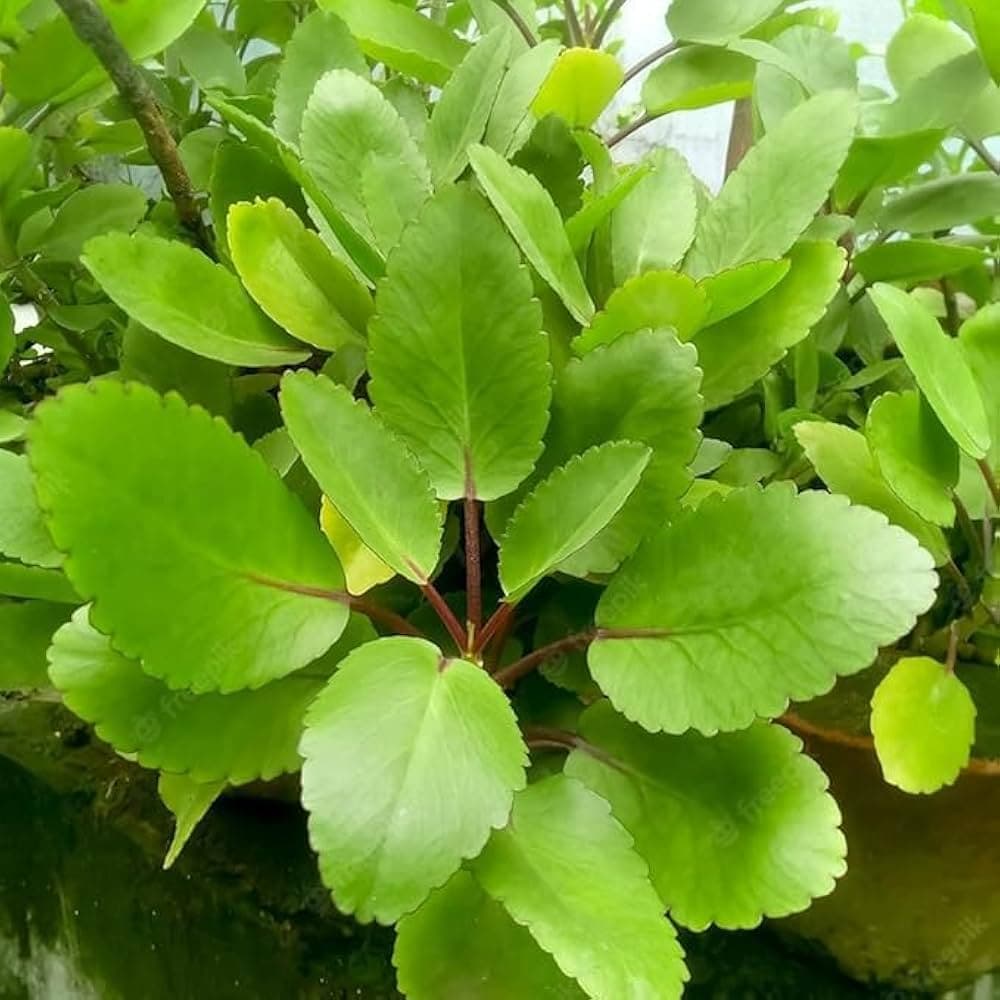
Parnabeej is a perennial, fleshy, herbaceous plant with upright stems.
Bryophyllum pinnatum · Crassulaceae
Parnabeej is a perennial, fleshy, herbaceous plant with upright stems.
Scientific Name
Bryophyllum pinnatum
Family
Crassulaceae
Hindi Name
Airavati, Pathacharuti
Used Part
Patra (Leaves)
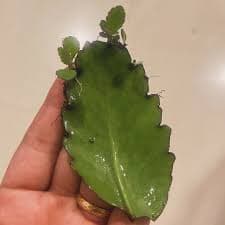
Morphology and field-identification notes as documented in our Dravyaguna library.
Parnabeej is a perennial, fleshy, herbaceous plant with upright stems. It usually grows 30-120 cm tall up to 2 m in height. A fleshy upright plant usually growing 60-120 cm tall. Its relatively broad leaves have scalloped margins and are oppositely arranged. These leaves may be simple or compound, with three or five leaflets. Its drooping bell-shaped flowers are greenish-yellow to pinkish-red in colour (up to 7 cm long). These flowers are borne in branched clusters at the top of its stems.
The five-fold framework Ayurveda uses to describe a drug — Rasa, Guna, Vipaka, Veerya and its effect on the doshas.
Kashaya, Amla
The primary taste perceived on the tongue.
Laghu
Physical and energetic attributes of the dravya.
Madhura
Taste that emerges after complete digestion.
Vatakaphahara
Effect on Vata, Pitta and Kapha doshas.
Sheeta
Heating (ushna) or cooling (sheeta) energy.
Ashmarighna, Vranaropaka, Mootrala, Shonita sthapana, Rakta stambaka, Grahi, Rogaghnata.
How modern science maps onto the classical understanding of this dravya.
Pharmacological Action
Anti inflammatory, Analgesics, Antipyretic, Antimicrobial
Phytoconstituents
Alkaloids, Saponnins, Flavonoids and Tannins
Classical Ayurvedic indications drawn directly from the Dravyaguna tradition — paired with the preparations recommended in shastra.
01
The decoction of the leaves of the plant along with Bilwa is given to treat dysentery in a dosage of 30-40 ml in divided dose.
02
The fresh juice of the leaves of Parnabeeja is given in a dose of 8-10 ml to control bleeding piles, fresh wounds and dysmenorrhoea.
03
Juice of the leaf is given in a dose of 10-15 ml to control bleeding in cases of piles and blood mixed diarrhoea. The paste of the leaves of the plant is applied to reduce localized swelling.
Always consult a qualified Ayurvedic physician before using any herb therapeutically. Dose, anupana and Prakriti-specific suitability matter.
Yoga / Kalpana
Common Ayurvedic preparations where Parnabeeja is a key ingredient.
Shastra Pramana
पर्णबीजं कषायाम्लं मधुरं शीतमेव च । वातपित्तहरं रक्तस्तम्भनं व्रणरोपणम् ।। (स्व.)