Rasa (Taste)
Katu, Tikta
The primary taste perceived on the tongue.

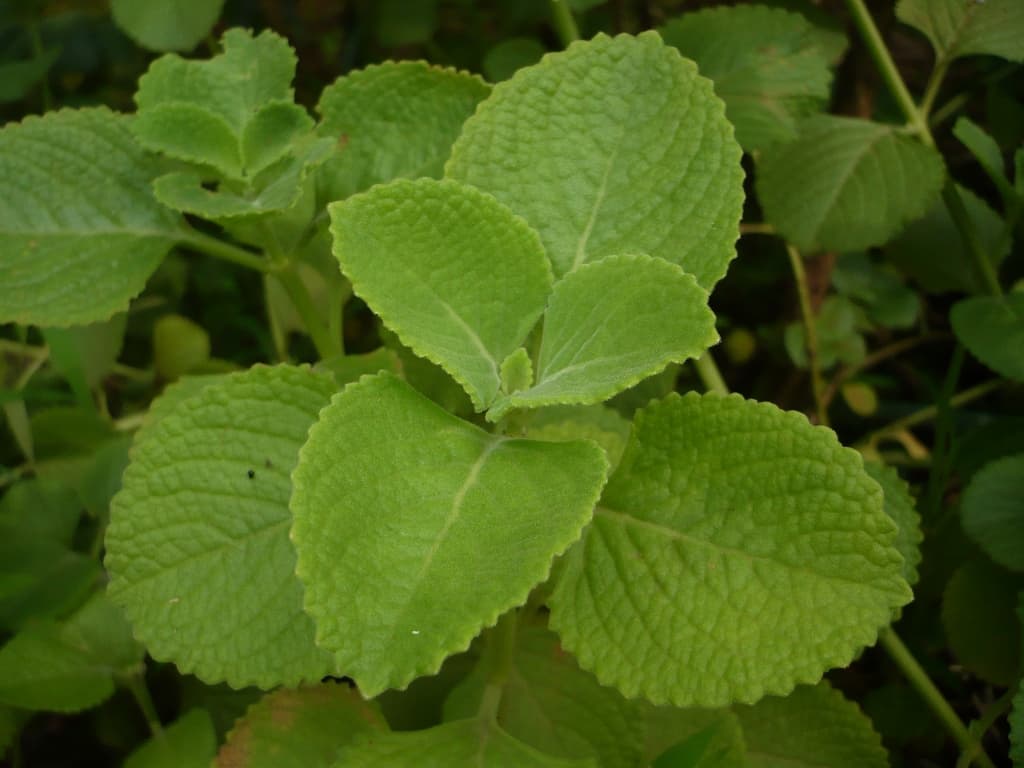
A perennial, hairy shrub, very fragrant and with bristly hair.
Coleus amboinicus · Lamiaceae
A perennial, hairy shrub, very fragrant and with bristly hair.
Scientific Name
Coleus amboinicus
Family
Lamiaceae
Hindi Name
Patharchatta
Used Part
Leaves (patra)
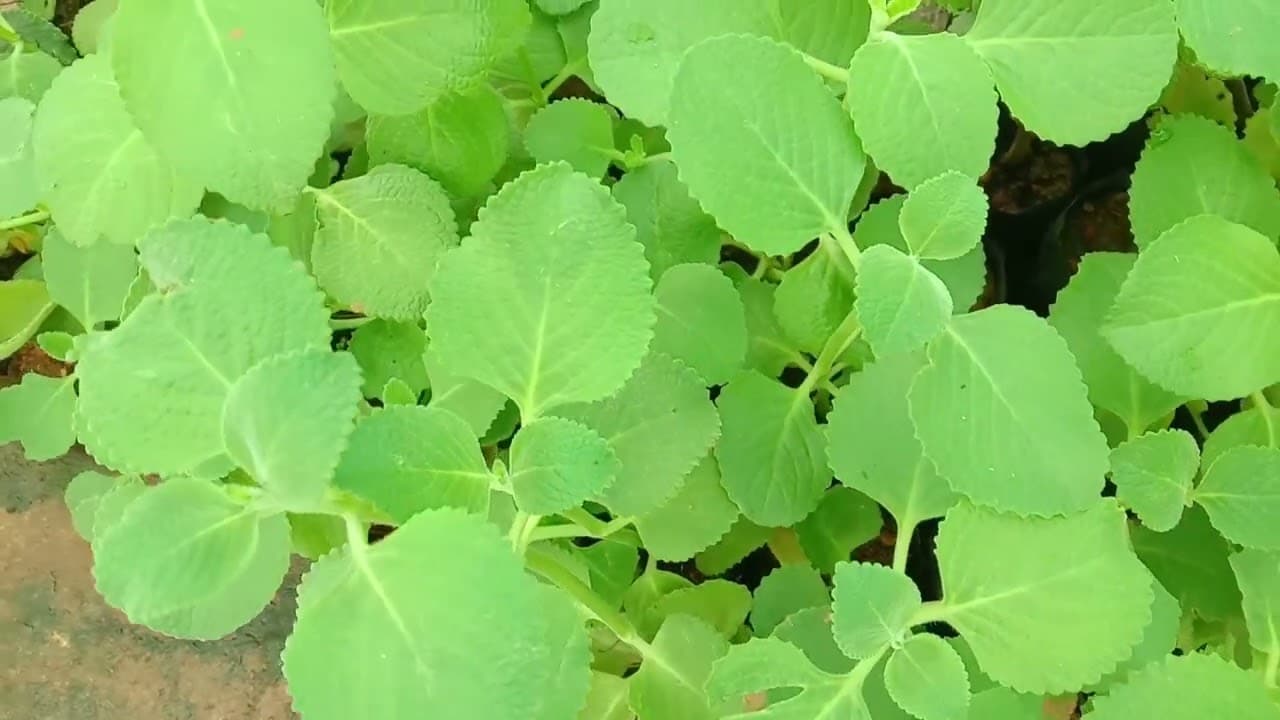
Morphology and field-identification notes as documented in our Dravyaguna library.
A perennial, hairy shrub, very fragrant and with bristly hair. Trunk is 30 cm to 1 mt high and delicate. Leaves – simple 6cm. long, ovate, dentate, thick with pungent smell. Flowers – small, violet, flowering at the end of winter and fruiting in summer.
The five-fold framework Ayurveda uses to describe a drug — Rasa, Guna, Vipaka, Veerya and its effect on the doshas.
Katu, Tikta
The primary taste perceived on the tongue.
Laghu, Ruksha
Physical and energetic attributes of the dravya.
Katu
Taste that emerges after complete digestion.
Kapha and Vatahara
Effect on Vata, Pitta and Kapha doshas.
Ushna
Heating (ushna) or cooling (sheeta) energy.
Jwaraghna, Krimighna, Mriduvirechak , Vednasthapan.
How modern science maps onto the classical understanding of this dravya.
Pharmacological Action
Anti-inflammatory, Analgesic, Antiurolithic, Diuretic, Antimicrobial, Wound healing activity, Antioxidant, Hemostatic, Antipyretic, Gastroprotective.
Phytoconstituents
Essential oil camphor, Oxalacetic acid, Flavonoid, Thymol, Cirsimaritin and Beta- Sitosterol.
Classical Ayurvedic indications drawn directly from the Dravyaguna tradition — paired with the preparations recommended in shastra.
01
The juice of the plant is given with juice of ginger to improve craving and treat acid reflux.
02
The glue and squeeze of the leaf is offered inside to treat renal and urinary calculi.
03
Juice is blended in with sugar is given to kids in colic, in asthma, incessant hack, strangury, analytics, gonorrhea, heaps and dyspepsia.
04
The medication is additionally valuable in cardiovascular disability, cough, breathlesness, hiccups, dysurea and urinary calculi.
Always consult a qualified Ayurvedic physician before using any herb therapeutically. Dose, anupana and Prakriti-specific suitability matter.
Yoga / Kalpana
Common Ayurvedic preparations where Parnayavani is a key ingredient.
Shastra Pramana
तीक्ष्णा पर्णयवान्युष्णा कटुतिक्ता रसे लघुः । दीपनी पाचनी रुच्या मलसंग्राहिणी परम् ॥ अग्निमान्द्ये यकृद्रोगे ग्रहण्यामुदरक्रिमौ । विषूचिकायामश्मर्या मूत्रकृच्छ्रे च शस्यते॥ ( द्र.गु.वि)