Rasa (Taste)
Madhura (Sweet)
The primary taste perceived on the tongue.

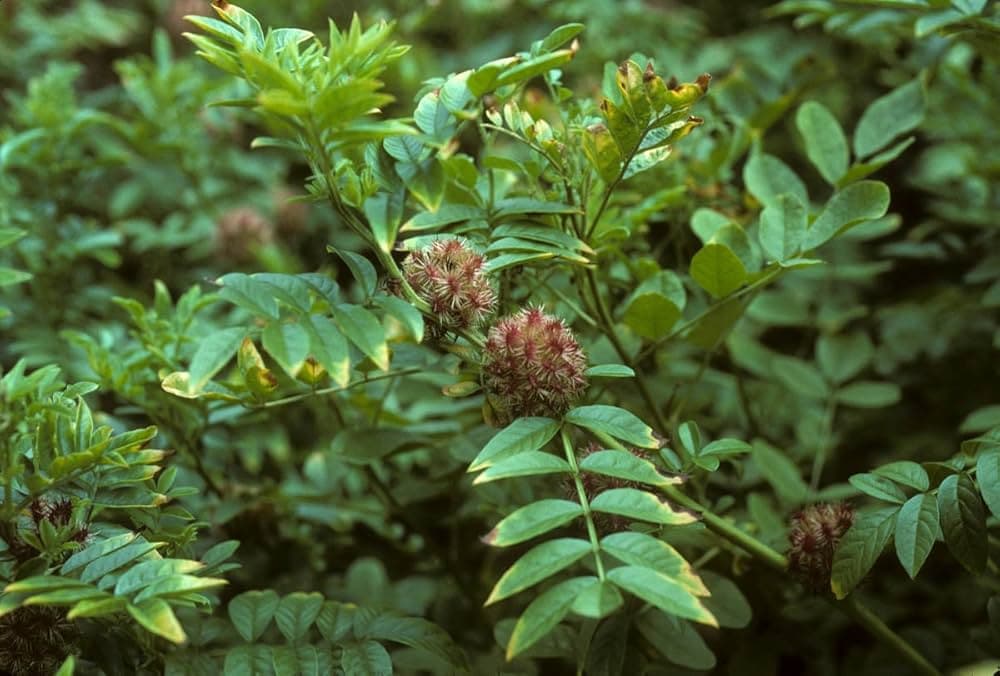
Mulethi is a perennial herb with a woody taproot, reaching up to 1 meter in height.
Glycyrrhiza glabra · Fabaceae
Mulethi is a perennial herb with a woody taproot, reaching up to 1 meter in height.
Scientific Name
Glycyrrhiza glabra
Family
Fabaceae
Hindi Name
Mulethi
Used Part
Mool (Root) and Kaand (stem)
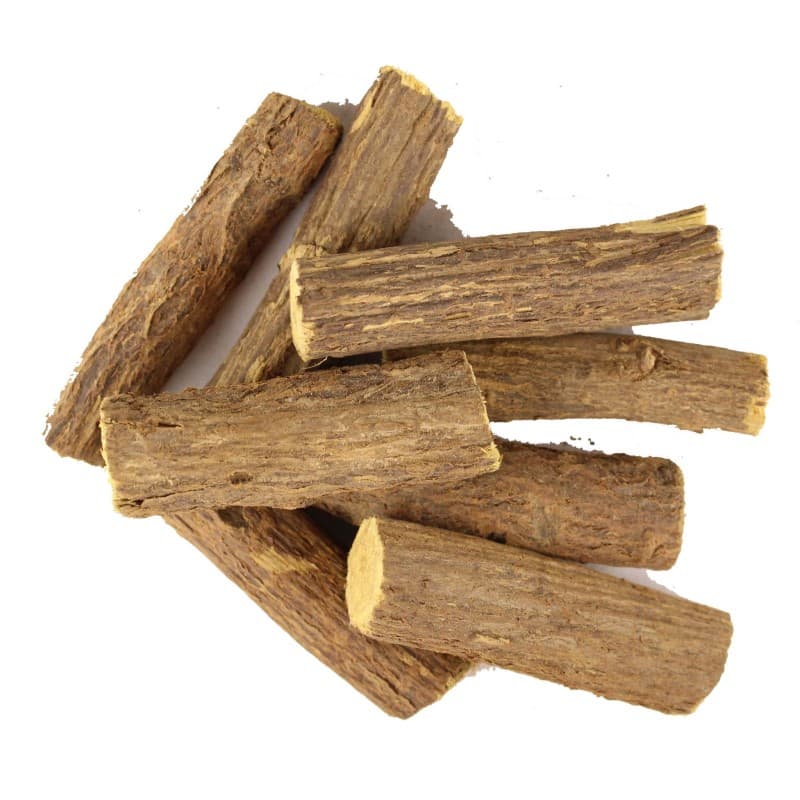
Morphology and field-identification notes as documented in our Dravyaguna library.
Mulethi is a perennial herb with a woody taproot, reaching up to 1 meter in height. It has compound leaves and purple to pale blue flowers in a spikelike inflorescence.
The five-fold framework Ayurveda uses to describe a drug — Rasa, Guna, Vipaka, Veerya and its effect on the doshas.
Madhura (Sweet)
The primary taste perceived on the tongue.
Guru (Heavy), Snigdha (Unctuous)
Physical and energetic attributes of the dravya.
Madhura
Taste that emerges after complete digestion.
Vatapittahar
Effect on Vata, Pitta and Kapha doshas.
Sheeta
Heating (ushna) or cooling (sheeta) energy.
Chakshushya ,Balakrut , Varnakrut , Shukrala , Keshya , Svarya
How modern science maps onto the classical understanding of this dravya.
Pharmacological Action
Antipyretic, antiemetic,anti-allergic, mild laxative, antioxidants
Phytoconstituents
Triterpenoid Saponins, Glycyrrhizin, Glycyrrhetinic Acid, Flavonoids and Chalcones Liquiritin & Isoliquiritin, Glabridin, Glabrene
Classical Ayurvedic indications drawn directly from the Dravyaguna tradition — paired with the preparations recommended in shastra.
01
teaspoon of licorice is added with half a cup of milk and 2 cups of water. This is boiled in a low flame till half a cup of milk remains. It is filtered and consumed, usually before food. Milk is a natural coolant and hence it enhances the cooling effects of licorice on the stomach.
02
Triphala with licorice is also useful when there is a burning sensation associated with mild constipation.
Always consult a qualified Ayurvedic physician before using any herb therapeutically. Dose, anupana and Prakriti-specific suitability matter.
Yoga / Kalpana
Common Ayurvedic preparations where Mulethi is a key ingredient.
Shastra Pramana
यष्टी हिमा गुरुः स्वाद्वी चक्षुष्या बलवर्णकृत् । सुस्निग्धा शुक्ला केश्या स्वर्या पित्तानिलास्रजित् ॥ व्रणशोथ विषच्छर्दि तृष्णा ग्लानि क्षयापहा । भाव प्रकाश