Rasa (Taste)
Madhur ,Kashaya
The primary taste perceived on the tongue.

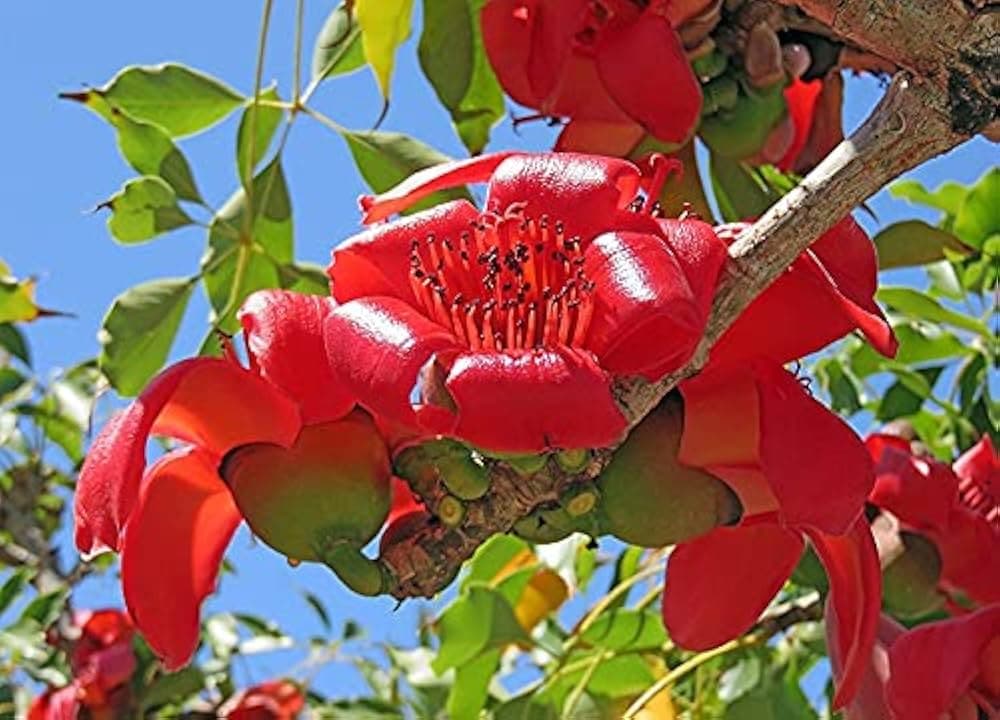
Bombax malabaricum is a large deciduous tree, notable its height and covered with hard conical prickles.Leaves are compound and multi foliated.
Salmania malabarica, Bombax malabaricum · Bombaceae
Bombax malabaricum is a large deciduous tree, notable its height and covered with hard conical prickles.Leaves are compound and multi foliated.
Scientific Name
Salmania malabarica, Bombax malabaricum
Family
Bombaceae
Hindi Name
Shalmali
Used Part
Resin (Niryas)
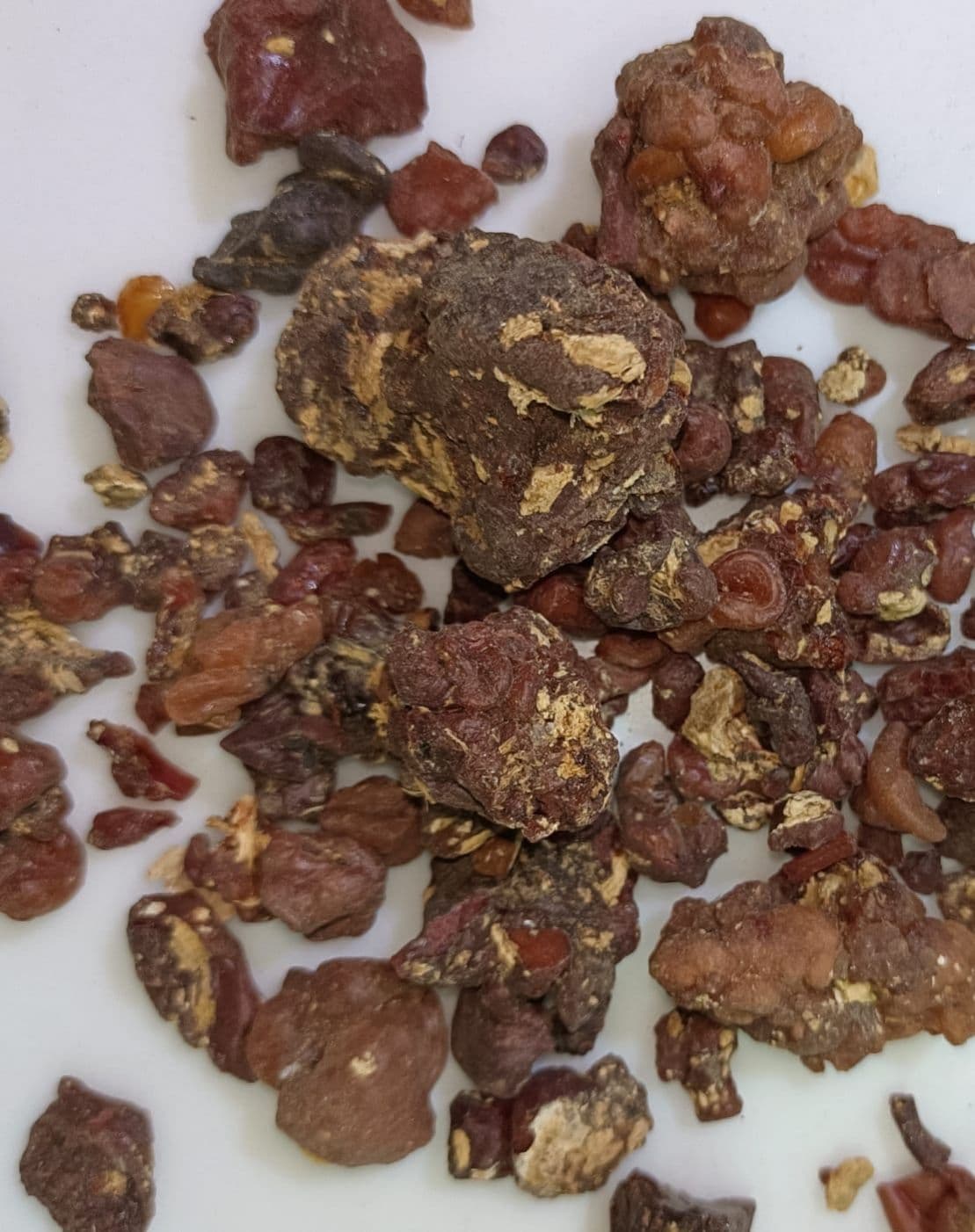
Morphology and field-identification notes as documented in our Dravyaguna library.
Bombax malabaricum is a large deciduous tree, notable its height and covered with hard conical prickles.Leaves are compound and multi foliated. Flowers are large, bright red in colour with green cup shaped calyx followed by egg shaped green capsules; seeds numerous, of a black colour, and covered by long silky hairs, or a quantity of fine cotton. The root is of carrot size; bark is externally dark brown and reddish from inside, fibrous, hard and studded with a soft spongy substance. It has astringent gummy or mucilaginous taste.
The five-fold framework Ayurveda uses to describe a drug — Rasa, Guna, Vipaka, Veerya and its effect on the doshas.
Madhur ,Kashaya
The primary taste perceived on the tongue.
Laghu,Picchila,Snigdha
Physical and energetic attributes of the dravya.
Madhura
Taste that emerges after complete digestion.
Pittakapha shamak
Effect on Vata, Pitta and Kapha doshas.
sheeta
Heating (ushna) or cooling (sheeta) energy.
Shothhara,Sandhaniya,Raktasthambhak,Grahi,Vrishya,Vranoparana
How modern science maps onto the classical understanding of this dravya.
Pharmacological Action
Astringent ,Haemostatic,Antimicrobial,Antifungal,Anti inflammatory,Antioxidant,Hepatoprotective
Phytoconstituents
Gum exudates contains gallic and tannic acids. Bark, root bark, seed contains Lupeol. Flowers contain Hentriacontane and Gossypol.
Classical Ayurvedic indications drawn directly from the Dravyaguna tradition — paired with the preparations recommended in shastra.
01
It is used for the treatment and management of leucorrhoea. It is also useful in fighting against itching or burning sensation, skin irritation or redness of the tissues.
02
Roots of salmalia are used for treating dysentery, diarrhoea and menorrhagia are styptic and are also useful for treating wounds.
03
Gum of this plant is used to reduce burning sensation and is also effective for treating haemoptysis, influenza, pulmonary tuberculosis and enteritis.
04
Paste of bark is applied externally to treat boils, acne, pimples.
Always consult a qualified Ayurvedic physician before using any herb therapeutically. Dose, anupana and Prakriti-specific suitability matter.
Yoga / Kalpana
Common Ayurvedic preparations where Shalmali is a key ingredient.
Shastra Pramana
शाल्मली शीतला स्निग्धा शुक्रलेष्मविवर्धनी। कषायस्तद्रसो ग्राही पुष्पं तद्वत्तथा फलम्