Rasa (Taste)
Madhura, Tikta
The primary taste perceived on the tongue.

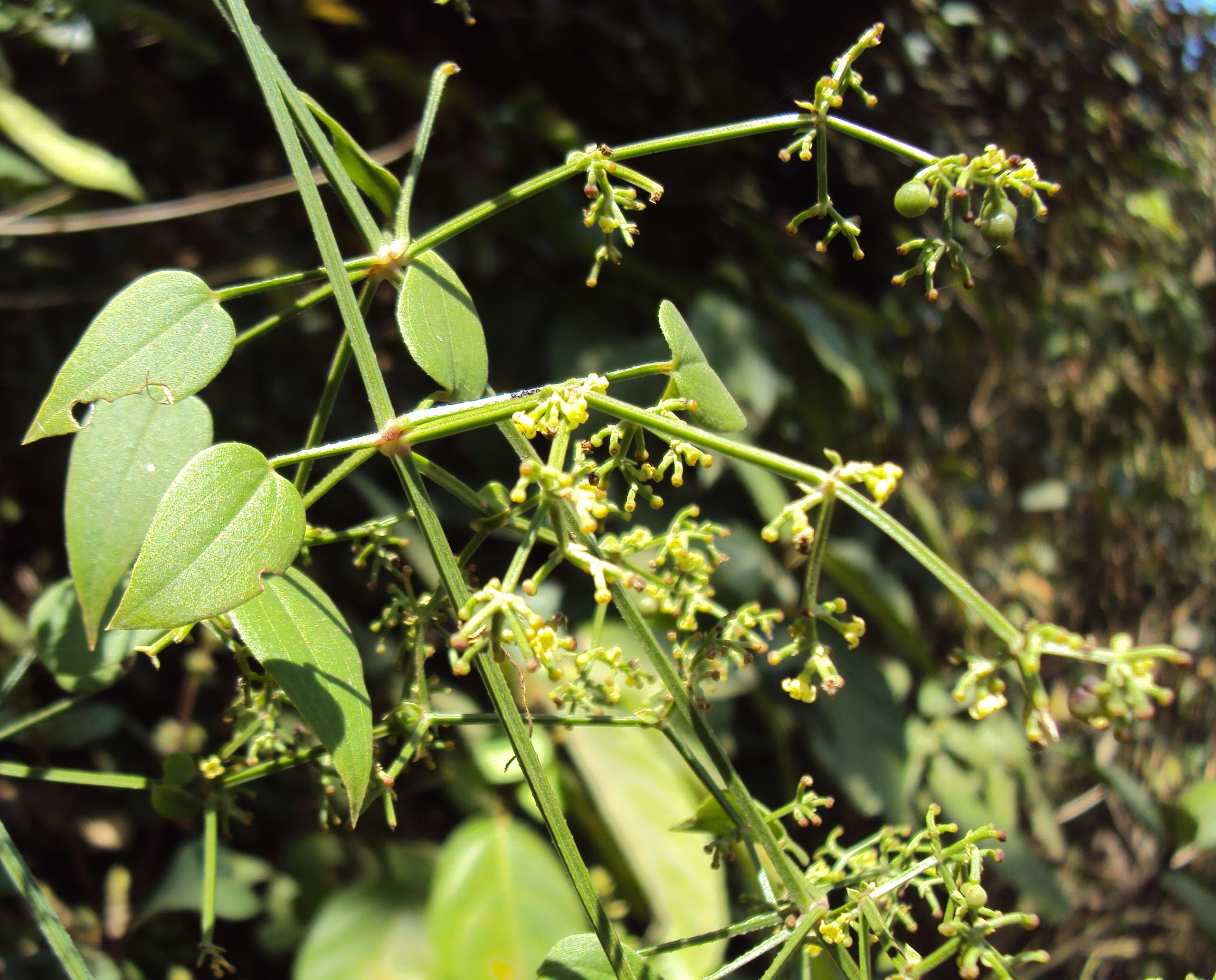
Perennial, herbaceous, climbing plant stems often many yards long, rough, grooved; bark white.
Rubia cordifolia Linn. · Rubiaceae
Perennial, herbaceous, climbing plant stems often many yards long, rough, grooved; bark white.
Scientific Name
Rubia cordifolia Linn.
Family
Rubiaceae
Hindi Name
Manjetha
Used Part
Moola (Root)
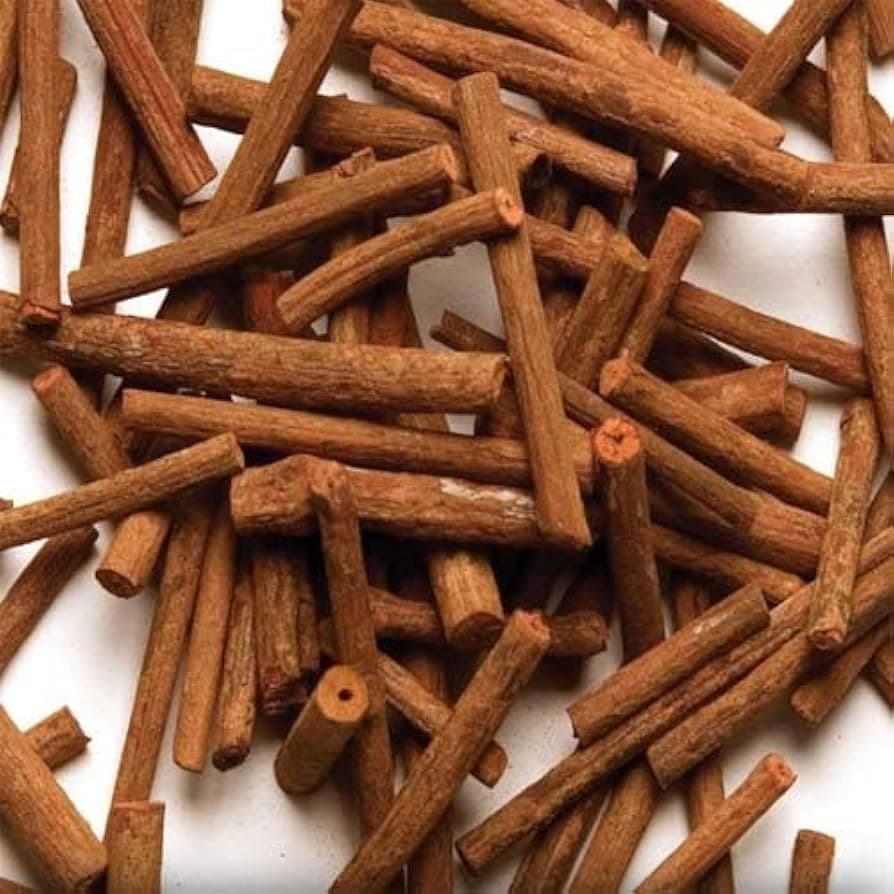
Morphology and field-identification notes as documented in our Dravyaguna library.
Perennial, herbaceous, climbing plant stems often many yards long, rough, grooved; bark white. Habit: Prickly climber reaching 10–12 m. Stem: Slender, rough, quadrangular with hooked prickles. Leaves: Heart-shaped/ovate, arranged in whorls of 4–7. Flowers: Small greenish-white or pale yellow flowers in clusters. Roots: Reddish-brown medicinal roots producing red dye. Fruit: Small dark purple-black fleshy drupes. Distribution: Found throughout India in hilly areas.
The five-fold framework Ayurveda uses to describe a drug — Rasa, Guna, Vipaka, Veerya and its effect on the doshas.
Madhura, Tikta
The primary taste perceived on the tongue.
Ruksha, Laghu
Physical and energetic attributes of the dravya.
Katu
Taste that emerges after complete digestion.
Kaphapitta shamak
Effect on Vata, Pitta and Kapha doshas.
Ushna
Heating (ushna) or cooling (sheeta) energy.
Varnya, Kusthaghna, Raktashodhak, Shothahara, Jwarahara, Raktashodhaka, Raktastambhaka, Kaphapitta shamaka.
How modern science maps onto the classical understanding of this dravya.
Pharmacological Action
Blood purifier, anti-inflammatory agent, antioxidant, antimicrobial, and hepatoprotective properties.
Phytoconstituents
Antitumour cyclic hexapeptides RA-V and RA VII along with RA-I-IV; anthraquinones munjista purpuroxanthin, rubiatriol, rubicoumaric acid, rubifolic acid, pseudopurpurin, alizarin, rubiadin, rubimallin, purpurinxanthoparpurin, ruberythric acid etc.
Classical Ayurvedic indications drawn directly from the Dravyaguna tradition — paired with the preparations recommended in shastra.
01
Manjistha Meha: Manjistha and Candana Kasaya are useful.
02
Arsas: In bleeding piles, ghee prepared with Manjistha and Sigru.
03
Kandabhagna: Manjistha and Madhuka are made into a paste using Amla dravyas and applied externally.
Always consult a qualified Ayurvedic physician before using any herb therapeutically. Dose, anupana and Prakriti-specific suitability matter.
Yoga / Kalpana
Common Ayurvedic preparations where Manjishtha is a key ingredient.
Shastra Pramana
मञ्जिष्ठा मधुरा तिक्ता कषाया स्वरवर्णकृत् । गुरूष्ण विषश्लेष्मशोथ योन्यक्षिकर्णरुक ॥ रक्तातीसारकुष्ठास्त्रवीसर्पव्रणमेहनत् ।। (भा.प्र.नि. हरीतक्यादि वर्ग 190-91)