Rasa (Taste)
Tikta, Madhura.
The primary taste perceived on the tongue.

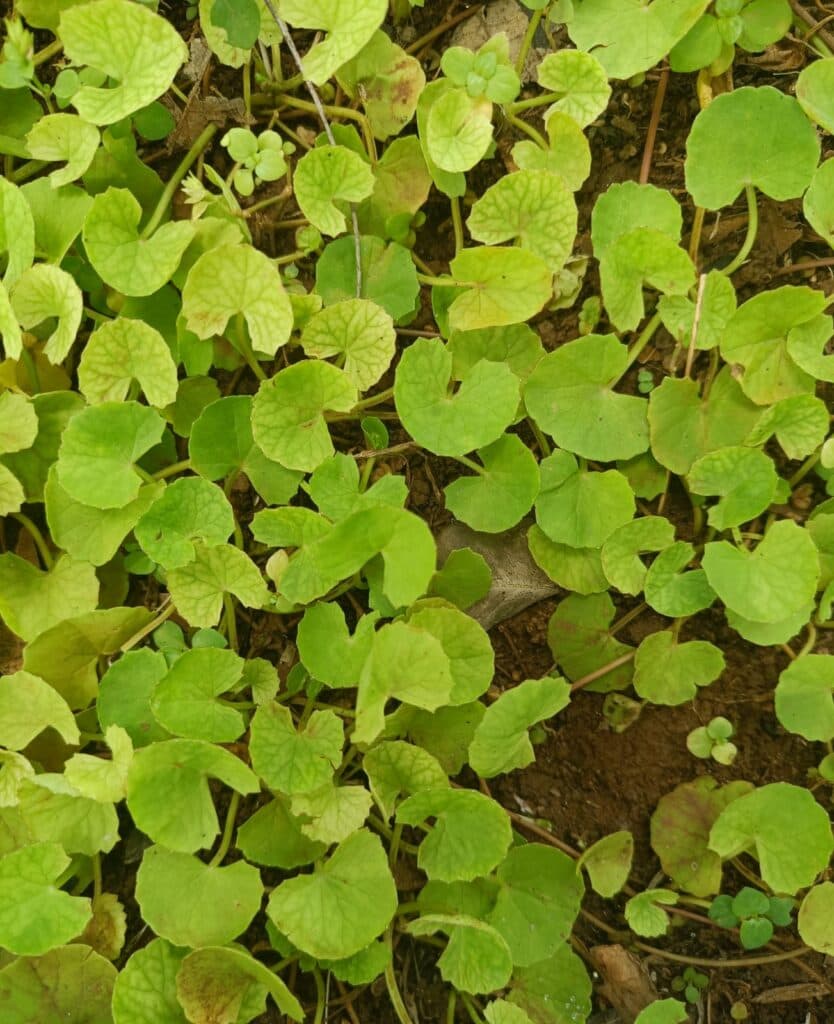
Mandukaparni is a creeping perennial plant with kidney-shaped or round leaves that float on the water's surface.
Centella asiatica · Apiaceae
Mandukaparni is a creeping perennial plant with kidney-shaped or round leaves that float on the water's surface.
Scientific Name
Centella asiatica
Family
Apiaceae
Hindi Name
Brahmamanduki
Used Part
Whole Plant (Panchang)
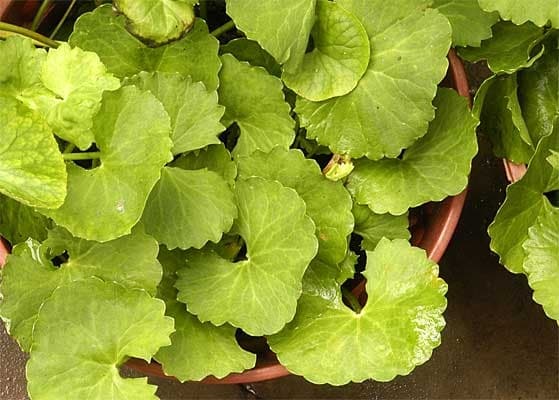
Morphology and field-identification notes as documented in our Dravyaguna library.
Mandukaparni is a creeping perennial plant with kidney-shaped or round leaves that float on the water's surface.
It produces small, inconspicuous pink or white flowers.
The plant typically grows in wetlands, marshes, and other damp areas.
The five-fold framework Ayurveda uses to describe a drug — Rasa, Guna, Vipaka, Veerya and its effect on the doshas.
Tikta, Madhura.
The primary taste perceived on the tongue.
Laghu, Sara
Physical and energetic attributes of the dravya.
Madhura
Taste that emerges after complete digestion.
Tridoshara, Pittahara
Effect on Vata, Pitta and Kapha doshas.
Sheeta
Heating (ushna) or cooling (sheeta) energy.
Kasahar, Shwashara, Medhya, Rasayan, Kandughna, Arshoghna,Vranahara, Kanda shodhana.
How modern science maps onto the classical understanding of this dravya.
Pharmacological Action
Central nervous system relaxant, Peripheral vasodilator, Sedative, Antibiotic, Detoxifier, Blood-purifier, Cooling, Laxative, Intellect promoting, Anodyne, Carminative, Digestive, Anti inflammatory, Depurative, Bronchodilator, Diuretic, Cardiotonic.
Phytoconstituents
Brahmoside, Asiaticoside, Thankuniside, Hydrocotyline, Vellarin
Classical Ayurvedic indications drawn directly from the Dravyaguna tradition — paired with the preparations recommended in shastra.
01
Stress and Anxiety: Some people use Mandukaparni as an adaptogen to help combat stress and anxiety. It is believed to have a calming effect on the nervous system.
02
Wound Healing: The triterpenoid compounds in Mandukaparni, such as asiaticoside and madecassoside, have been found to promote wound healing by stimulating the production of collagen and other factors involved in tissue repair. It may be applied topically to wounds, burns, and skin ulcers. 3- Anti-inflammatory: Mandukaparni is believed to have anti-inflammatory properties, which can be beneficial for conditions associated with inflammation, such as arthritis.
Always consult a qualified Ayurvedic physician before using any herb therapeutically. Dose, anupana and Prakriti-specific suitability matter.
Yoga / Kalpana
Common Ayurvedic preparations where Mandupkarni is a key ingredient.
Shastra Pramana
मण्डूकपर्णी तिक्तोष्णा कषाया मधुरा लघुः। मेध्या स्मृतिप्रदा बल्या शुक्रला त्वग्दोषनुत्॥”