Rasa (Taste)
Tikta, Kashaya
The primary taste perceived on the tongue.

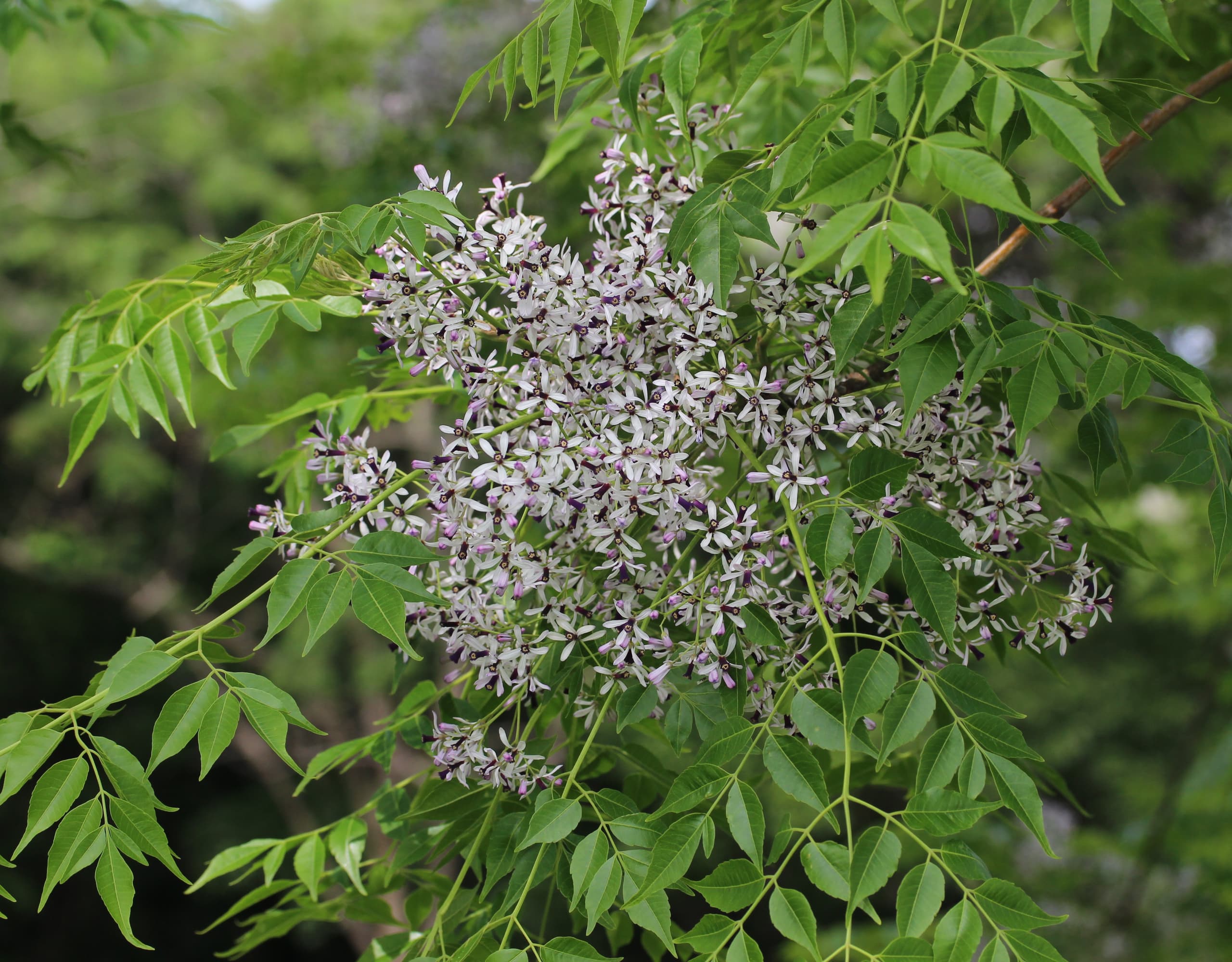
Melia azedarach is a fully grown tree with a rounded crownwhich is 7–12 metres (20–40 feet) tall.The leaves are up to 50 centimetres (20 inches) long, altern...
Melia achidarach · Meliaceae
Melia azedarach is a fully grown tree with a rounded crownwhich is 7–12 metres (20–40 feet) tall.The leaves are up to 50 centimetres (20 inches) long, altern...
Scientific Name
Melia achidarach
Family
Meliaceae
Hindi Name
Bakayan
Used Part
Patra (leaves) , Kand (bark ), Phala (Fruits ),Beej (seeds), Mool ( roots ).
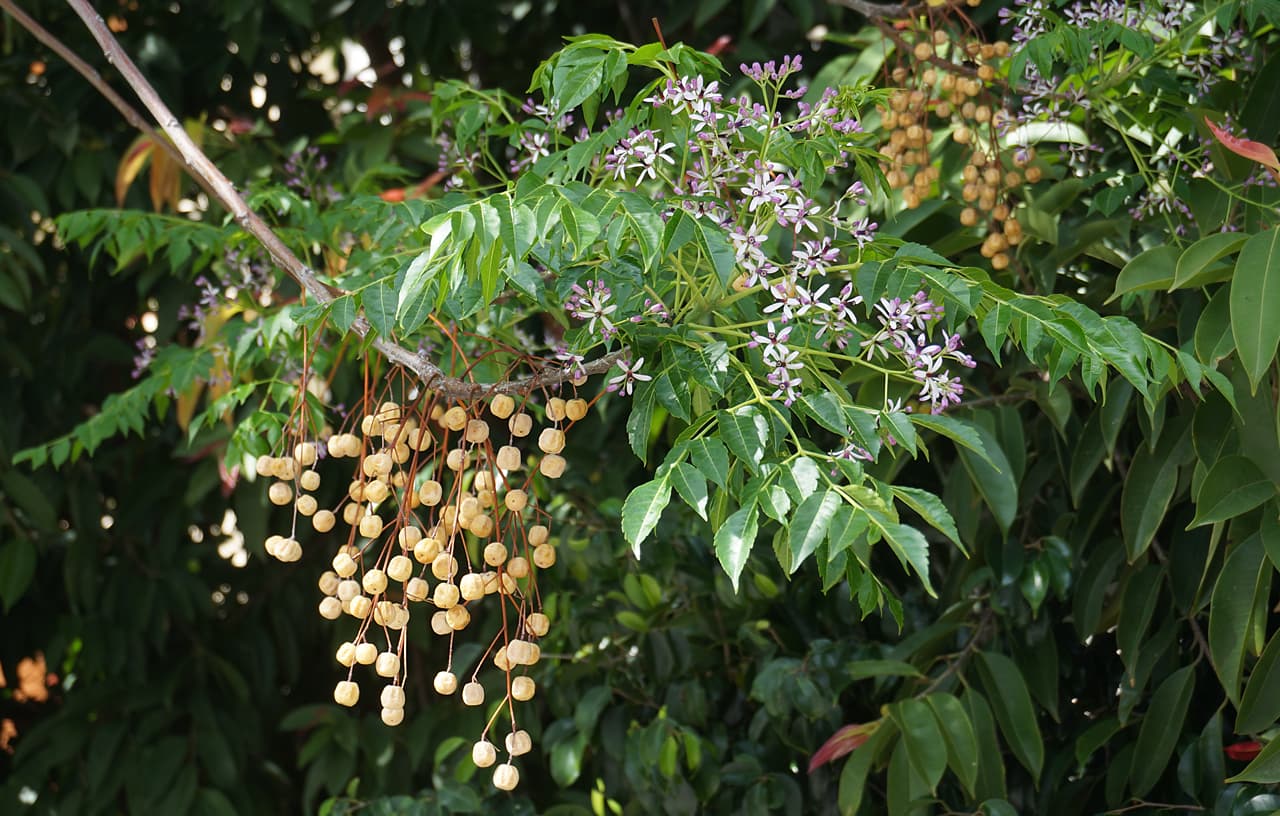
Morphology and field-identification notes as documented in our Dravyaguna library.
Melia azedarach is a fully grown tree with a rounded crownwhich is 7–12 metres (20–40 feet) tall.The leaves are up to 50 centimetres (20 inches) long, alternate, long-petioled, two or three times compound (odd-pinnate) .The leaflets are dark green above and lighter green below, with serrate margins.The flowers are small and fragrant, with five pale purple or lilac petals, growing in clusters.The fruit is a drupe, marble-sized, light yellow at maturity, hanging on the tree all winter, and gradually becoming wrinkled and almost white.
The five-fold framework Ayurveda uses to describe a drug — Rasa, Guna, Vipaka, Veerya and its effect on the doshas.
Tikta, Kashaya
The primary taste perceived on the tongue.
Laghu, Ruksha
Physical and energetic attributes of the dravya.
Katu
Taste that emerges after complete digestion.
Kapha Pitta Shamaka
Effect on Vata, Pitta and Kapha doshas.
Sheeta
Heating (ushna) or cooling (sheeta) energy.
Vishamajvara nasana, Bhrama, Hrillasa, Chardhi, Kushtahara, Rata pitta, Prameha, Swasa, Gulma Mushika visha.
How modern science maps onto the classical understanding of this dravya.
Pharmacological Action
Anti inflamatory, Analgesic, Hepatoprotective.
Phytoconstituents
Leaves contain Azadirachtin, azadirachtanin, azadirone, nimbandiol, nimbin and nimbolide . Stem bark contains nimbin, nimbidin, nimbinin, sitosterol, kulinonea and margosinolide Root bark contains nimbin, nimbidin. Fruits contain Azadirachtin, azadirachtol, azadirachnol, melianone, nimbiol and nimocin . Seed oi contains Tocopherol, azadirone, azadiradione, nimbinin, salannol, nimbin and nimbidin Flowers contain Azadiradione, margosene, linoleic acid and arachidic acid
Classical Ayurvedic indications drawn directly from the Dravyaguna tradition — paired with the preparations recommended in shastra.
01
Leaves are stimulant of liver. Its bark decoction with honey is useful in jaundice, anorexia, vomiting, dysentery, intestinal worms, liver diseases. Ointment prepared from seeds is applied in piles.
02
Leaves are more useful in excessive mucous secretion and chronic cough.
03
Seed powder is used in dysmenorrheal.
Always consult a qualified Ayurvedic physician before using any herb therapeutically. Dose, anupana and Prakriti-specific suitability matter.
Yoga / Kalpana
Common Ayurvedic preparations where Mahanimba is a key ingredient.
Shastra Pramana
महानिम्बो हिमो रूक्षस्तिक्तो ग्राही कषायकः |कफपित्तभ्रमच्छर्दिकुष्ठहृल्लासरक्तजित् |प्रमेहश्वासगुल्मार्शोमूषिकाविषनाशनः ||८६