Rasa (Taste)
Tikta, Madhura, Katu & Kashaya
The primary taste perceived on the tongue.

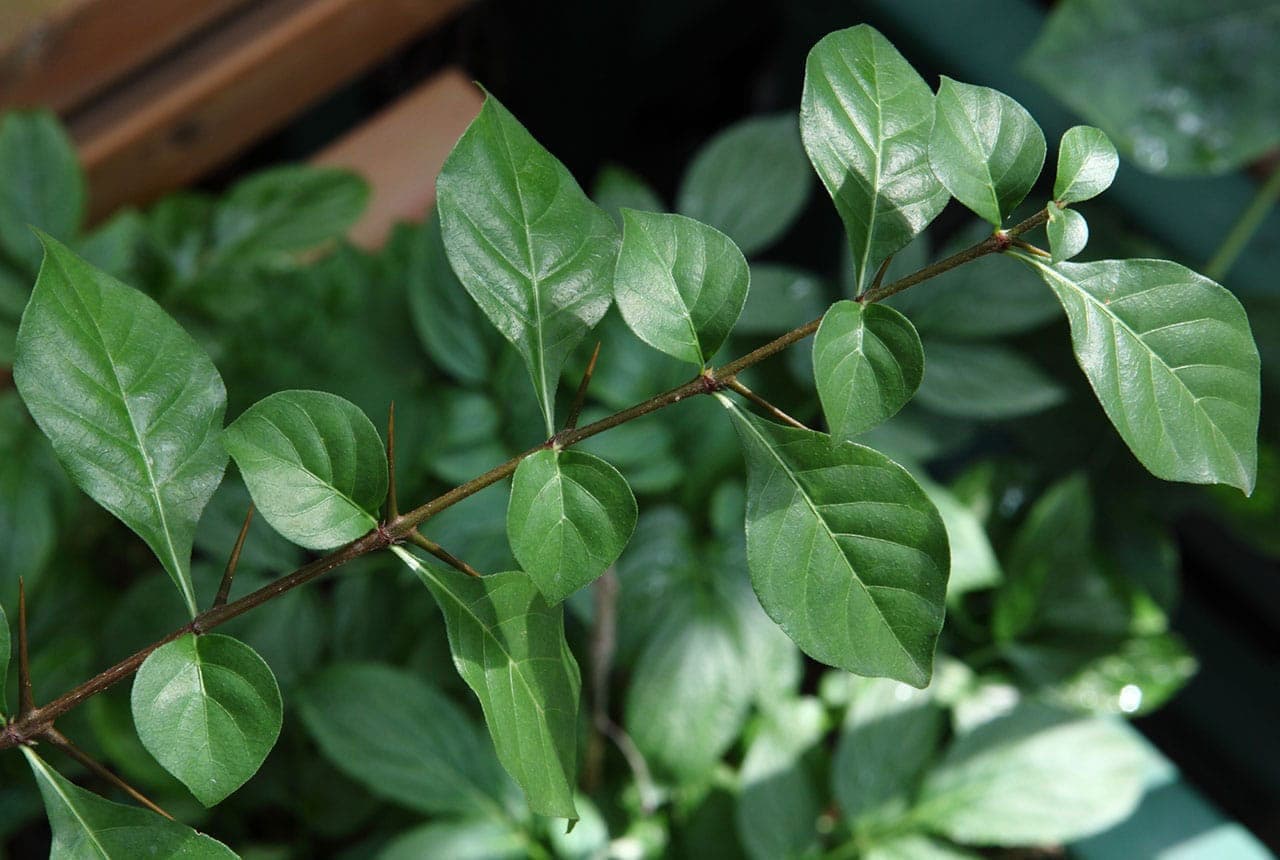
A large shrub or small tree armed with strong, straight, nearly opposite decussate spines 1 to 3 cm long, coming off from above the branchlets.
Randia dumetorum Lamk. · Rubiaceae
A large shrub or small tree armed with strong, straight, nearly opposite decussate spines 1 to 3 cm long, coming off from above the branchlets.
Scientific Name
Randia dumetorum Lamk.
Family
Rubiaceae
Hindi Name
Mainphal
Used Part
Phala (Fruit) & Beeja (Seed) (Seeds are also specifically referred to as Madanapippali).
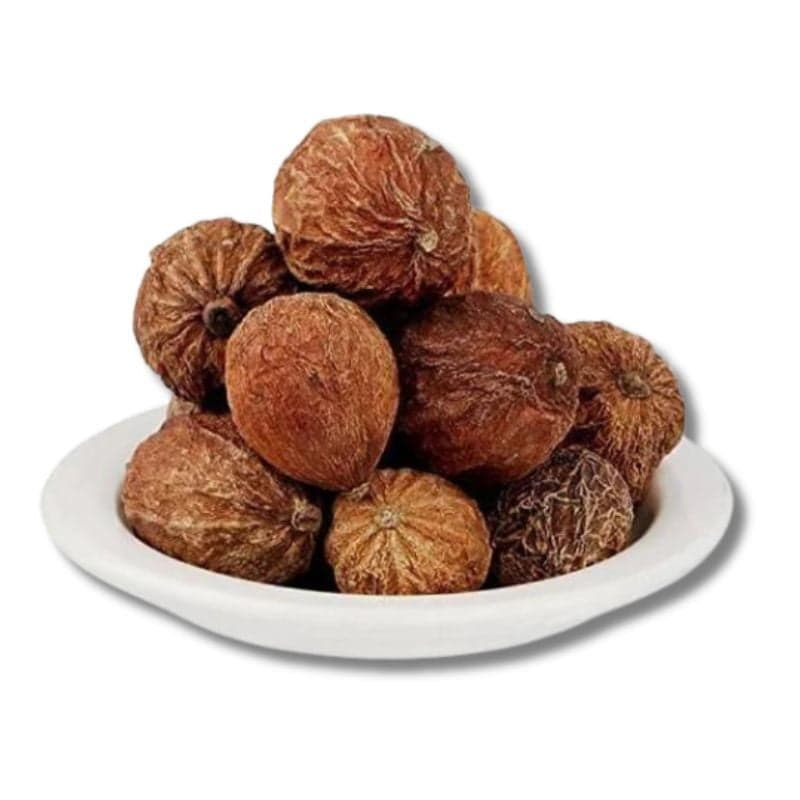
Morphology and field-identification notes as documented in our Dravyaguna library.
A large shrub or small tree armed with strong, straight, nearly opposite decussate spines 1 to 3 cm long, coming off from above the branchlets. Leaves are opposite, 3 to 5 cm long and 2 to 3 cm wide, obovate, obtuse, wrinkled, base is cuneate. Inflorescence solitary and terminal or axillary, Flowers white or yellowish, Fruits berry, globose, ovoid or ellipsoid, seeds often immersed in pulp and angled.
The five-fold framework Ayurveda uses to describe a drug — Rasa, Guna, Vipaka, Veerya and its effect on the doshas.
Tikta, Madhura, Katu & Kashaya
The primary taste perceived on the tongue.
Laghu, Ruksha
Physical and energetic attributes of the dravya.
Katu
Taste that emerges after complete digestion.
Kaphavata Shamaka & Pittanissaraka.
Effect on Vata, Pitta and Kapha doshas.
Ushna
Heating (ushna) or cooling (sheeta) energy.
Vamaka, Lekhana, Vidradhihara, Vranahara, Kushthaghna, Jwarahara, Shophahara. Varaha-Chardana, Pakwashaya Shodhaka, Amashaya Shodhaka. It is considered the best drug to induce emesis (Agrya Karma).
How modern science maps onto the classical understanding of this dravya.
Pharmacological Action
Emetic, Diaphoretic, Anspasmodic, Antiflammatory, Antibacterial, Antifungal, Antiviral
Phytoconstituents
Fruits yield saponins, ursosaponin, essential oil, and 6 saponins named as dumetoronin A, B, C, D, E & F, along with randialic acid-A & randialic acid-B. The pulp contains citric acid, tartaric acid, tannins, pectin, and mucilage.
Classical Ayurvedic indications drawn directly from the Dravyaguna tradition — paired with the preparations recommended in shastra.
01
Vamanartha (To induce emesis): It is considered the best and safest drug for inducing emesis because it does not cause any complications. It is especially administered for shleshma jwara, gulma, and pratishyaya.
02
Jwara (Fever): Madana mixed with Pippali, Indrayava, or Madhuka, if administered with hot water, will induce vomiting and thereby alleviate fever.
03
Parshva Shula (Pain in flanks): Madana kalka (paste) prepared from sour gruel, if applied over the navel, will relieve all kinds of pain, including pain in the flanks.
Always consult a qualified Ayurvedic physician before using any herb therapeutically. Dose, anupana and Prakriti-specific suitability matter.
Yoga / Kalpana
Common Ayurvedic preparations where Madanphala is a key ingredient.
Shastra Pramana
• मदनफलं वमनास्थापनानुवासनोपयोगिनाम् । (च.सू. 25/40) • मदनश्चर्दनः पिण्डो नटः पिण्डीतकस्तथा । करहाटो मरूबकः शल्यको विषपुष्पकः ॥ (भा.प्र. हरीतक्यादि वर्ग 160) •मदनो मधुरस्तिक्तो वीर्योष्णो लेखनो लघुः । वान्तिकृद्विद्रधिहरः प्रतिश्यायव्रणान्तकः ॥ रूक्षः कुष्ठकफानाहशोथगुल्मन्त्रणापहः ।। (भा.प्र. हरीतक्यादि वर्ग 161) • वमन द्रव्याणां मदनफलानि श्रेष्ठतमन्याचक्षते, अनपायित्वात् ॥ (च.चि.क. 1/13)