Rasa (Taste)
Tikta ,Katu
The primary taste perceived on the tongue.

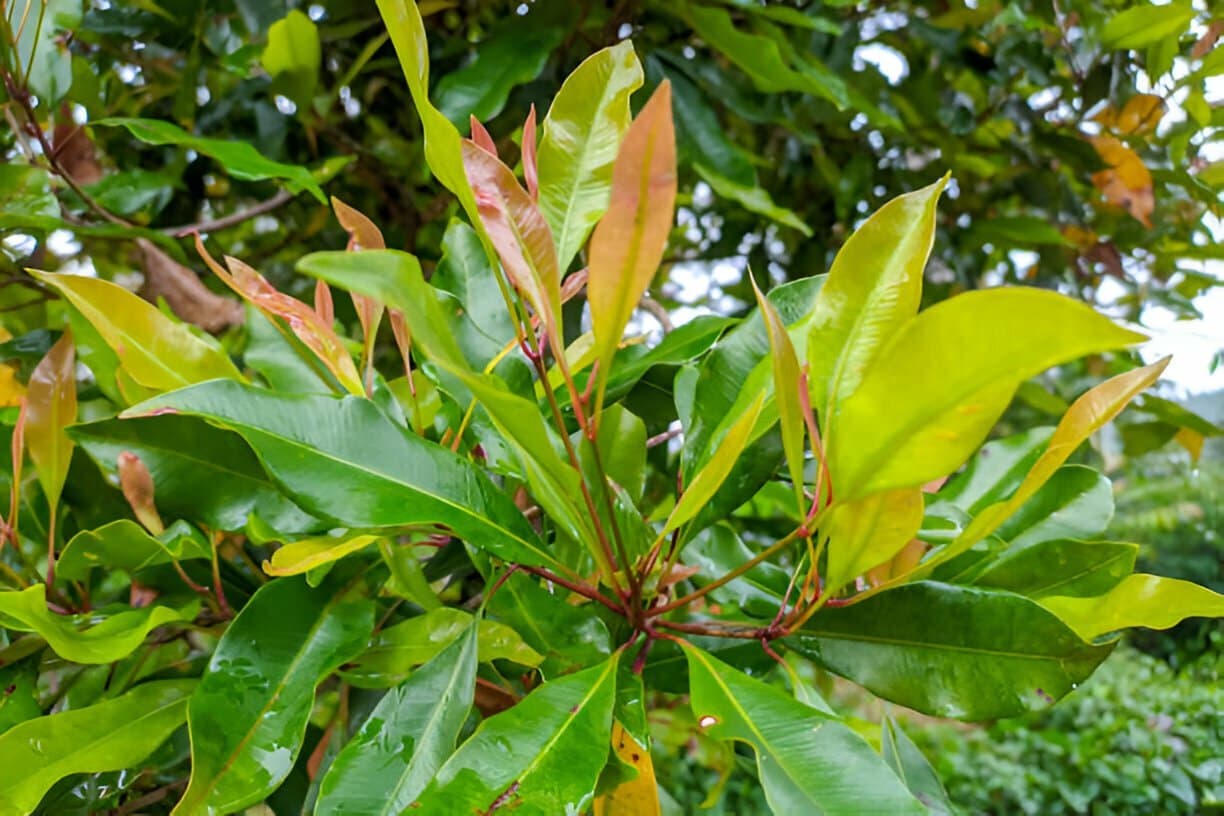
Lavanga is a medium- sized crown, bushy, evergreen tree growing up to 8-20 meters in height.
Syzigium aromaticum · Myrtaceae
Lavanga is a medium- sized crown, bushy, evergreen tree growing up to 8-20 meters in height.
Scientific Name
Syzigium aromaticum
Family
Myrtaceae
Hindi Name
Laung
Used Part
Pushpa (Flower Bud )
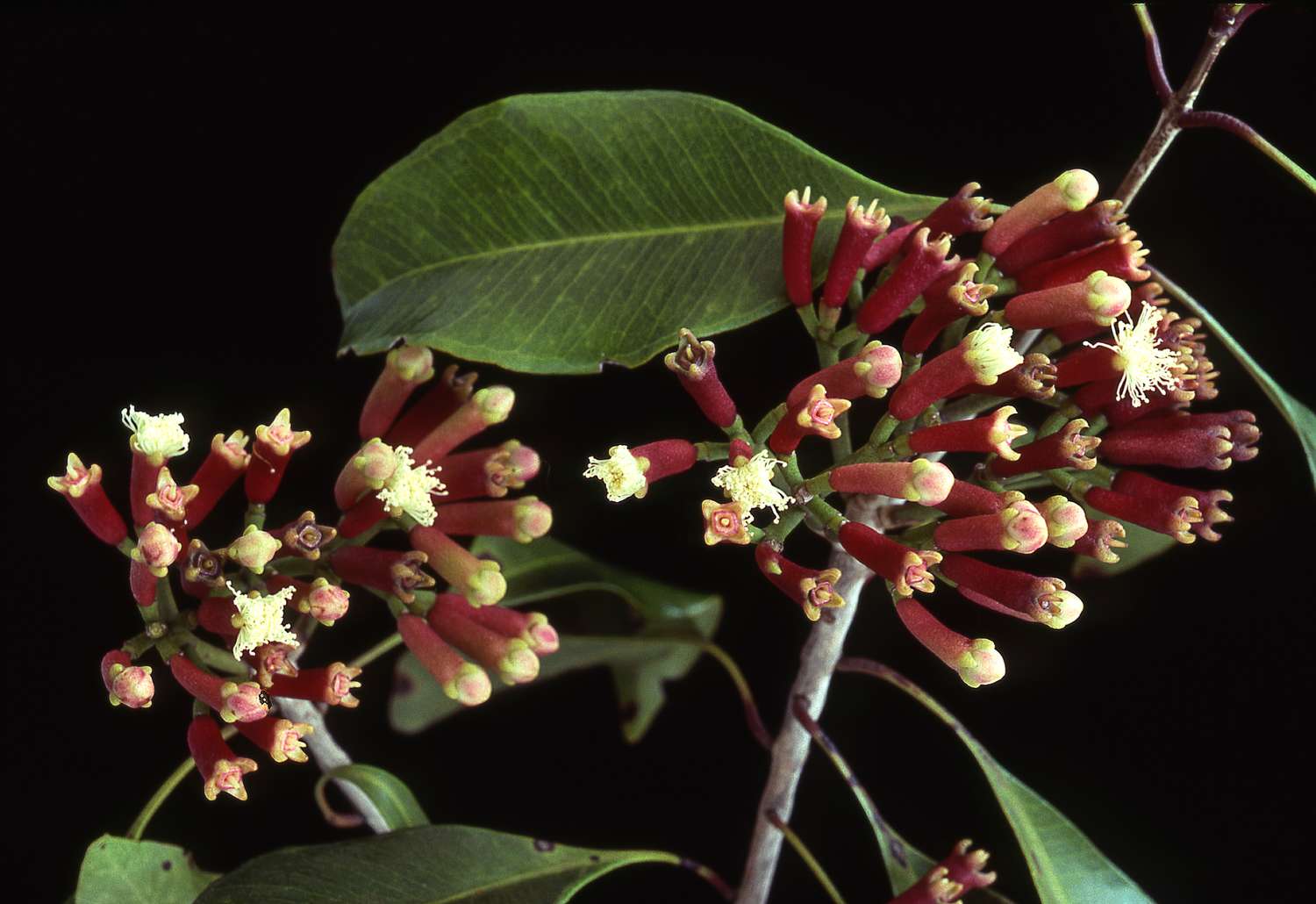
Morphology and field-identification notes as documented in our Dravyaguna library.
Lavanga is a medium- sized crown, bushy, evergreen tree
growing up to 8-20 meters in height. Leaves are simple, bright
green and glossy. The lower surface of the leaves is covered in aromatic oil glands.
Elliptical leaves with petioles can grow up to 13cm long along numerous short branches.
Flowers are present in small clusters. Flower buds in the starting are pale with a glossy,
fleshy appearance, turning green and become bright red as they turn mature. They
consist of long, narrow ovary which is approximately 1.5-2.0 cm in length with four small
triangular sepals protruding outwards at one end.
The five-fold framework Ayurveda uses to describe a drug — Rasa, Guna, Vipaka, Veerya and its effect on the doshas.
Tikta ,Katu
The primary taste perceived on the tongue.
Laghu,Snigdha
Physical and energetic attributes of the dravya.
Katu
Taste that emerges after complete digestion.
Kapha pitta Shamaka
Effect on Vata, Pitta and Kapha doshas.
Sheeta
Heating (ushna) or cooling (sheeta) energy.
Kasahar,Shwashara,Dipana,Pachan,Netra,Ruchya
How modern science maps onto the classical understanding of this dravya.
Pharmacological Action
Dental analgesic, Carminative, Stimulant, Aromatic, Antispetic, Appetizer, Diges- tive, Aphrodisiac
Phytoconstituents
Eugenol which adds up to 70 to 90% of the clove essential oil constituent. Other major phytochemical constituents are beta caryophyllene, methyl salicylate, kaempferol, acetyl eugenol, triterpenoids, gallotannic acid, rhamnetin, vanillin and eugenin.
Classical Ayurvedic indications drawn directly from the Dravyaguna tradition — paired with the preparations recommended in shastra.
01
To cleanse mouth one can keep flower buds of Lavanga in mouth. It also acts as mouth freshner and improves taste sensation.
02
Paste prepared from Lavanga with water is applied over the site of pain. It relieves pain.
Always consult a qualified Ayurvedic physician before using any herb therapeutically. Dose, anupana and Prakriti-specific suitability matter.
Yoga / Kalpana
Common Ayurvedic preparations where Lavang is a key ingredient.
Shastra Pramana
लवनं कटुकं तिक्तं लघु नेत्रहितं हिमम् । दीपन पाचन रुच्यं कफपित्तात्रनाशकृत् ॥ तृष्णां छर्दि तथाऽध्मानं शूलमाशु विनाशयेत् । कासं श्वासं च हिक्काञ्च क्षयं क्षपयति धुवम् ॥ (भा.प्र. कर्पूरादि वर्ग 58-59)