Ishan Ayurvedic Medical College & Research Centre
Kutaki (Hellebore)

Kutaki (Hellebore)

Kutaki is a perennial, more or less hairy herb, globally distributed in the Himalayan range across Pakistan, India and Nepal.

Medicinal Plant

Kutaki (Hellebore)

Kutaki is a perennial, more or less hairy herb, globally distributed in the Himalayan range across Pakistan, India and Nepal.

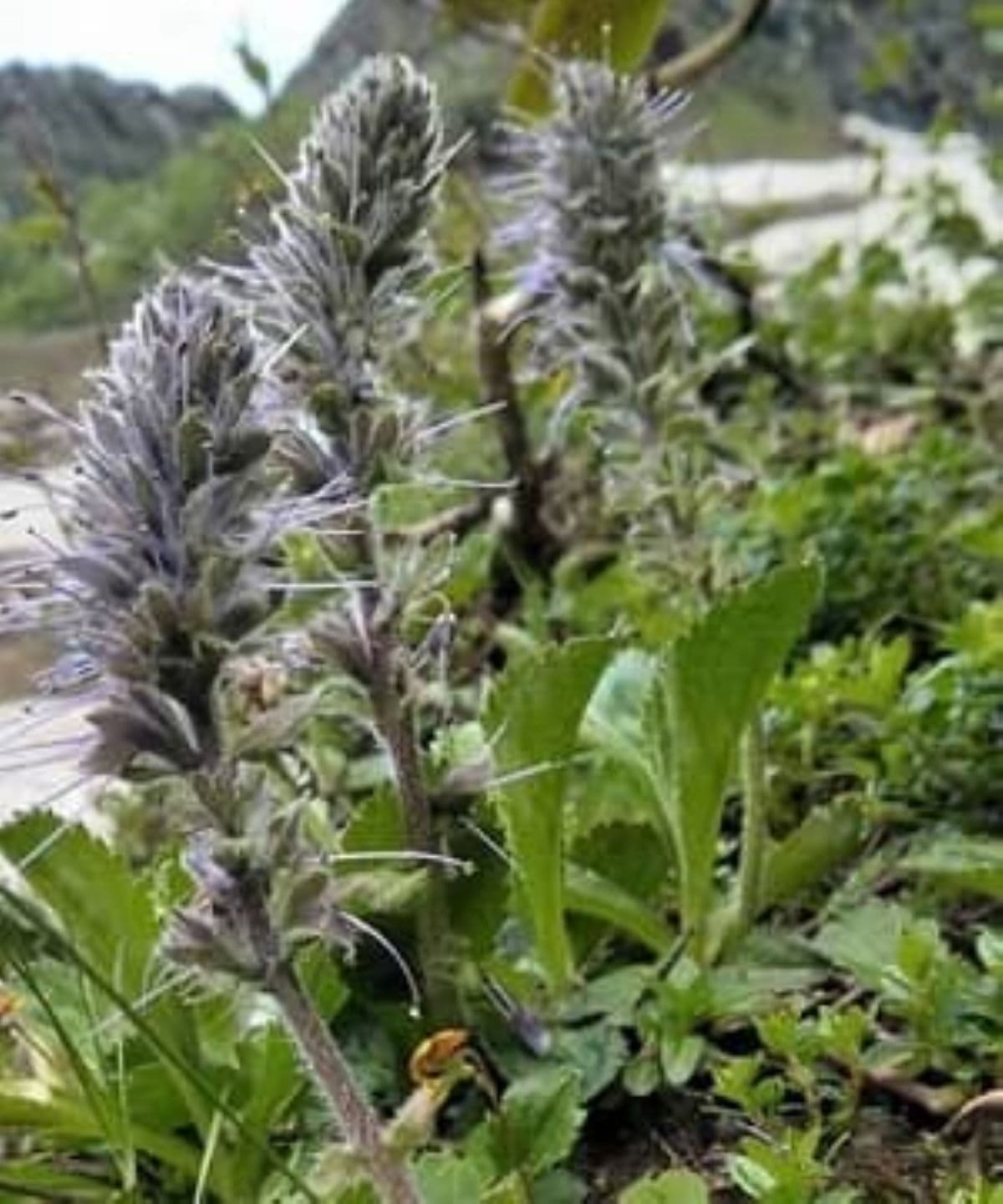
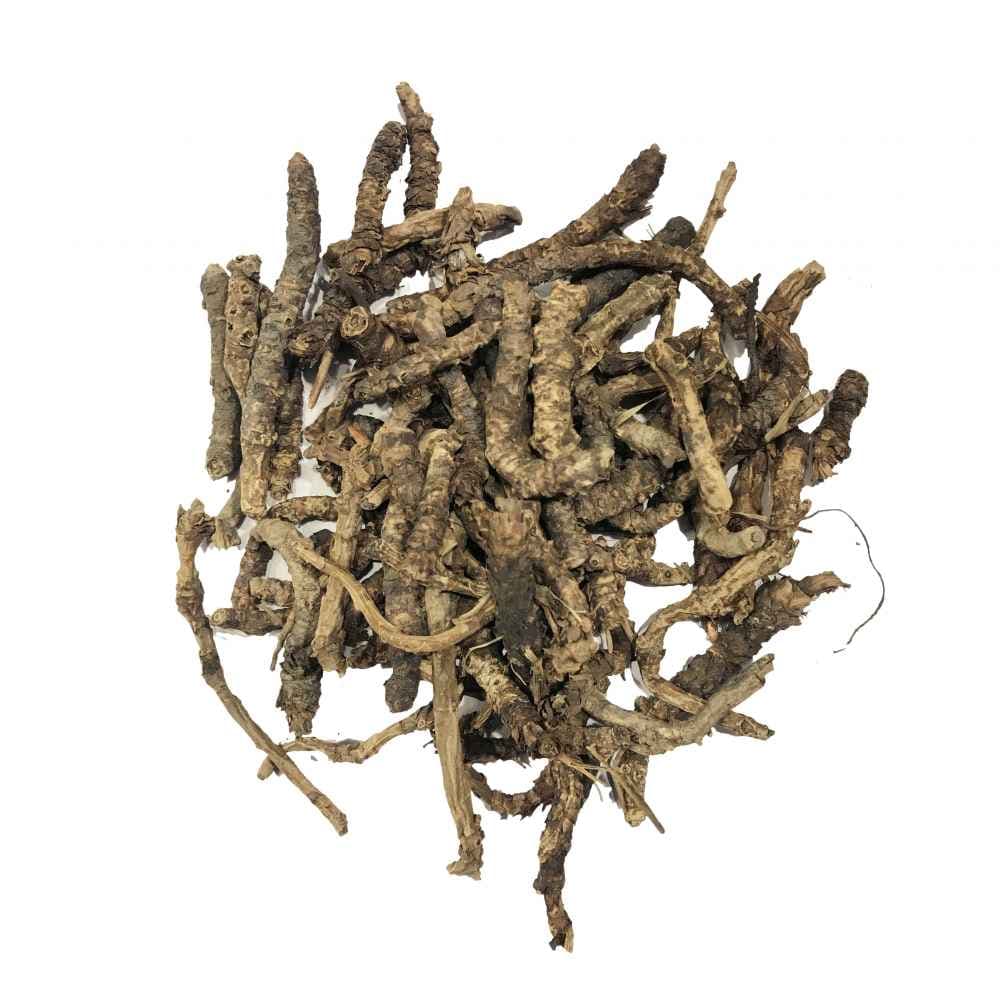
Kutaki is a perennial, more or less hairy herb, globally distributed in the Himalayan range across Pakistan, India and Nepal. Within India, it is found in the alpine Himalayas of Jammu & Kashmir, Himachal Pradesh, Uttarakhand and Sikkim between an altitude range of 3300-4300 m. Leaves are coarsely toothed 5–15 cm long. Rhizome are 2.5-8 cm long and 4-8 mm thick, subcylindrical, straight or slightly curved, externally greyish-brown, surface rough due to longitudinal wrinklesat places cork exfoliates exposing dark cortex; fracture, short; odour, pleasant; taste, bitter. Root are thin, cylindrical, 5-10 cm long, 0.05-0.1 cm in diameter, straight or slightly curved with a few longitudinal wrinkles and dotted scars, mostly attached with rhizomes. Flowers are about small 8 mm, 5-lobed to the middle, and with much longer stamens pale or purplish blue, borne in cylindric spikes.Fruits are about 1.3 cm long.

Scientific Name

Picrorhizakurroa

Family

Plantaginaceae

Common Name

Hellebore

Kutaki
Kutuki medicinal plant
Botanical Description

About the Kutaki Plant

Kutaki is a perennial, more or less hairy herb, globally distributed in the Himalayan range across Pakistan, India and Nepal. Within India, it is found in the alpine Himalayas of Jammu & Kashmir, Himachal Pradesh, Uttarakhand and Sikkim between an altitude range of 3300-4300 m. Leaves are coarsely toothed 5–15 cm long. Rhizome are 2.5-8 cm long and 4-8 mm thick, subcylindrical, straight or slightly curved, externally greyish-brown, surface rough due to longitudinal wrinklesat places cork exfoliates exposing dark cortex; fracture, short; odour, pleasant; taste, bitter. Root are thin, cylindrical, 5-10 cm long, 0.05-0.1 cm in diameter, straight or slightly curved with a few longitudinal wrinkles and dotted scars, mostly attached with rhizomes. Flowers are about small 8 mm, 5-lobed to the middle, and with much longer stamens pale or purplish blue, borne in cylindric spikes.Fruits are about 1.3 cm long.

Ayurvedic Properties

Rasa · Guna · Virya · Vipaka

It balances Kappha& Pitta dosha.

Rasa

Rasa

Tikta

Tikta

Guna

Guna

Ruksha , Laghu

Ruksha , Laghu

Virya

Virya

Sheet

Sheet

Vipaka

Vipaka

Katu

Katu

Chemical Composition

Phytochemical Constituents

The chemical constituents of 70% hydroalcoholic fraction of Picrorhizakurroa by LC–ESI–MS/MS which showed the presence of iridoid glucosides such as picroside I, picroside II, picroside III, picroside IV, kutkoside, pikuroside and flavonoids like apocynin and vanillic acid. P. kurroa exhibited DPPH radical scavenging and metal chelating activities with IC50 of 75.16 ± 3.2 and 55.5 ± 4.8 μg/mL and also showed potent reducing power and total antioxidant activities. The extract inhibited macromolecule damage such as H2O2 induced plasmid DNA damage and AAPH induced oxidation of bovine serum albumin and lipid production of rat hepatic tissues.

Health Benefits

Therapeutic Benefits of Kutaki

From classical Ayurvedic indications to modern phytotherapeutic insights — explore the spectrum of wellness benefits this herb has to offer.

01

For diabetes

02

Blood sugar levels in diabetes are high that cause damage to the eyes, bones, heart and other organs. A study by Joy et al. in 1999 on rats showed that extracts from kutki can lower blood sugar levels. It also showed that it could reduce the damage caused by a chemical called alloxan in diabetes, which may prevent further complications of diabetes. The study proves that kutki extracts might be helpful for people with diabetes.

03

For obesity

04

Obesity is an inflammatory and metabolic disorder that occurs due to excess accumulation of fat in the body tissue that releases various inflammatory mediators that can cause cellular damage. A study by Almeleebia et al. in 2022 showed that the root extracts of kutki can reduce the levels of inflammatory mediators involved in inflammatory processes.

05

In cancer

06

Cancer is the second leading cause of death worldwide. found that kutki extracts are rich in flavonoids, phenolic acids, and antioxidants that can stimulate the cell death process in cancerous cells of the breast, liver, and prostate cancer.

07

For stomach ulcers

08

When stomach or intestinal linings get damaged because of the acid present, it causes stomach or intestinal ulcers. A study by Almeleebia et al. in 2022 showed that kutki root extracts have a protective effect on the stomach. It can reduce ulcers caused by a medicine named Indomethacin. The extract promotes mucus formation, which protects the stomach and intestinal lining from ulcer formation. It also lowers the production of chemicals involved in ulcer formation. The study shows that kutki might help those struggling with ulcers.

09

Kutki can be used in the following ways

Kutki roots, stems, and leaves extracts can be used in the form of capsules, powder, ‘churna’, decoction, infusions and confections to manage various ailments.1

10

It is used as an astringent and applied on the skin in case of minor abrasions.1

11

It can be used as an appetizer.

12

Decoction of kutki with honey or kutki powder with sugar is used to treat jaundice in ayurveda.