Rasa (Taste)
Tikta, Madhura
The primary taste perceived on the tongue.

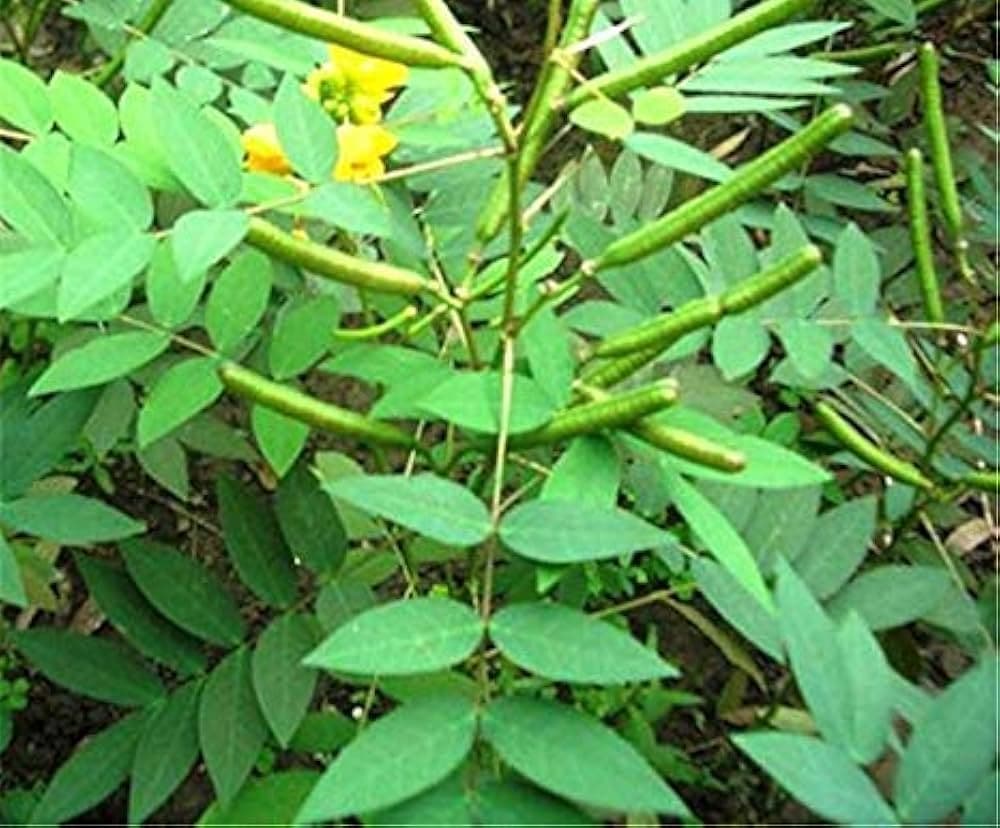
The plant is a one to two meters tall shrub with a slender, erect stem and pointed leaves consisting of 3 to 7 pairs of leaflets.
Cassia occidentalis · Fabaceae
The plant is a one to two meters tall shrub with a slender, erect stem and pointed leaves consisting of 3 to 7 pairs of leaflets.
Scientific Name
Cassia occidentalis
Family
Fabaceae
Hindi Name
Kasondi
Used Part
Root, Seed, Leaf
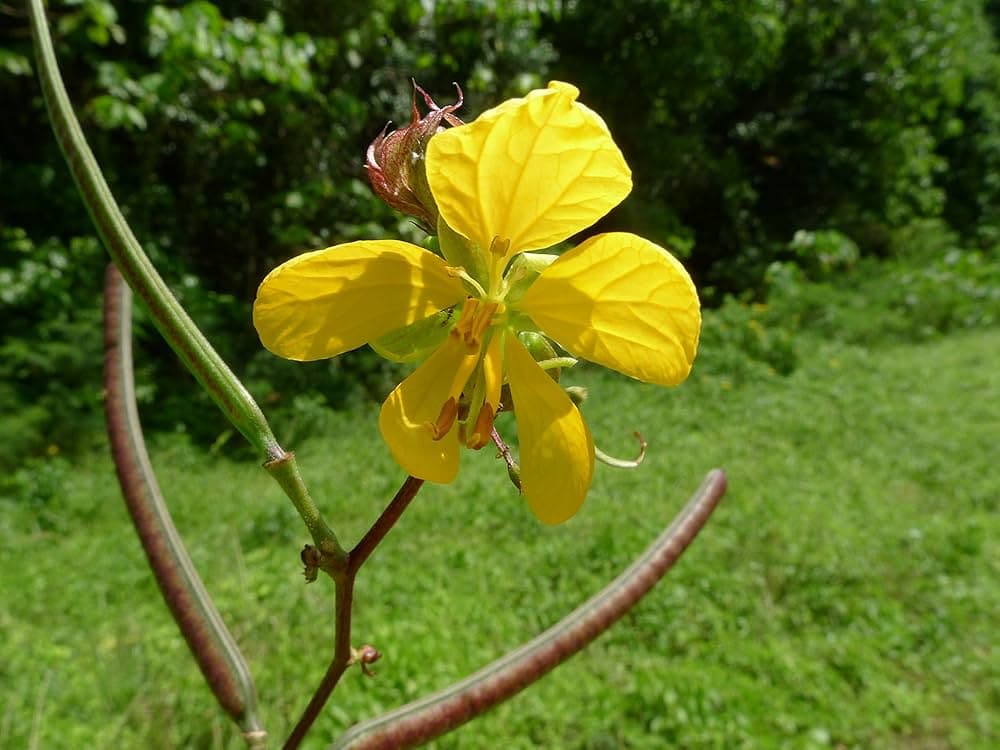
Morphology and field-identification notes as documented in our Dravyaguna library.
The plant is a one to two meters tall shrub with a slender, erect stem and pointed leaves
consisting of 3 to 7 pairs of leaflets. Since the plant oozes a strong unpleasant odour, it
is pretty easy to identify kasmard even from a distance. The plant has various beneficial
properties and has been traditionally used as a laxative and a diuretic agent. It has also
been used to treat piles, fever, snake bites, and various venereal diseases.
The five-fold framework Ayurveda uses to describe a drug — Rasa, Guna, Vipaka, Veerya and its effect on the doshas.
Tikta, Madhura
The primary taste perceived on the tongue.
Laghu, Ruksha
Physical and energetic attributes of the dravya.
Katu
Taste that emerges after complete digestion.
Tridoshahara
Effect on Vata, Pitta and Kapha doshas.
Ushna
Heating (ushna) or cooling (sheeta) energy.
Shwasahara(anti-asthmetic), Kasahara (anti-cough), Vrushya (aphrodisiac), Pachana (digestive)
How modern science maps onto the classical understanding of this dravya.
Pharmacological Action
Anti-inflammatory, Anti-microbial, and Antiseptic.
Phytoconstituents
Anthraquinone, Glucoside, Barbaloin, Aloin, Formic acid, Butyric acid, Ceryl alcohol, Kaempferol, Bianthraquinone, Glycoside, Fistulin, Rhein, Sennosides A and B.
Classical Ayurvedic indications drawn directly from the Dravyaguna tradition — paired with the preparations recommended in shastra.
01
Kasmard helps manage Asthma due to its balancing properties. These properties
02
remove obstruction in the respiratory pathways, thus making breathing easier.
03
Kasmard helps manage skin infections and heals all
04
skin problems due to its pitta balancing properties.
05
Bark infusion of kasmard is used to keep control of insulin levels.
06
The paste of Kasmarda leaf is applied topically to get rid of scabies skin disease that can be
07
very discomforting and itchy.
08
Due to its antipyretic property, kasmard roots help to lower the body temperature and
09
provide relief from intermittent fever.
Always consult a qualified Ayurvedic physician before using any herb therapeutically. Dose, anupana and Prakriti-specific suitability matter.
Yoga / Kalpana
Common Ayurvedic preparations where Kasmarda is a key ingredient.
Shastra Pramana
कासमर्दः कटुस्तिक्तः स्वादुपाकोऽनिलापहः ।कफघ्नः पाचनः कण्ठ्यः विशेषेण कफापहः ॥(भा० प्र० नि०, गुडूच्यादिवर्ग, श्लोक ४१)