Rasa (Taste)
Tikta, Kashaya
The primary taste perceived on the tongue.

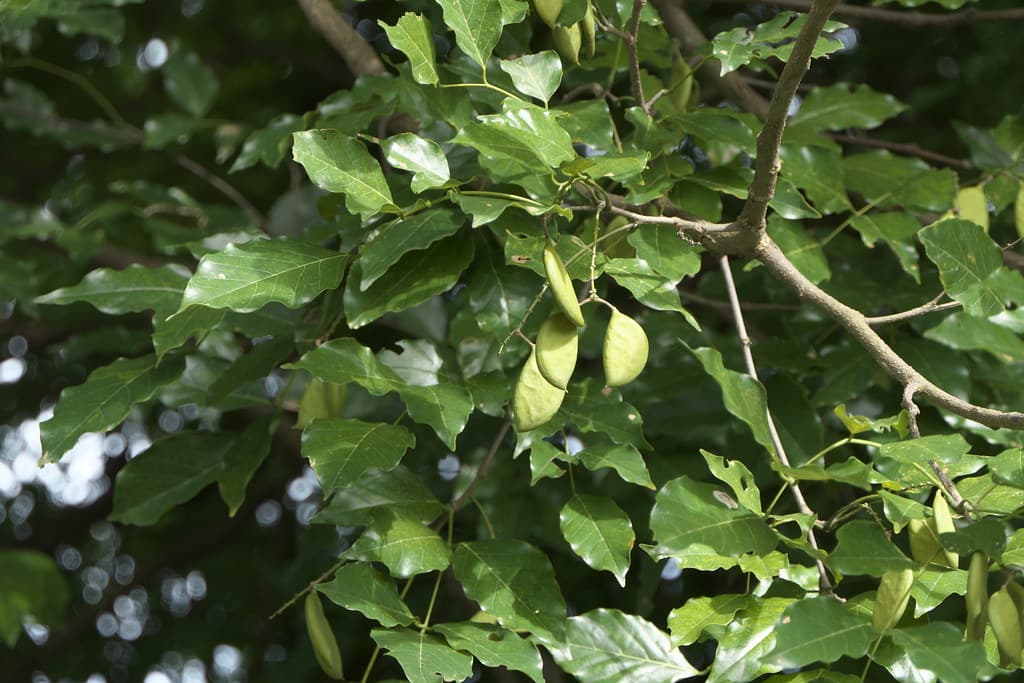
Karanja is a medium-sized deciduous tree widely distributed throughout India.
Pongamia pinnata (L.) Pierre · Fabaceae
Karanja is a medium-sized deciduous tree widely distributed throughout India.
Scientific Name
Pongamia pinnata (L.) Pierre
Family
Fabaceae
Hindi Name
Karanja
Used Part
Seeds, Leaves, Bark, Roots, and Oil.
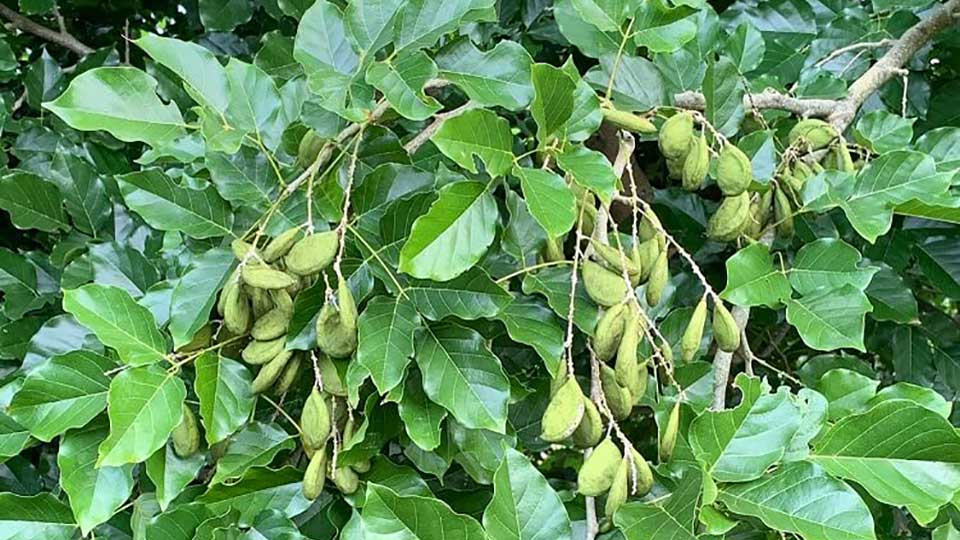
Morphology and field-identification notes as documented in our Dravyaguna library.
Karanja is a medium-sized deciduous tree widely distributed throughout India.
The tree grows up to 15–20 meters in height with a broad crown and smooth grey-brown bark.
Leaves are imparipinnate, shiny green, and oval in shape.
Flowers are small, fragrant, pinkish-white to lavender in color and appear in clusters.
Fruits are flat pods containing one or two seeds.
Seeds contain Karanja oil which is commonly used in traditional medicine and agriculture.
The five-fold framework Ayurveda uses to describe a drug — Rasa, Guna, Vipaka, Veerya and its effect on the doshas.
Tikta, Kashaya
The primary taste perceived on the tongue.
Laghu, Tikshna
Physical and energetic attributes of the dravya.
Katu
Taste that emerges after complete digestion.
Kapha-Vata Shamaka
Effect on Vata, Pitta and Kapha doshas.
Ushna
Heating (ushna) or cooling (sheeta) energy.
Kandughna, Krimighna, Kushtaghna, Vedanasthapana, Shothahara, Vrana Shodhana, and Deepana.
How modern science maps onto the classical understanding of this dravya.
Pharmacological Action
Anti-inflammatory, Antimicrobial, Antifungal, Antioxidant, Antidiabetic, Wound-healing, and Insecticidal properties.
Phytoconstituents
Karanja contains flavonoids such as karanjin, pongamol, fixed oils, tannins and glycosides.
Classical Ayurvedic indications drawn directly from the Dravyaguna tradition — paired with the preparations recommended in shastra.
01
Karanja oil is applied externally in skin diseases such as eczema and scabies.
02
Leaf paste is used for wound healing and reducing inflammation.
03
Seed oil is traditionally used in fungal infections.
04
Bark decoction is used in piles and digestive disorders.
05
Karanja preparations are also used in agriculture as a natural pesticide.
Always consult a qualified Ayurvedic physician before using any herb therapeutically. Dose, anupana and Prakriti-specific suitability matter.
Yoga / Kalpana
Common Ayurvedic preparations where Karanja is a key ingredient.
Shastra Pramana
करञ्जः कटुकस्तीचणो वीर्योप्णो योनिदोषहृत् । कुष्ठोदावर्त्तगुश्मार्शोंत्रणक्रिमिक फापहा ॥ तत्पत्रं कफवातार्शः कृमिशोथहरं परम् । भेदनं कटुकं पाके वीर्योष्णं पित्तलं लघु ।। तत्फलं कफवातध्नं मेहार्शः कृमिकुष्ठजित्।' (भा. प्र.)