Rasa (Taste)
Katu,Tikta
The primary taste perceived on the tongue.

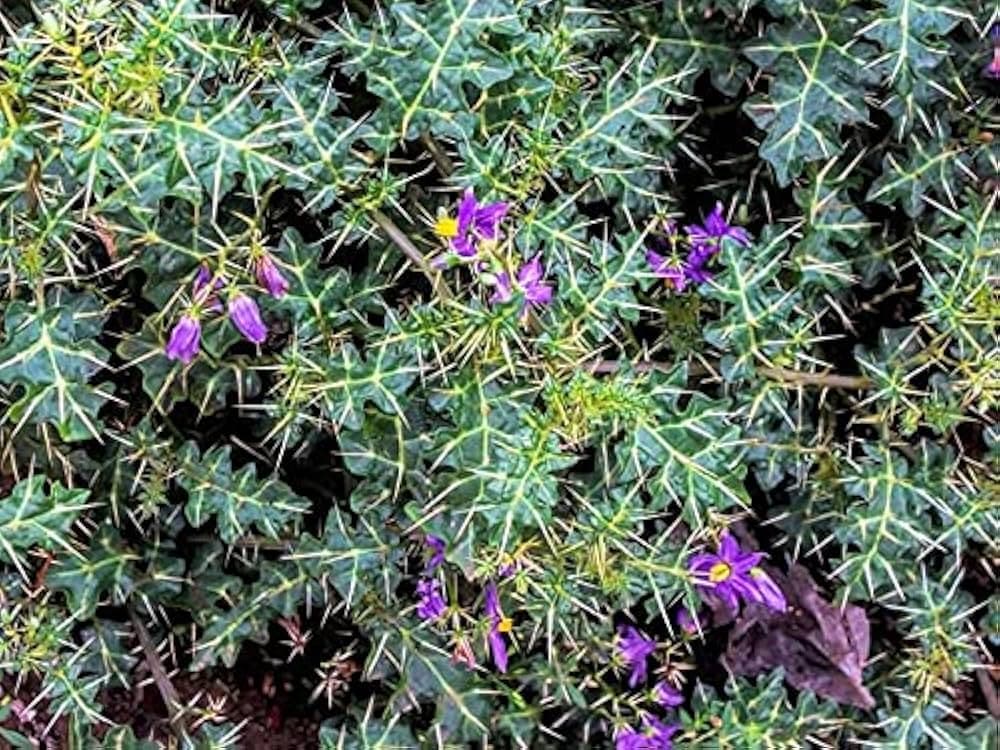
A prickly, diffuse perennial undershrub, woody at base, with zig zag branches.
Solanum xanthocarpum · Solanaceae
A prickly, diffuse perennial undershrub, woody at base, with zig zag branches.
Scientific Name
Solanum xanthocarpum
Family
Solanaceae
Hindi Name
Choti Kateri
Used Part
Whole plant, Fruit, Root.
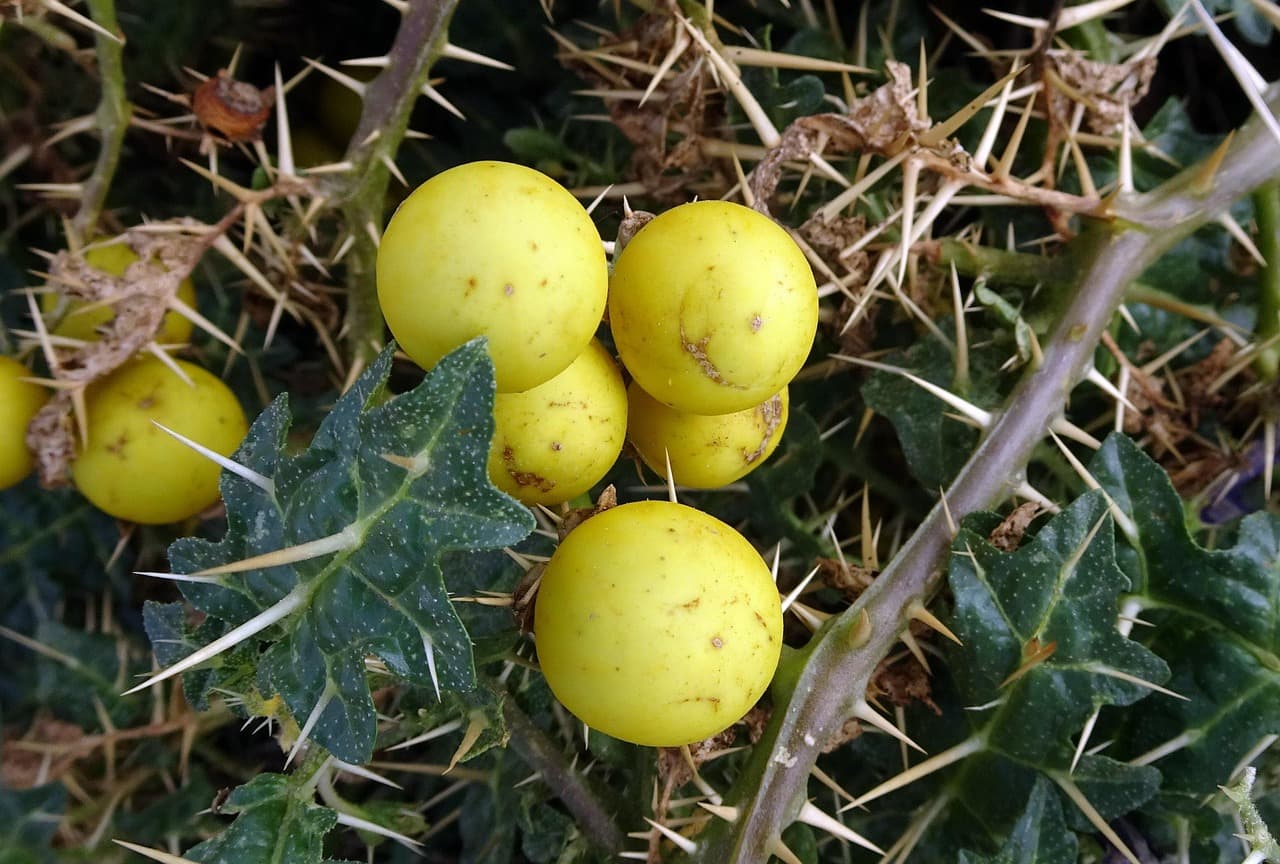
Morphology and field-identification notes as documented in our Dravyaguna library.
A prickly, diffuse perennial undershrub, woody at base, with zig zag branches. Leaves— Ovate or elliptic sinuate or subpinnatified glabrescent, with straight spines, armed on midrib and the nerves with long yellow sharp prickles. Flowers— in few flowered lateral cymes.
The five-fold framework Ayurveda uses to describe a drug — Rasa, Guna, Vipaka, Veerya and its effect on the doshas.
Katu,Tikta
The primary taste perceived on the tongue.
Laghu, Ruksha, Tikshna.
Physical and energetic attributes of the dravya.
Katu
Taste that emerges after complete digestion.
Balances Kapha Vata
Effect on Vata, Pitta and Kapha doshas.
Ushna
Heating (ushna) or cooling (sheeta) energy.
Aruchihara, Jvarahara, Vatahara, Amadoshahara, Kanduhara, Kushtahara, Krumighna, Rechana, Agnikrut, Medahara .
How modern science maps onto the classical understanding of this dravya.
Pharmacological Action
Antibacterial and Antioxidant properties. .
Phytoconstituents
B-Carotene, Disgenin, Solasodine, Solamargine, Solanine.
Classical Ayurvedic indications drawn directly from the Dravyaguna tradition — paired with the preparations recommended in shastra.
01
Fresh plant juice is used to relieve dandruff and to promote hair growth.
02
The juice extract of Kantakari along with honey is used in treating dysuria (difficulty in urination).
Always consult a qualified Ayurvedic physician before using any herb therapeutically. Dose, anupana and Prakriti-specific suitability matter.
Yoga / Kalpana
Common Ayurvedic preparations where Kantakari is a key ingredient.
Shastra Pramana
निदग्धिकारसे वापि सक्षौद्र कृच्छ्रनाशनः। (सोढल) कासे निदिग्धिका । (अ.ह.उ ४०/५६) कण्टकारी कटुस्तिक्ता तथोष्णा श्वासकासजित् । अरुचिज्वरवातामदोषहृत् गदनाशिनी ॥ (ध.नि) कण्टकारीद्वयं वातामकफकासजित् । क्षुद्रिकायाः फलं कटु तिक्तं ज्वरापहम् ॥ कण्डूकुष्ट कृमिघ्नश्च कफवातहररन्तथा। (ध.नि) कण्टकारी सरा तिक्ता कटुका दीपनी लघुः ॥ रुक्षोष्णा पाचनी कासश्वास ज्वरकफानिलान् । निहन्ति पीनसं पार्श्व पीडाकृमिहृदामयान् ॥ (भा.प्र) तयोः फलं कटु रसे पाके च कटुकं भवेत्। शुक्रस्य रेचनं भेदि तिक्त पित्ताग्निकृल्लुघु॥ हन्यात्कफ मरुत्कण्डू कासमेदः कृमिज्वरान् ॥ (भा.प्र) वार्ताकी कटुका रुच्या मदुरा पित्तनाशिनि । बलुपुष्टिकरी हृद्या गुरुर्वातेषु निन्दिता । (र.नि)