Rasa (Taste)
Kashaya
The primary taste perceived on the tongue.

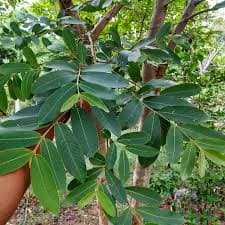
A large tree with a huge trunk and horizontally spreading branches.Bark is Smooth, Gray ,Sap wood is reddish white and heart wood is brown.
Terminalia arjuna (Roxb) W &A · Combretaceae
A large tree with a huge trunk and horizontally spreading branches.Bark is Smooth, Gray ,Sap wood is reddish white and heart wood is brown.
Scientific Name
Terminalia arjuna (Roxb) W &A
Family
Combretaceae
Hindi Name
Arjuna
Used Part
Twaka (Bark)
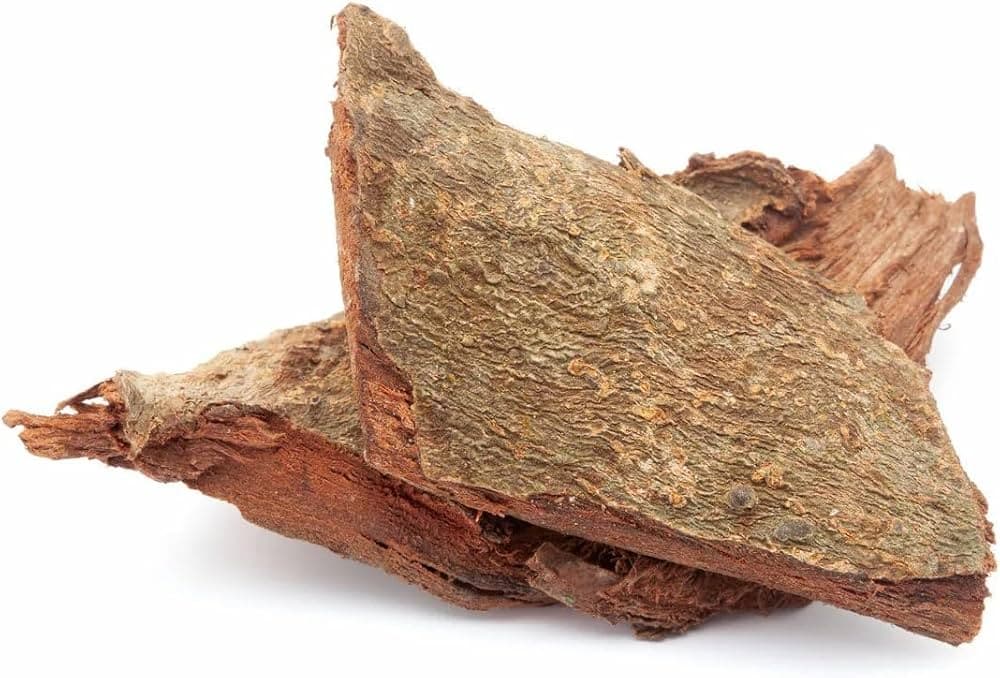
Morphology and field-identification notes as documented in our Dravyaguna library.
A large tree with a huge trunk and horizontally spreading branches.Bark is Smooth, Gray ,Sap wood is reddish white and heart wood is brown. Leaves are Sub-opposite, 10-15 cm long, 4-7 cm wide, oblong ,subacute,reticulate venation. Petiole is 0.5 to 1 cm long, with 1 or usually 2 prominent glands at the top immediately below the leaves.Inflorescence Short axillary spikes or termi-nal panicles. Fruit is Drupe, 2.5-5 cm in diameter, ovoid or obovoid-oblong, fibrous, woody, glabrous, dark brown with 5 hard projecting wings.
The five-fold framework Ayurveda uses to describe a drug — Rasa, Guna, Vipaka, Veerya and its effect on the doshas.
Kashaya
The primary taste perceived on the tongue.
Laghu,Ruksha
Physical and energetic attributes of the dravya.
Katu
Taste that emerges after complete digestion.
Kaphapitta shamaka
Effect on Vata, Pitta and Kapha doshas.
Sheeta
Heating (ushna) or cooling (sheeta) energy.
Hridya , Vranahara , Artighna , Bhagna sandhanakara , Raktapittahara
How modern science maps onto the classical understanding of this dravya.
Pharmacological Action
Cardiotonic , Antidysenteric , Diuretic , Antihypertensive
Phytoconstituents
Hydrolysable tannis (15%), Triterpenoid saponin , Arjunolic acid , g-sitosterol ,Arjunic acid , Arjunine , Arjunetinc ,Calcium , Aluminium and Magnesium.
Classical Ayurvedic indications drawn directly from the Dravyaguna tradition — paired with the preparations recommended in shastra.
01
Arjuna and Godhum are mixed together and cooked with oil, ghee, jaggery and milk. This is beneficial in Cardiac disorders.
02
The decoction of Arjuna is very useful in Shukrameha (Spermaturia).
03
Application of Kalka prepared from Arjuna twak and honey is useful in Vyanga (Skin problem).
04
Powder of Arjuna , Laksha and Guggulu mixed with ghee and taken internally, which promotes union in fracture. During this treatment patient should be on milk diet.
05
Managing cardiovascular diseases like high blood pressure and cholesterol.
Always consult a qualified Ayurvedic physician before using any herb therapeutically. Dose, anupana and Prakriti-specific suitability matter.
Yoga / Kalpana
Common Ayurvedic preparations where Arjuna is a key ingredient.
Shastra Pramana
ककुभः शीतलो हृद्यः क्षतक्षयविषास्त्रजित् । मेदोमेहव्रणान् हन्ति तुवरः कफपित्तहृत् ॥ (भा.प्र.नि. वटादिवर्ग-27)