Rasa (Taste)
Katu
The primary taste perceived on the tongue.

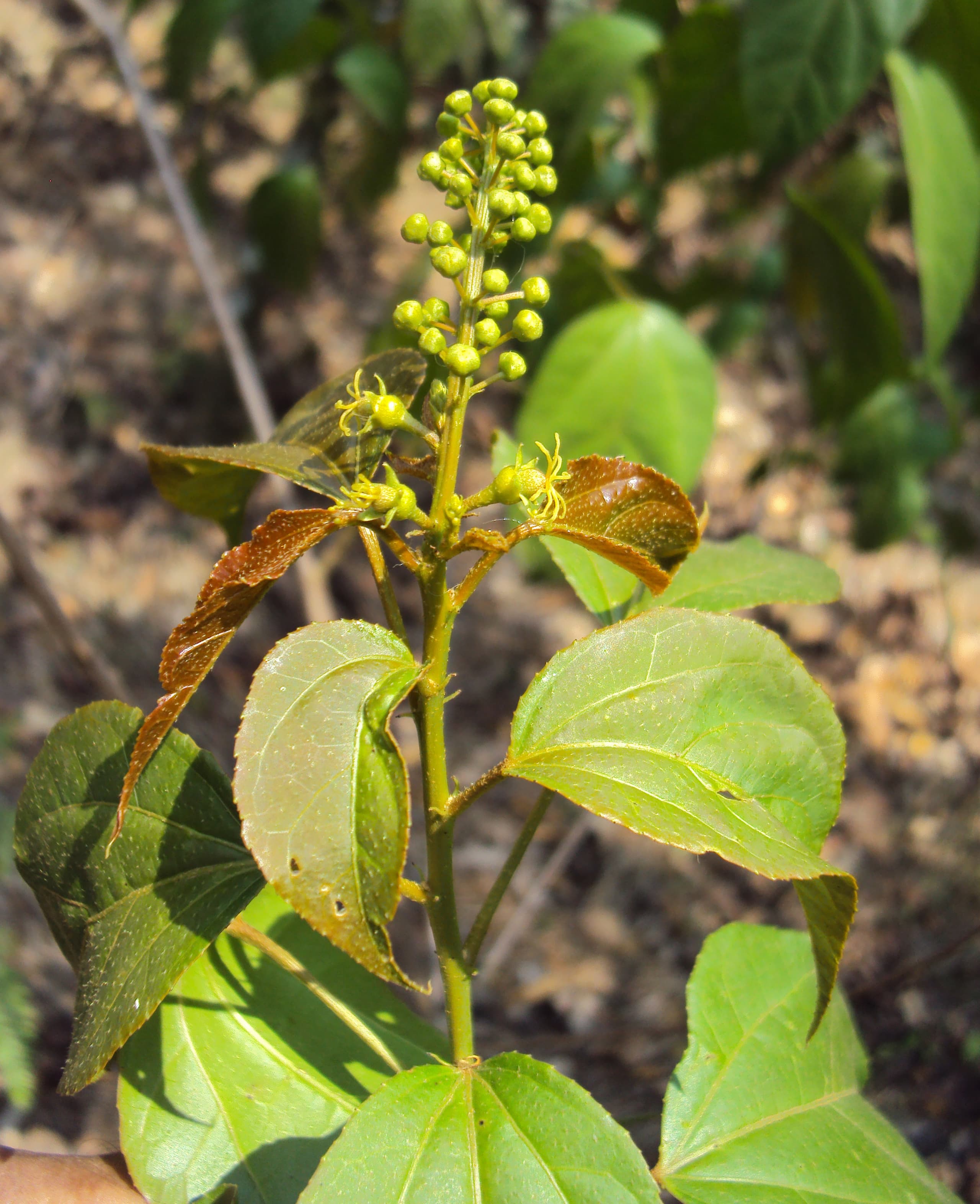
Jayapal is found all over india .It is an ever green tree,bark smooth,ash coloured.
Croton Tiglium Linn · Euphorbiaceae
Jayapal is found all over india .It is an ever green tree,bark smooth,ash coloured.
Scientific Name
Croton Tiglium Linn
Family
Euphorbiaceae
Hindi Name
Jamalgota
Used Part
Seed
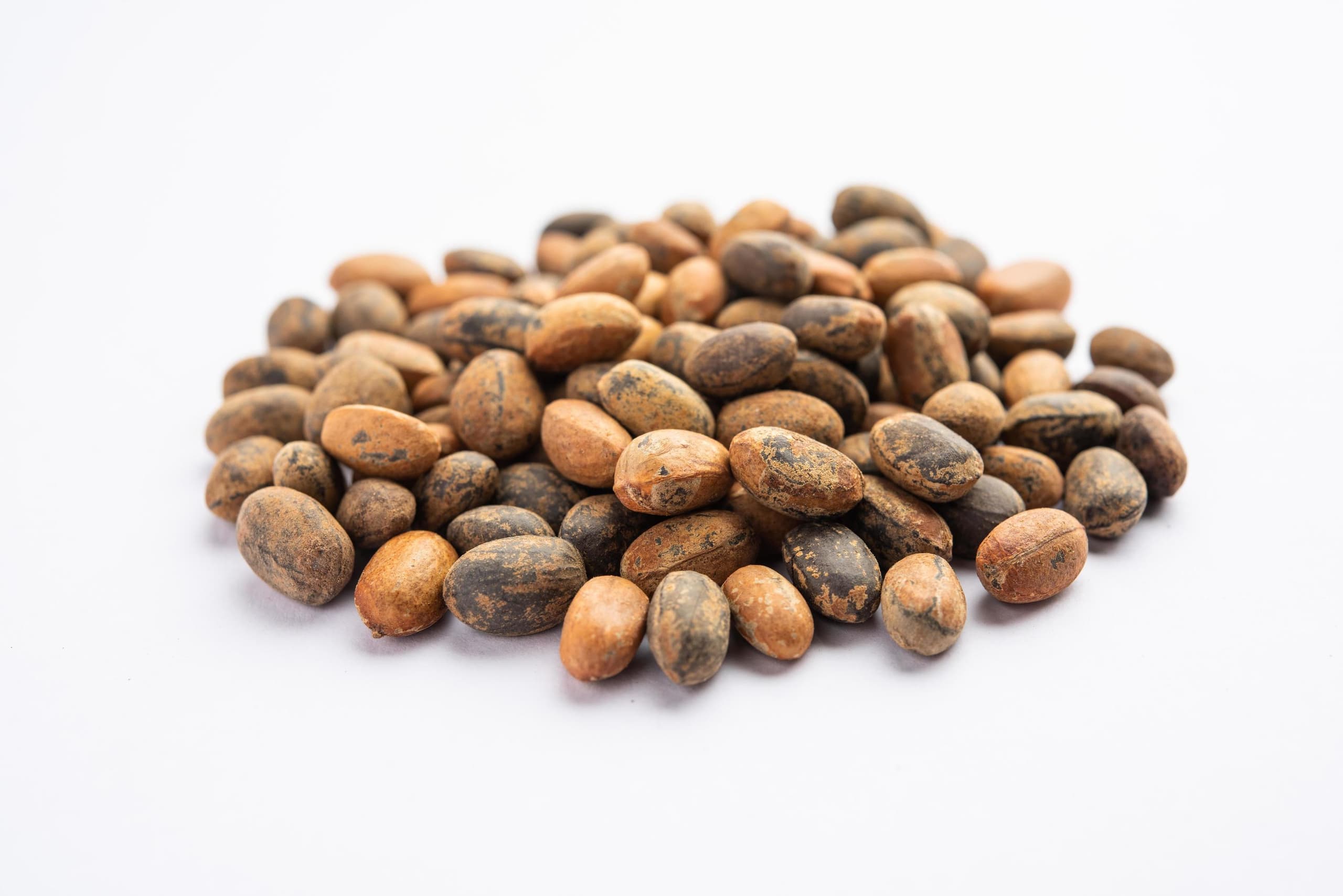
Morphology and field-identification notes as documented in our Dravyaguna library.
Jayapal is found all over india .It is an ever green tree,bark smooth,ash coloured. Leaves oblong to ovate-lanceolate, on a slender glabrous petiole 2.5-5 cm.long, obtuse or rounded at the 2-glanded base. Flowers small, the males on slender, glabrous pedicels,solitary or by 2 or 3, the females larger, on short, thick fascicle densely stellate-pubescent pedicels, capsule oblong, seeds smooth about 13mm long or longer,purgative.
The five-fold framework Ayurveda uses to describe a drug — Rasa, Guna, Vipaka, Veerya and its effect on the doshas.
Katu
The primary taste perceived on the tongue.
Guru, Tikshna
Physical and energetic attributes of the dravya.
Katu
Taste that emerges after complete digestion.
Kaphapitta Shamaka
Effect on Vata, Pitta and Kapha doshas.
Ushna
Heating (ushna) or cooling (sheeta) energy.
Rechaka, Dipana, Krmighna, Jalodarahara, Malabadhata, Agnimandya, Hrdayodara, Jalodara, Amavata, Sandhisotha.
How modern science maps onto the classical understanding of this dravya.
Pharmacological Action
Purgative, Anti-inflammatory and Antineoplastic agent.
Phytoconstituents
Phorbol Esters (Phorbol-12-myristate-13-acetate) antineoplastic agent, croton oil, toxalbumin ( croton).
Classical Ayurvedic indications drawn directly from the Dravyaguna tradition — paired with the preparations recommended in shastra.
01
Purified seeds (seed powder:20-40mg) or oil(0.1-0.3ml) are used to induce rapid bowel movement.
02
Often administered with hot water or milk to mitigate discomfort, skin conditions & pain.
03
The paste of purified seeds is applied topically to treat chronic skin diseases, warts, and joint pain.
04
It is sometimes combined with sesame oil as a counter-irritant for muscle pain.
Always consult a qualified Ayurvedic physician before using any herb therapeutically. Dose, anupana and Prakriti-specific suitability matter.
Yoga / Kalpana
Common Ayurvedic preparations where Jayapal is a key ingredient.
Shastra Pramana
जयपालो दन्तिबीजं विख्यातं तिन्तिडीफलम् । जयपालो गुरुः स्निग्धो रेची पित्तकफापहः ।। (भा. नि.) जयपालः कटुरूष्णाश्च कृमिहरी रेचनः । दीपनः कफवातघ्नो जलोदरविनाशनः ॥ (रा. नि.)