Rasa (Taste)
Tikta, Kashaya
The primary taste perceived on the tongue.

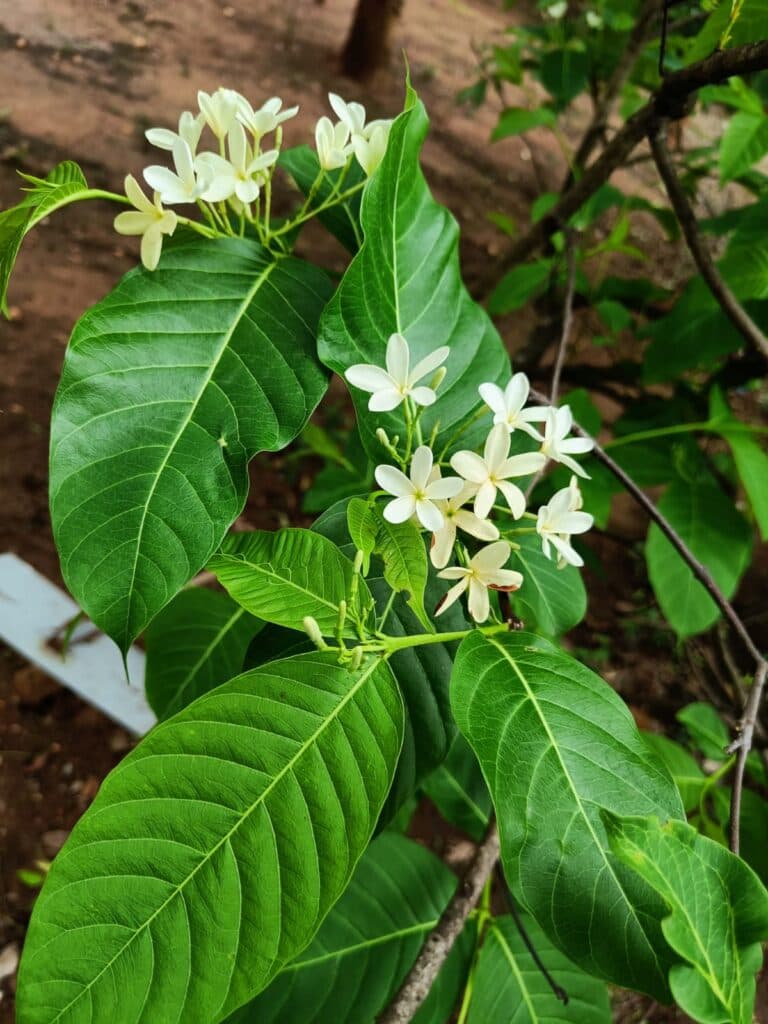
The Kutaj plant is a deciduous shrub or small tree.
Holarrhena antidysenterica · Apocynaceae
The Kutaj plant is a deciduous shrub or small tree.
Scientific Name
Holarrhena antidysenterica
Family
Apocynaceae
Hindi Name
Indrajav
Used Part
Bark, Leaves, Seeds, Flowers.
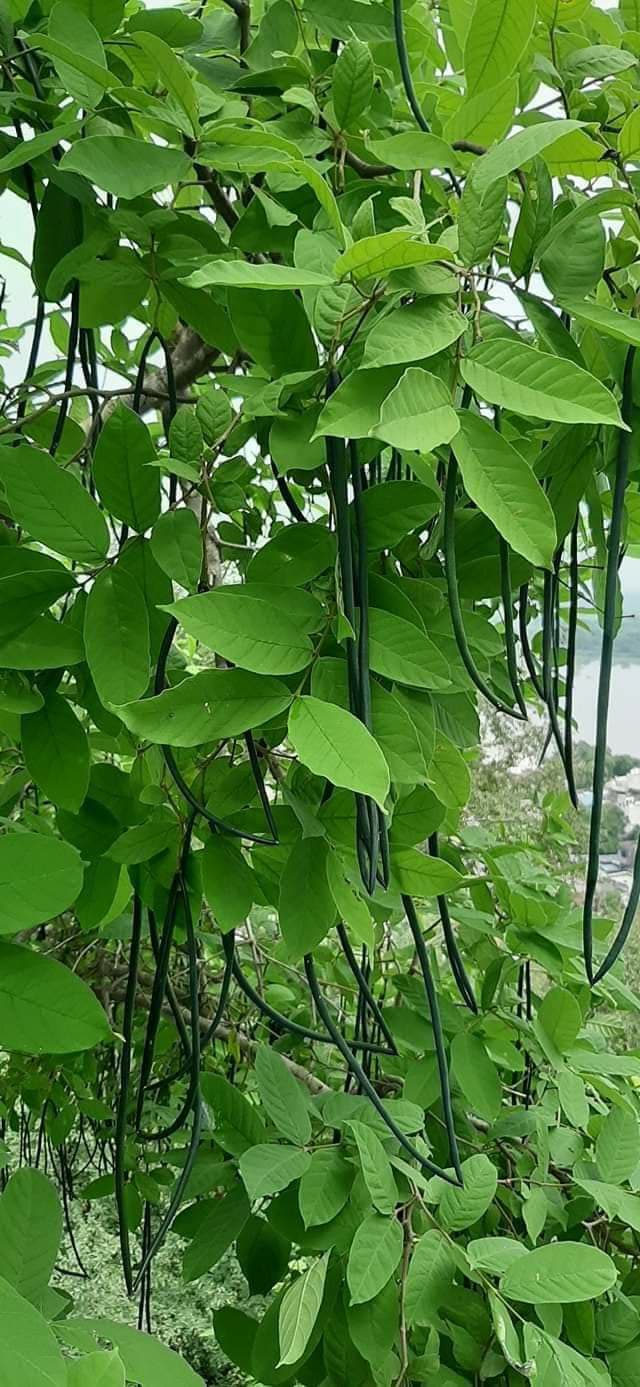
Morphology and field-identification notes as documented in our Dravyaguna library.
The Kutaj plant is a deciduous shrub or small tree.
It has simple, elliptical leaves and produces white or pale yellow flowers.
The plant typically grows to a height of 1-3 meters.
It bears fruits that are cylindrical, slender, and pointed, containing numerous seeds.
The five-fold framework Ayurveda uses to describe a drug — Rasa, Guna, Vipaka, Veerya and its effect on the doshas.
Tikta, Kashaya
The primary taste perceived on the tongue.
Laghu, Ruksha, Tikshna
Physical and energetic attributes of the dravya.
Katu
Taste that emerges after complete digestion.
Kapha pitta Shamaka
Effect on Vata, Pitta and Kapha doshas.
Sheeta
Heating (ushna) or cooling (sheeta) energy.
Atisaraghna, Krimighna, Deepana, Pachana, Stambhana, Jwaraghna, Kandughna.
How modern science maps onto the classical understanding of this dravya.
Pharmacological Action
Astringent, Anti-diarrhoeal, and Anti-dysenteric properties.
Phytoconstituents
The Kutaj plant contains several bioactive compounds, including alkaloids like conessine and holarrhenine.
Classical Ayurvedic indications drawn directly from the Dravyaguna tradition — paired with the preparations recommended in shastra.
01
Atisara - in case of blood mixed diarrhoea one should consume ghee cooked with Indrayava (Seeds) and barley. Then one should take liquid gruel.
02
Raktarshas (Bleeding piles) - Decoction prepared from Kutaja twak (Bark ) and Nagara (dry ginger) checks the bleeding piles.
03
Vrana (Wound) - Decoction prepared from Karavira, Arka and Kutaja if used for washing the wound it promotes healing.
Always consult a qualified Ayurvedic physician before using any herb therapeutically. Dose, anupana and Prakriti-specific suitability matter.
Yoga / Kalpana
Common Ayurvedic preparations where Kutaj is a key ingredient.
Shastra Pramana
इन्द्रयवं त्रिदोषघ्नं संग्राहि कटु शीतलम् । ज्वरातीसार क्र्तार्थो वमि वीसर्पकुष्ठनुत् ॥ दीपनं गुदकीलास्र वातास्रश्लेष्मशूलजित् । कुटजः कटुको रूक्षो दीपनस्तुवरो हिमः ॥ आर्शी अतिसार पित्तस्र कफतृष्णा आमकुष्ठनुत् ॥ भावप्रकाश