Rasa (Taste)
Tikta
The primary taste perceived on the tongue.

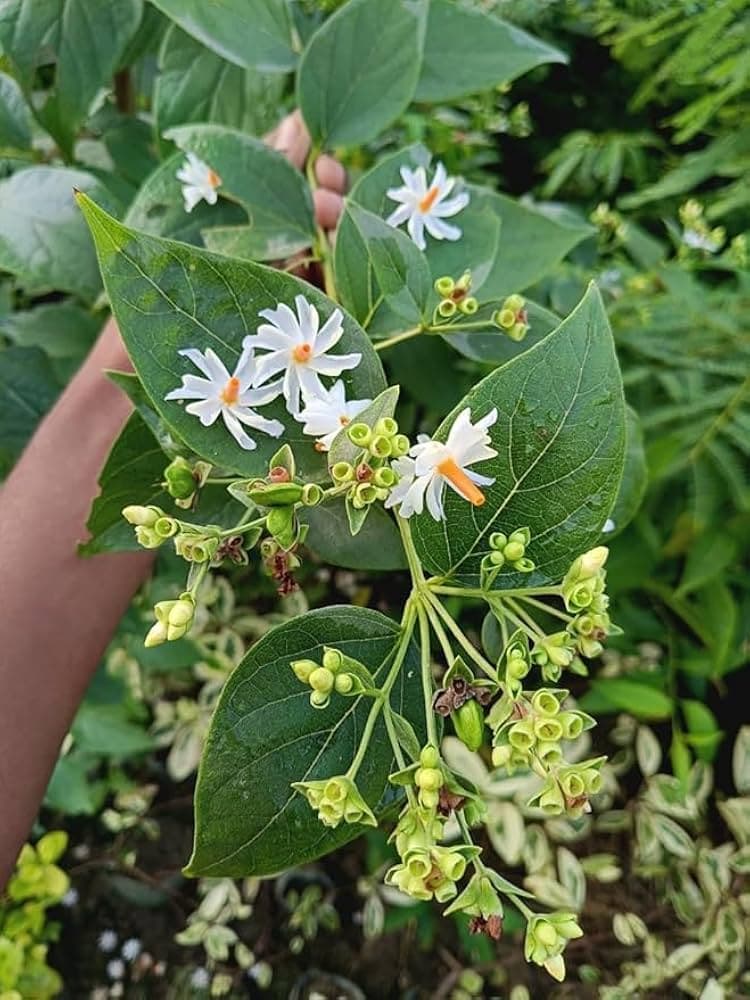
Parijata is a small tree growing up to 10 m and possesses whitish yellow flowers.
Nyctanthes arbor-tristis Linn. · Nyctanthaceae
Parijata is a small tree growing up to 10 m and possesses whitish yellow flowers.
Scientific Name
Nyctanthes arbor-tristis Linn.
Family
Nyctanthaceae
Hindi Name
Harsingar
Used Part
Leaf and stem bark
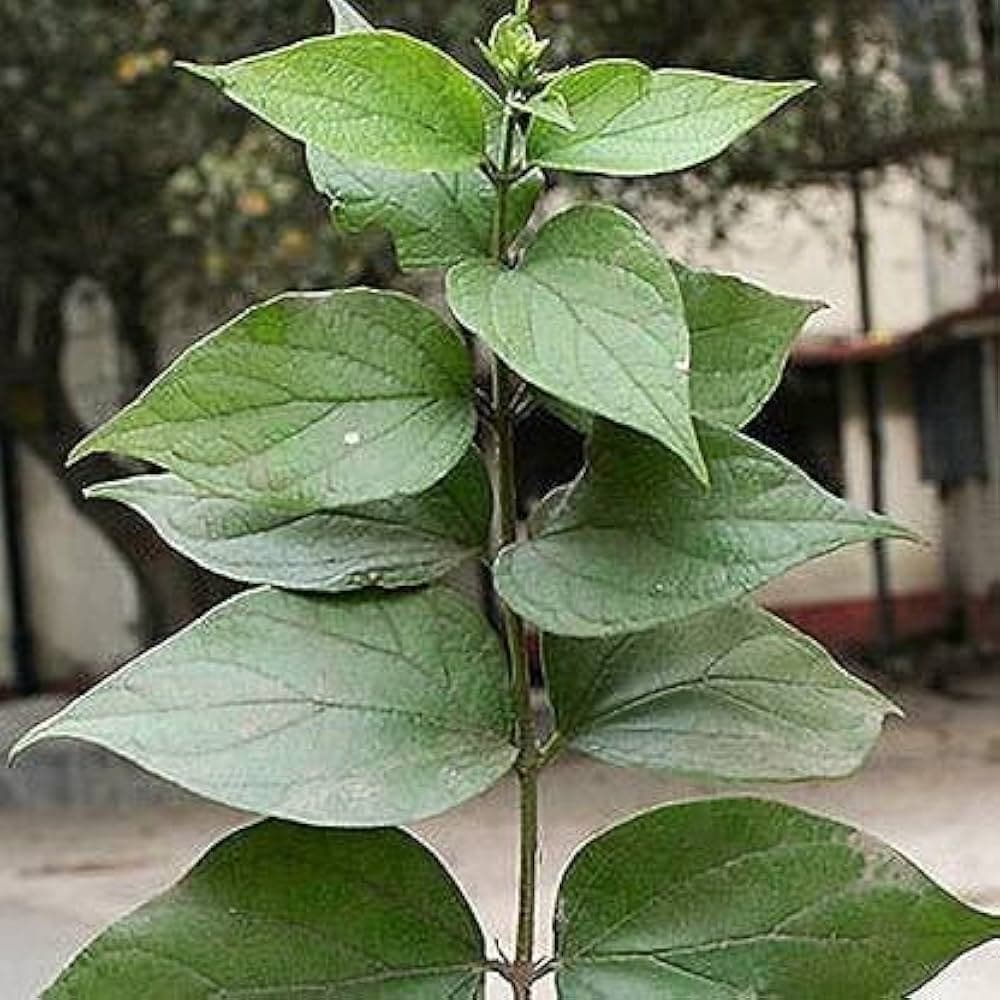
Morphology and field-identification notes as documented in our Dravyaguna library.
Parijata is a small tree growing up to 10 m and possesses whitish yellow flowers. Its leaves are described among the Anu-Sastras. Sephalika is considered the synonym of blue variety of Nirgundi.
The five-fold framework Ayurveda uses to describe a drug — Rasa, Guna, Vipaka, Veerya and its effect on the doshas.
Tikta
The primary taste perceived on the tongue.
Laghu, Ruksha
Physical and energetic attributes of the dravya.
Ushna
Taste that emerges after complete digestion.
kapha-vata hara
Effect on Vata, Pitta and Kapha doshas.
Katu
Heating (ushna) or cooling (sheeta) energy.
Jwaraghna, Kramighna, Mriduvirechak , Vednasthapan.
How modern science maps onto the classical understanding of this dravya.
Pharmacological Action
Antipyretic , Atihelminthic , Anti inflammatory, Hepatoprotective , Analgesic, Laxative.
Phytoconstituents
Leaves contain D-mannitol, β-sitosterol, Favanol glycosides, Astragalin, Nicotiflorin, Oleanolic acid etc.
Classical Ayurvedic indications drawn directly from the Dravyaguna tradition — paired with the preparations recommended in shastra.
01
The decoction of its leaves (Shephalikadalaih) prepared on low flame is used for Sciatica.
02
For chronic fever, the juice of 7-8 tender leaves, mixed with the juice of the plant's nectar, and honey, is given. This is very beneficial for malaria. For chronic malaria, it is advisable to use it along with Trikatu.
03
For children's worms, juice of leaves is given with sugar mixed in it.
04
In case of cough and asthma, taking 125-250 mg of bark powder in betel leaf 3-4 times a day reduces the viscosity of phlegm.
05
Grind its seeds in water and apply it on the bald patches of the head, which helps in new hair growth.
Always consult a qualified Ayurvedic physician before using any herb therapeutically. Dose, anupana and Prakriti-specific suitability matter.
Yoga / Kalpana
Common Ayurvedic preparations where Parijata is a key ingredient.
Shastra Pramana
शेफालिः कटुतिक्तोष्णा रूक्षा वातक्षयापहा । स्यादङ्गसंधिवातध्नो गुदवातादिदोषनुत्॥ (रा. नि.)