Rasa (Taste)
Pancharasa (Kashaya pradhan)
The primary taste perceived on the tongue.

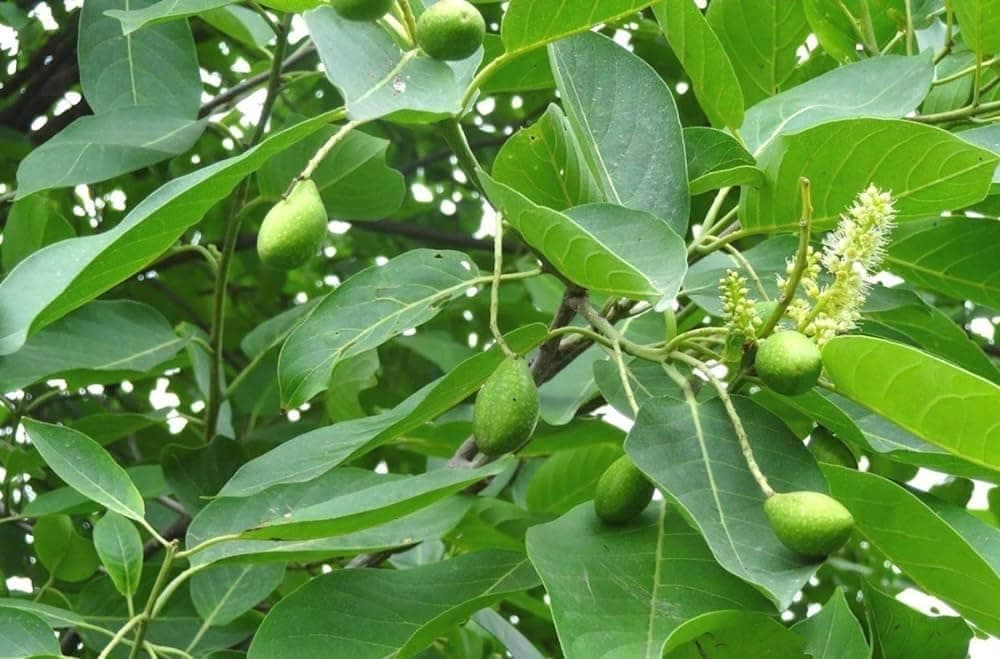
Haritaki tree is found all over India especially in forests of North India, attaining height of upto 90 ft.
Terminalia chebula Retz. · Combretaceae
Haritaki tree is found all over India especially in forests of North India, attaining height of upto 90 ft.
Scientific Name
Terminalia chebula Retz.
Family
Combretaceae
Hindi Name
Harad
Used Part
Phala (Fruit)
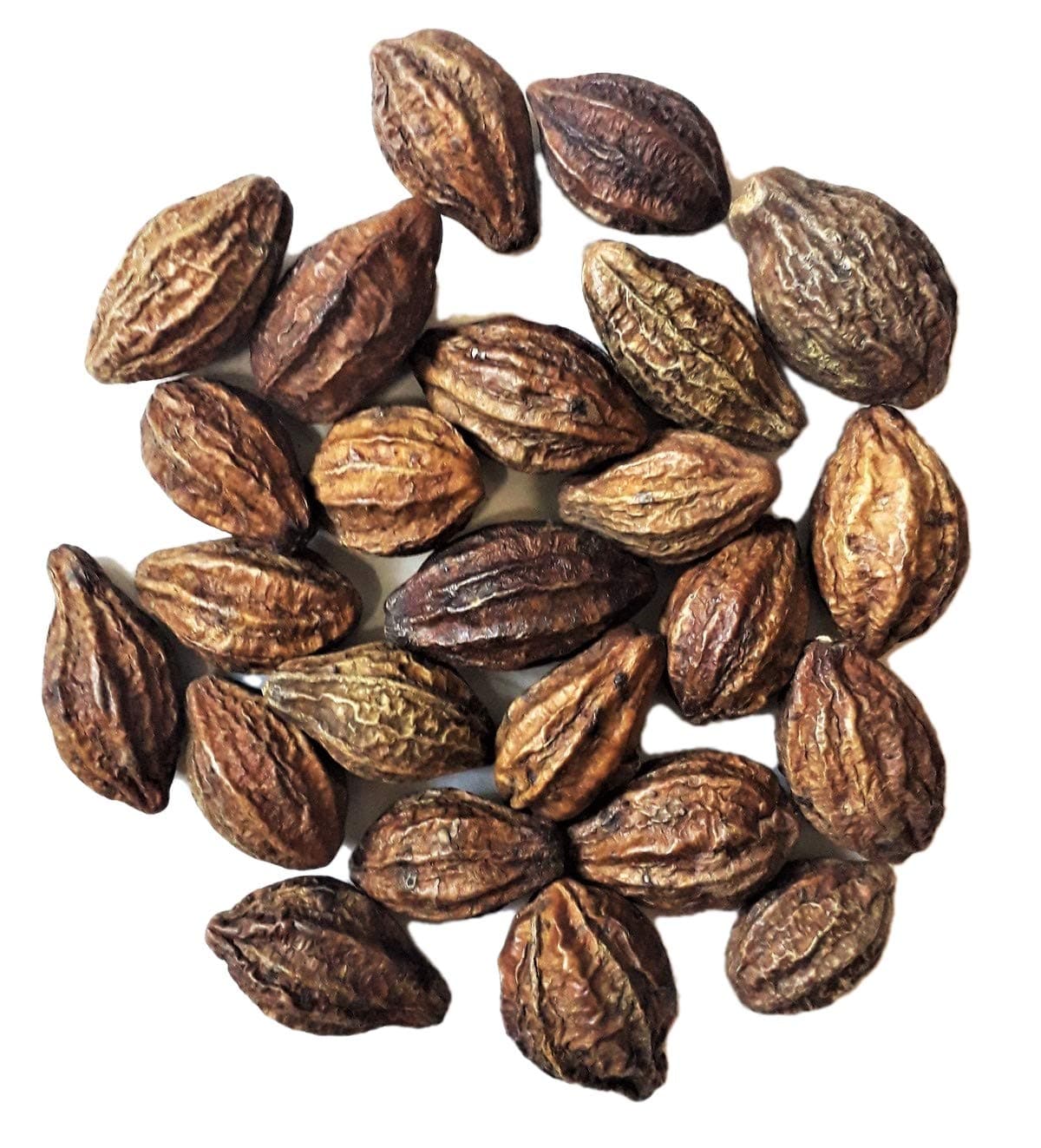
Morphology and field-identification notes as documented in our Dravyaguna library.
Haritaki tree is found all over India especially in forests of North India, attaining height of upto 90 ft. Leaves are 7 to 20cm long, glabrous, alternate, elliptic, acute, rounded or cordate at base and pubescent. It’s Inflorescence are spikes . Flowers are sessile, dull white or yellow.
The five-fold framework Ayurveda uses to describe a drug — Rasa, Guna, Vipaka, Veerya and its effect on the doshas.
Pancharasa (Kashaya pradhan)
The primary taste perceived on the tongue.
Laghu, Ruksha
Physical and energetic attributes of the dravya.
Madhura
Taste that emerges after complete digestion.
Tridoshahara
Effect on Vata, Pitta and Kapha doshas.
Ushna
Heating (ushna) or cooling (sheeta) energy.
Rasayana, Dipana, Pachana, Shothahara, Shwashara, Kasahara, Shulahara, Kushthaghna, Krimighna, Jwarahara, Hridya.
How modern science maps onto the classical understanding of this dravya.
Pharmacological Action
Antimicrobial, Antifungal, Antispasmodic, Antibacterial, Purgative, Antihelminthic.
Phytoconstituents
It contains upto 32% of Tannin (Hydrolysable) and on hydrolysis yield chebulic acid and d-galloyl glucose. Other constituents include chebulagic acid, chebulinic acid, gallic acid,Terchebin.
Classical Ayurvedic indications drawn directly from the Dravyaguna tradition — paired with the preparations recommended in shastra.
01
Haritaki taken with jaggery and sugar relieves Parinama shula (duodenal ulcer).
02
Regular usage of Haritaki with cow's urine cures Vatavyadhi (disorders of Vata).
03
Paste of Haritaki is anointed on the body, then taken bath, will check Atisweda (Excessive perspiration).
04
Haritaki powder taken with honey will check Chardi (vomiting).
05
Haritaki kept in Cow's urine then mixed with jaggery if taken, cures Arshas (piles).
Always consult a qualified Ayurvedic physician before using any herb therapeutically. Dose, anupana and Prakriti-specific suitability matter.
Yoga / Kalpana
Common Ayurvedic preparations where Haritaki is a key ingredient.
Shastra Pramana
हरीतक्यभया पथ्या कायस्था पूतनाऽमृता ।हैमवत्यव्यथा चापि चेतकी श्रेयसी शिवा ॥वयस्था विजया चापि जीवन्ती रोहिणीति च ॥भा.प्र. हरीतक्यादि वर्ग 6-7)