Rasa (Taste)
Tikta, Katu, Madhura, Kashaya
The primary taste perceived on the tongue.

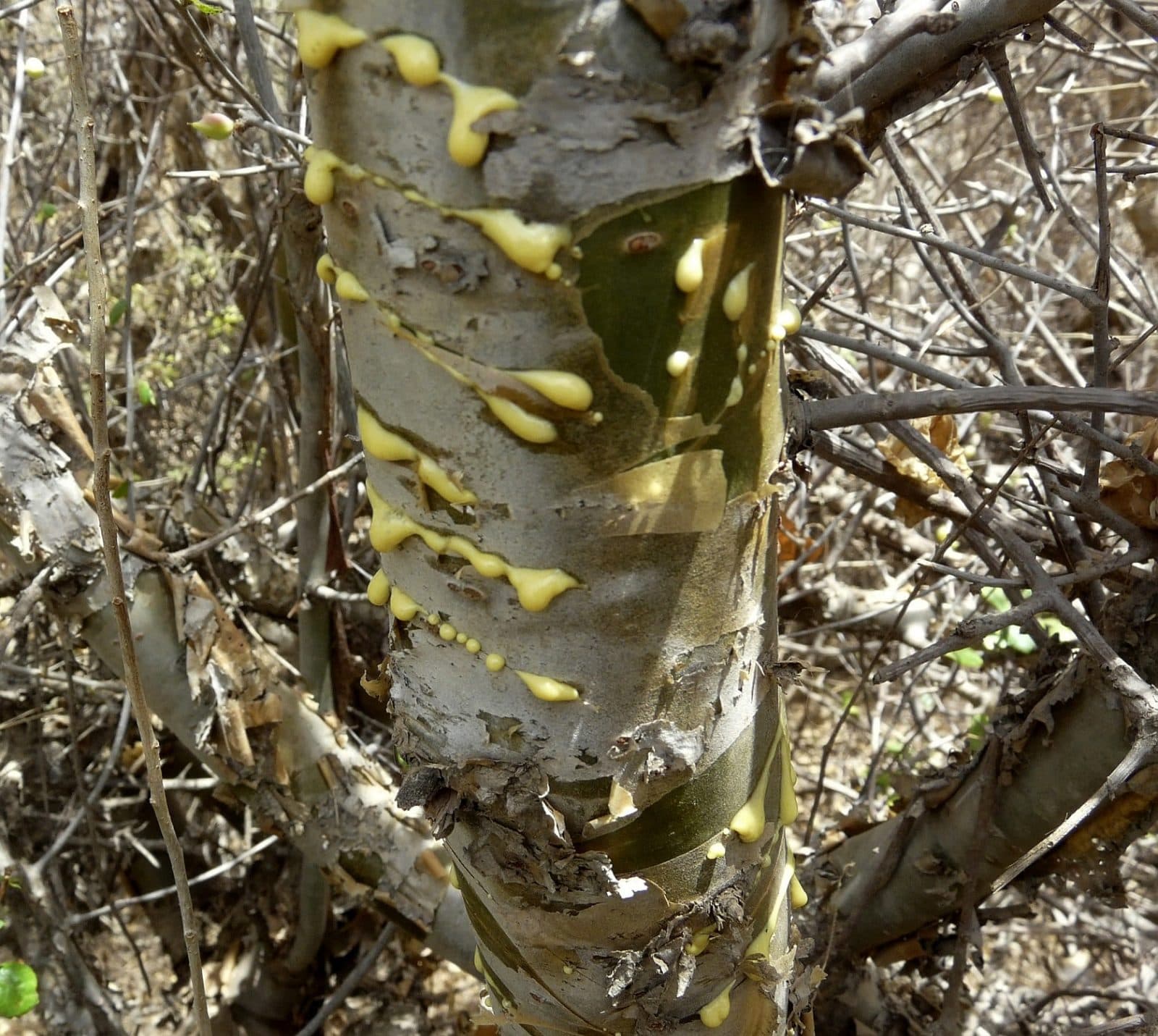
Guggulu plant commonly grows in dry and arid regions of Rajasthan, Deccan, Bellary & Mysore.
Commiphora mukul Hook · Burseraceae
Guggulu plant commonly grows in dry and arid regions of Rajasthan, Deccan, Bellary & Mysore.
Scientific Name
Commiphora mukul Hook
Family
Burseraceae
Hindi Name
Guggal
Used Part
Niryasa (Gum resin)
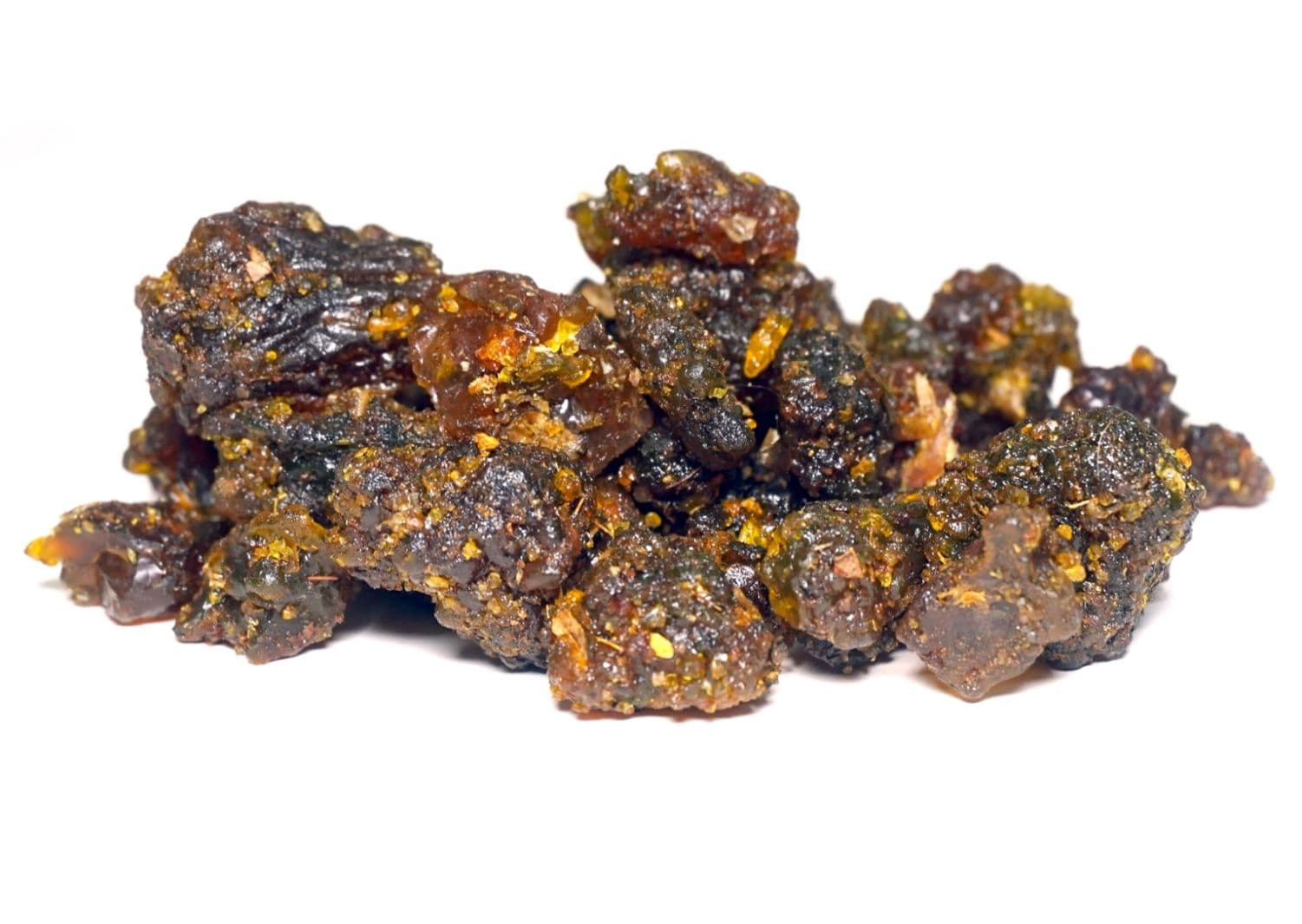
Morphology and field-identification notes as documented in our Dravyaguna library.
Guggulu plant commonly grows in dry and arid regions of Rajasthan, Deccan, Bellary & Mysore. Shrubby, 4 to 6 ft. high. Leaves are 1 to 3 foliate, leaflets sub sessile, 2 cm long and 1 cm wide, rhomboid or ovate shaped, smooth and shining. Flowers are seen in fascicles of 2-3 with very short pedicels and brownish red petals. Fruit is a drupe, becomes red on ripening with 6-8 mm diameter and ovoid in shape.
Seeds are small, ovoid and splitting into two.
The five-fold framework Ayurveda uses to describe a drug — Rasa, Guna, Vipaka, Veerya and its effect on the doshas.
Tikta, Katu, Madhura, Kashaya
The primary taste perceived on the tongue.
Tikshna, Sara, Sukshma, Snigdha, Laghu, Vishada
Physical and energetic attributes of the dravya.
Katu
Taste that emerges after complete digestion.
Tridosha Shamaka
Effect on Vata, Pitta and Kapha doshas.
Ushna
Heating (ushna) or cooling (sheeta) energy.
Medohara, Amavatahara, Pramehahara, Bhagna Sandhanakara, Vrashya, Swarya, Rasayana
How modern science maps onto the classical understanding of this dravya.
Pharmacological Action
Diuretic, Aphrodiasic, Anti-inflammatory, Antidiabetic
Phytoconstituents
Z-guggulusterone, E-Guggulusterone, Guggulusterols I, II, III, IV & V, Diterpene alcohol, Myrecene, Dimyrcene, Polymyrcene
Classical Ayurvedic indications drawn directly from the Dravyaguna tradition — paired with the preparations recommended in shastra.
01
Guggulu taken with milk is very useful as a Rasayana in all kinds of Vatavyadhi.
02
Regular usage of Guggulu with cow's urine is beneficial in Amavata (Rheumatoid arthritis).
03
Guggulu or Haritaki mixed with urine to be administered in case of Shotha (Oedema).
04
Regular usage of Guggulu, Shilajatu (Bitumen) and honey will cure Vatarakta (Gout).
Always consult a qualified Ayurvedic physician before using any herb therapeutically. Dose, anupana and Prakriti-specific suitability matter.
Yoga / Kalpana
Common Ayurvedic preparations where Guggulu is a key ingredient.
Shastra Pramana
माधुर्याच्छमंयेद्वातं कषायत्वाच्च पित्तहा । तिक्तत्वाद् कफजित्तेन गुग्गुलुः सर्वदोषहा ।। नवगुग्गुलु पुराणगुग्गुलु गुणकर्म : || (भा.प्र. कर्पूरादि वर्ग 38-41)