Rasa (Taste)
Tikta, Kashaya
The primary taste perceived on the tongue.

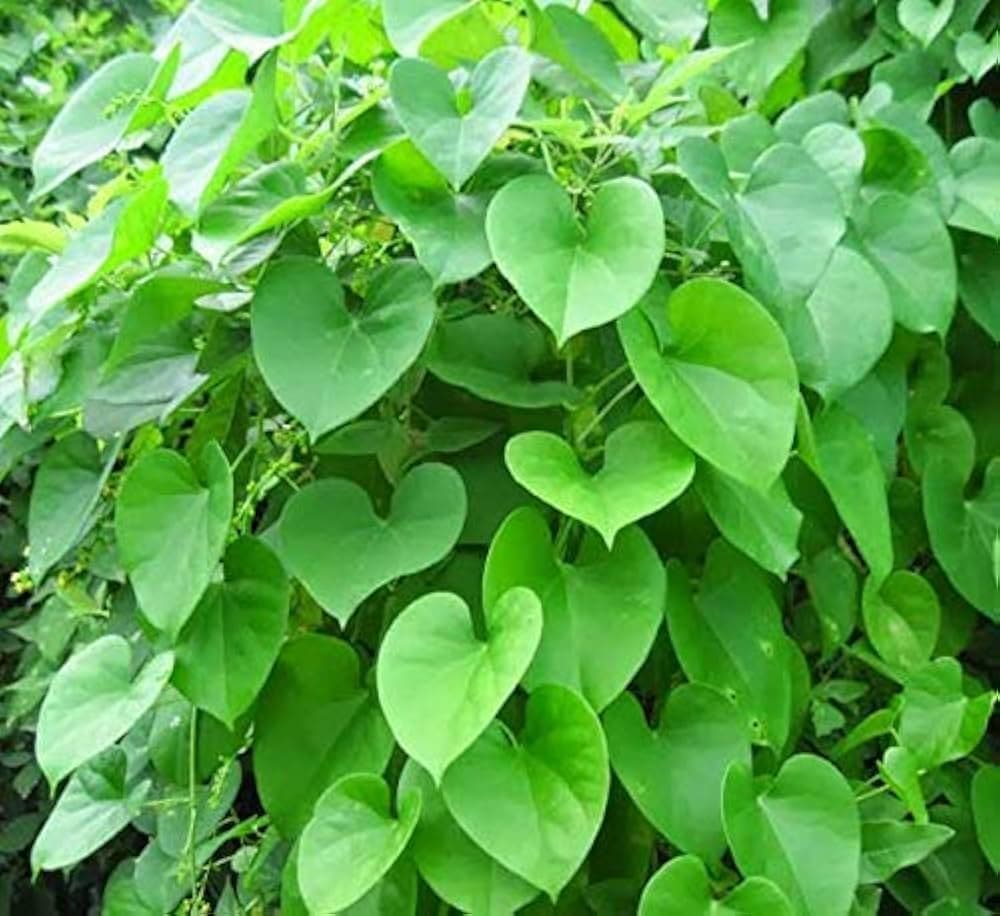
Guduchi is a widely used plant in folk and Ayurvedic systems of medicine.
Tinospora cordifolia · Menispermiaceae
Guduchi is a widely used plant in folk and Ayurvedic systems of medicine.
Scientific Name
Tinospora cordifolia
Family
Menispermiaceae
Hindi Name
Giloy
Used Part
Leaves, stem, fruits and roots.
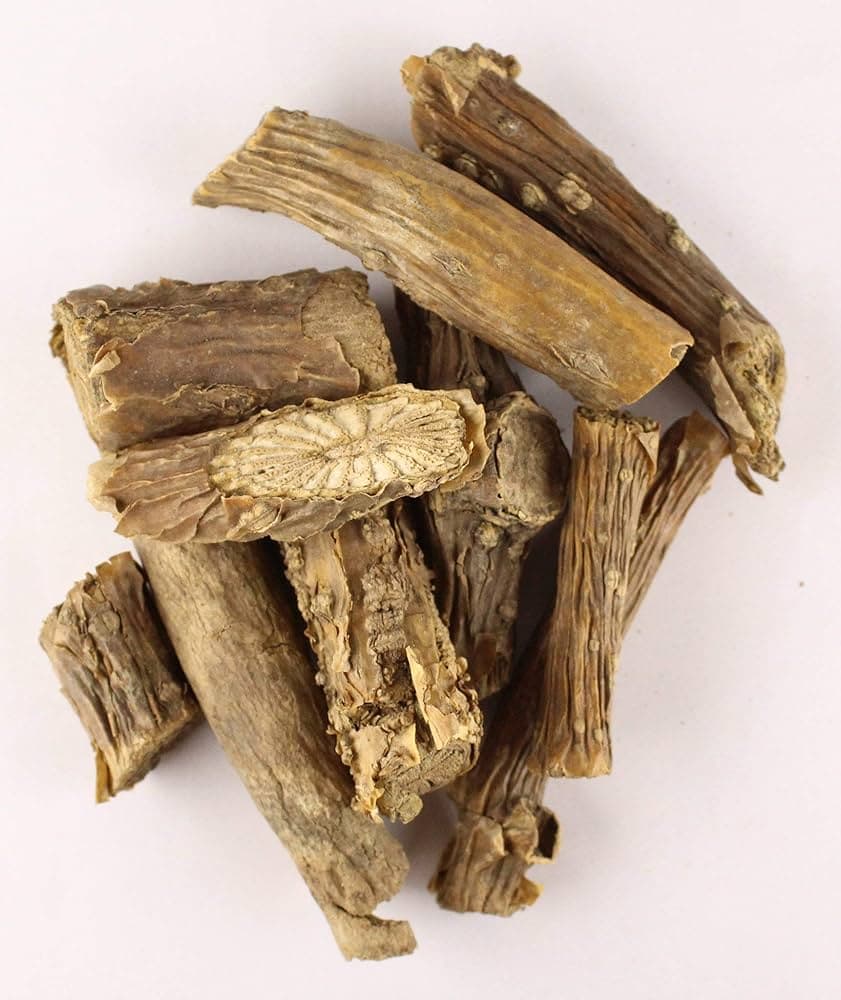
Morphology and field-identification notes as documented in our Dravyaguna library.
Guduchi is a widely used plant in folk and Ayurvedic systems of medicine. It is a large, deciduous, extensively-spreading, climbing vine with several elongated twining branches. Leaves are simple, alternate and exstipulate with long petioles up to 15 cm (6 in) long which are roundish and pulvinate, both at the base and apex with the basal one longer and twisted partially and half way around. It gets its name heart-leaved moonseed by its heart-shaped leaves and its reddish fruit. Lamina are broadly ovate or ovate cordate, 10–20 cm (4–8 in) long or 8–15 cm (3–6 in) broad, seven nerved and deeply cordate at base.
The five-fold framework Ayurveda uses to describe a drug — Rasa, Guna, Vipaka, Veerya and its effect on the doshas.
Tikta, Kashaya
The primary taste perceived on the tongue.
Laghu
Physical and energetic attributes of the dravya.
Madhura
Taste that emerges after complete digestion.
Doshatrayahara -Balances Tridoshas -Vata, Pitta and Kapha.
Effect on Vata, Pitta and Kapha doshas.
Ushna
Heating (ushna) or cooling (sheeta) energy.
Rasayani, Sangrahini, Balya, Agnideepani, Amahara.
How modern science maps onto the classical understanding of this dravya.
Pharmacological Action
Anti inflammatory, Antioxidant, Antimicrobial.
Phytoconstituents
Guduchi is known to contain a wide range of essential chemical constituents, including alkaloids, glycosides, steroids, flavonoids, phenols, tannins, terpenoids, polysaccharides, essential oils, and a combination of fatty acids
Classical Ayurvedic indications drawn directly from the Dravyaguna tradition — paired with the preparations recommended in shastra.
01
Guduchi (dry herb powder or in its decoction (kashayam) form) along with Ghee (clarified butter) is useful in Vata imbalance disorders. – like arthritis.
02
Guduchi along with jaggery helps to relieve constipation.
03
Giloy in combination with sugar candy (unprocessed sugar) is helpful in Pitta imbalance disorders such as skin diseases, gastritis, dizziness, liver disorders etc.
04
Giloy along with castor oil is useful in relieving gout.
05
Giloy along with ginger powder is useful in rheumatoid arthritis.
06
For Pitta type of vomiting, associated with severe burning sensation, migrain, gastritis, water added with the powder of chanaka (Bengal gram) or Gavedhuka- root or Guduchi .
Always consult a qualified Ayurvedic physician before using any herb therapeutically. Dose, anupana and Prakriti-specific suitability matter.
Yoga / Kalpana
Common Ayurvedic preparations where Guduchi is a key ingredient.
Shastra Pramana
गुडूची कटुका तिक्ता स्वादुपाका रसायनी। संग्राहिणी कषायोष्णा लध्वी बल्याग्निदीपनी ॥ दोषत्रयामतृहृद्दाह मेहकासांश्च पाण्डुताम् । कामला कुष्ठवा तास्त्रज्वरकृमिवमीर्ह रेत् ।।' (भा. प्र.)