Rasa (Taste)
Tikta, Kashaya, Madhura
The primary taste perceived on the tongue.

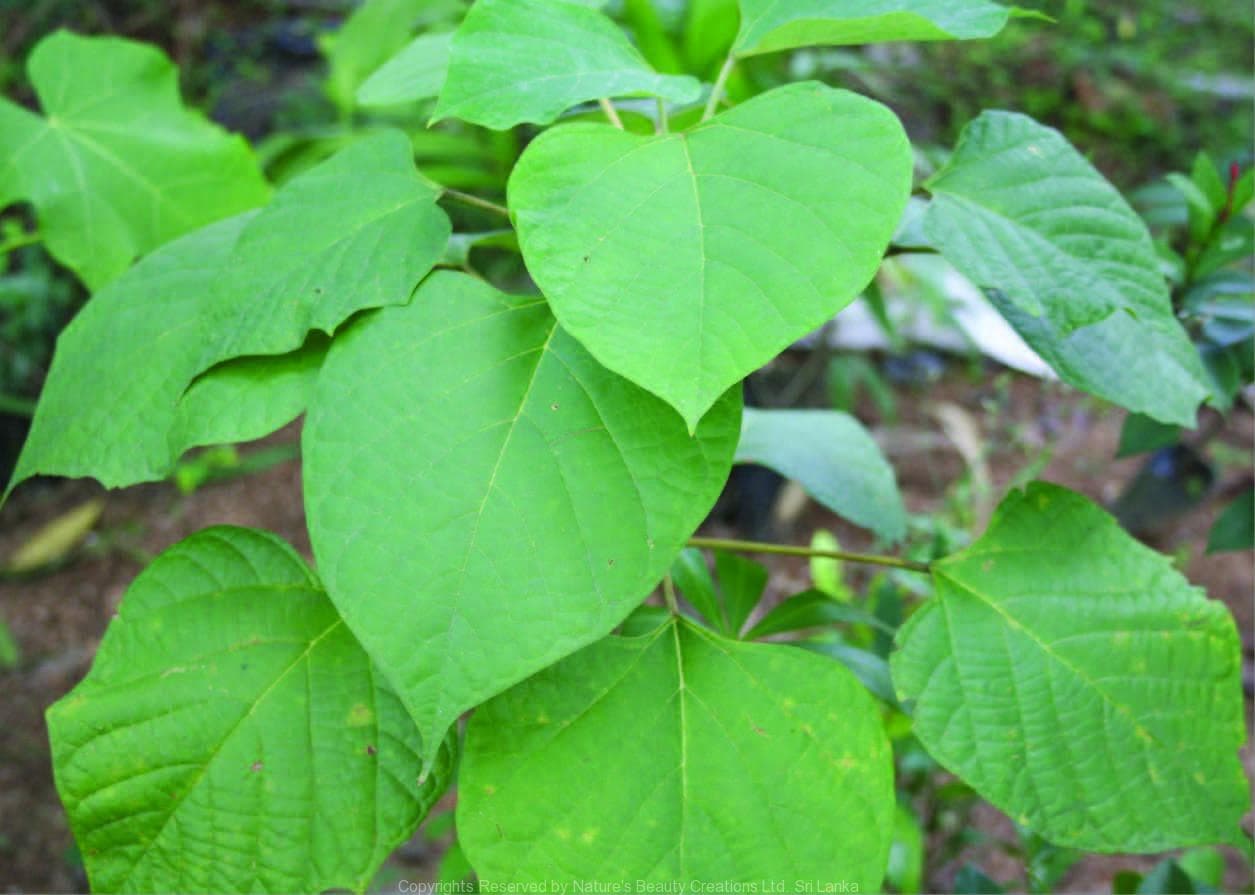
Habit- Moderate sized unarmed deciduous tree, grows upto 50 ft.
Gmelina arborea Linn. · Verbenaceae
Habit- Moderate sized unarmed deciduous tree, grows upto 50 ft.
Scientific Name
Gmelina arborea Linn.
Family
Verbenaceae
Hindi Name
Gambhara
Used Part
Mula twaka ( Root bark), Fruit.
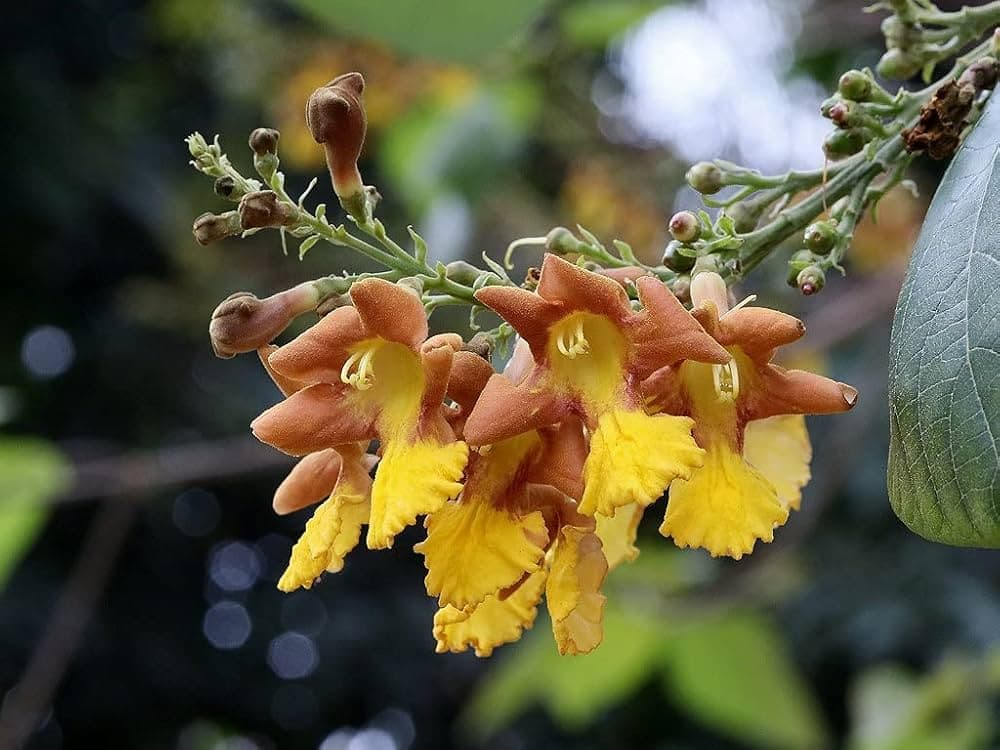
Morphology and field-identification notes as documented in our Dravyaguna library.
Habit- Moderate sized unarmed deciduous tree, grows upto 50 ft. in height.
Bark- Greyish yellow, corky. Branchlets and young parts clothed with fine white mealy pubescence. Leaves- 10 to 20 cm long, 7.5 to 15 cm wide, broadly ovate, acuminate, entire, glabrous. Flowers- Calyx is 5 mm long, densely fulvous-hairy, petals are brownish yellow, densely hairy outside, upto 4 cm long, ovate, subobtuse.
Fruit- Drupe, 2 to 2.5 cm long, ovoid or pyriform, smooth, orange-yellow when ripe.
The five-fold framework Ayurveda uses to describe a drug — Rasa, Guna, Vipaka, Veerya and its effect on the doshas.
Tikta, Kashaya, Madhura
The primary taste perceived on the tongue.
Laghu, Ruksha
Physical and energetic attributes of the dravya.
Katu
Taste that emerges after complete digestion.
Tridosha Shamaka
Effect on Vata, Pitta and Kapha doshas.
Ushna
Heating (ushna) or cooling (sheeta) energy.
Shothahara, Dipana, Pachana, Bhedana, Shoshahara, Trashnahara, Amahara, Shulahara, Vishaghna, Dahashamaka, Jwarahara, Rakaapittahara. Phala- Balyavardhaka, Vrashya, Keshya, Rasayana, Trashnahara, Hridya
How modern science maps onto the classical understanding of this dravya.
Pharmacological Action
Stomachic, Refrigerant, Demulcent, Laxative
Phytoconstituents
Gmelinol, B-sitosterol, Sesquiterpene, Cerylalcohol, Resin, trace of Benzoic acid.
Classical Ayurvedic indications drawn directly from the Dravyaguna tradition — paired with the preparations recommended in shastra.
01
The ripe fruit is a diuretic. A cold infusion of the fruit with milk or water and sugar treats Dysuria (painful urination) and Urinary Tract Inflammation.
02
Fruit- Used as a nutritional supplement to combat fatigue and emaciation and acts as a brain and cardiac tonic.
03
The root bark is applied as a poultice or taken internally to reduce fluid retention and swelling.
04
Known to improve appetite, act as a mild laxative, and help treat haemorrhoids, constipation, and abdominal pain.
05
Helps alleviate excessive thirst, burning sensations, and bleeding disorders.
Always consult a qualified Ayurvedic physician before using any herb therapeutically. Dose, anupana and Prakriti-specific suitability matter.
Yoga / Kalpana
Common Ayurvedic preparations where Gambhari is a key ingredient.
Shastra Pramana
काश्मरी तुवरा तिक्त्ता वीर्योष्णा मधुरा गुरुः। दीपनी पाचनी मेध्या भेदिनी भ्रमशोषजित् ।।दोषतृष्णाऽऽमशूलोर्शीविषदाहज्वरापहा ॥