Rasa (Taste)
Madhura, Katu, Kashaya
The primary taste perceived on the tongue.

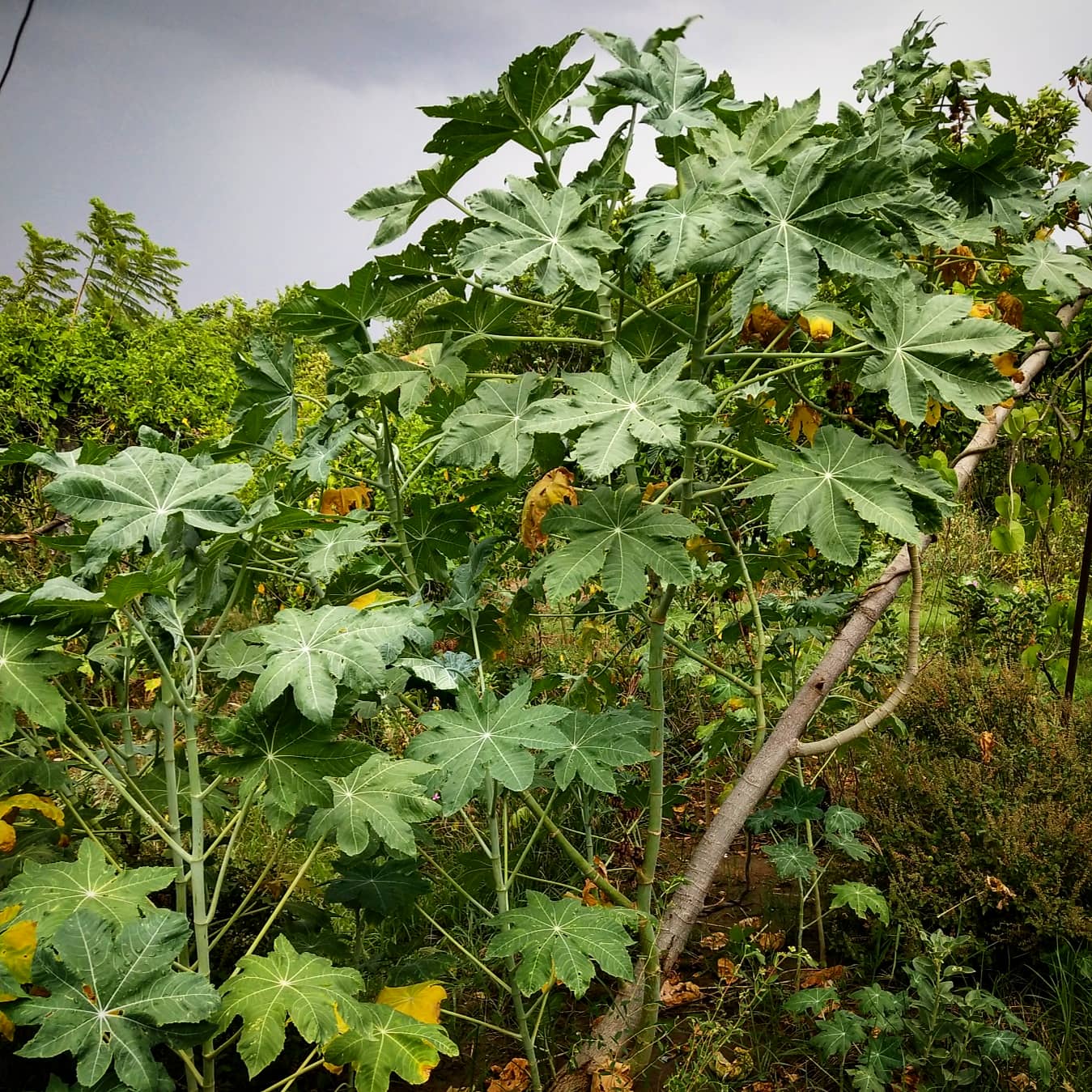
An evergreen, glabrous shrub, 2-5 m high.Leaves— palmately 7-many-lobed, lobes oblong to linear, acute or acuminate.Flowers— in large terminal subpanicled ra...
Ricinus communis · Euphorbiaceae
An evergreen, glabrous shrub, 2-5 m high.Leaves— palmately 7-many-lobed, lobes oblong to linear, acute or acuminate.Flowers— in large terminal subpanicled ra...
Scientific Name
Ricinus communis
Family
Euphorbiaceae
Hindi Name
Erand
Used Part
Root, Leaves, Seed, Oil.
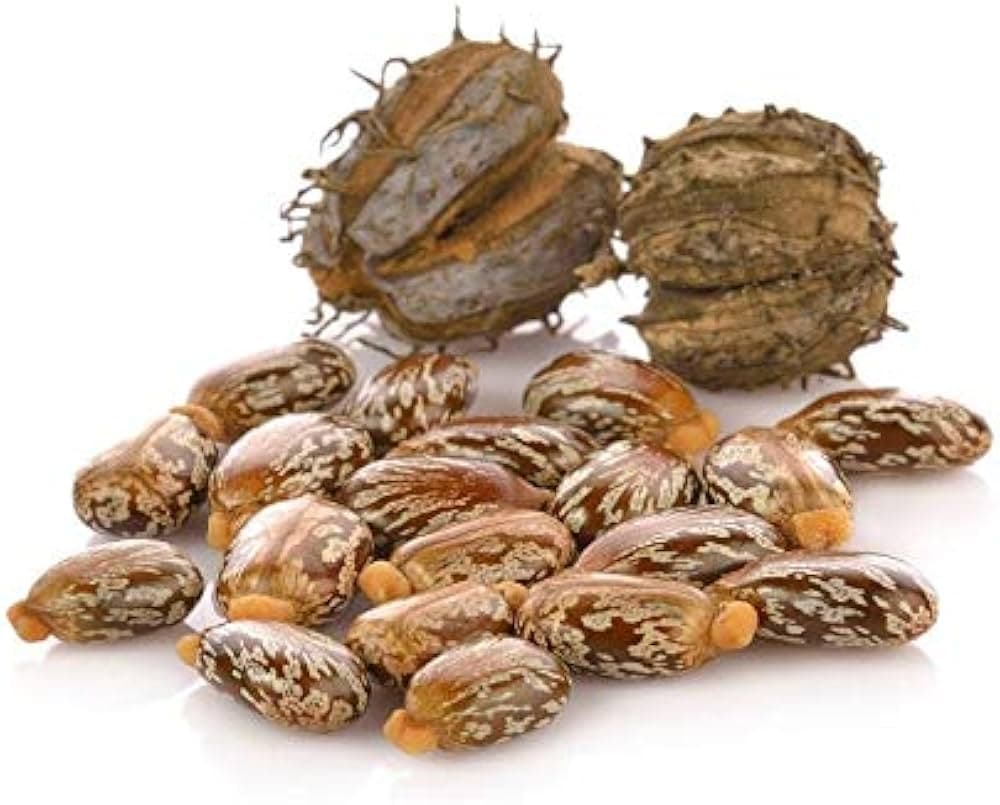
Morphology and field-identification notes as documented in our Dravyaguna library.
An evergreen, glabrous shrub, 2-5 m high.Leaves— palmately 7-many-lobed, lobes oblong to linear, acute or acuminate.Flowers— in large terminal subpanicled racemes; in a dense globose head of branched filaments and anthers; yellowish. Fruits— Capsules, globosely oblong, smooth or echinate.Seeds— oblong, smooth, mottled. Flowers and fruits occur almost throughout the year.
The five-fold framework Ayurveda uses to describe a drug — Rasa, Guna, Vipaka, Veerya and its effect on the doshas.
Madhura, Katu, Kashaya
The primary taste perceived on the tongue.
Guru, Sukshma, Snigdha, Tikshna
Physical and energetic attributes of the dravya.
Madhura
Taste that emerges after complete digestion.
Kapha Vata Shamaka
Effect on Vata, Pitta and Kapha doshas.
Ushna
Heating (ushna) or cooling (sheeta) energy.
Virechana, Vrsya-(root), Deepana, Kushtaghna
How modern science maps onto the classical understanding of this dravya.
Pharmacological Action
Purgative, Anti-inflammatory, Carminative, Fever, Ascites
Phytoconstituents
Ricinine (toxic alkaloid), Lupeol, lipids, phosphatides,arachidic, ricinoluc, palmitic, strearic acids: hexa decanoic, hydrocyanic & uric acids; squalene and tocopherols
Classical Ayurvedic indications drawn directly from the Dravyaguna tradition — paired with the preparations recommended in shastra.
01
Boiling Erand root in milk and using it as a decoction helps in fever associated with jaundice. 2 Erand oil is beneficial for patients suffering from intestinal obstruction.
02
Mixing Erand bark, Trivrit oil and jaggery in equal quantities and consuming it, helps in cough.
03
Leaves of Vasa, Arka, and Erand should be used as a swedana (sudation/fomentation) treatment.
04
Erand is used as a purgative in abdominal diseases.
Always consult a qualified Ayurvedic physician before using any herb therapeutically. Dose, anupana and Prakriti-specific suitability matter.
Yoga / Kalpana
Common Ayurvedic preparations where Erand is a key ingredient.
Shastra Pramana
एरण्डयुग्मं मधुरमुष्णं गुरु विनाशयेत् ।शूलशथकटीबस्तिशिरःपीडोदरज्वरान् ।ब्रध्नश्वास कफा नाहकासकुष्ठाम मारुतान् ॥ Bha.P.Ni.