Rasa (Taste)
Madhura
The primary taste perceived on the tongue.

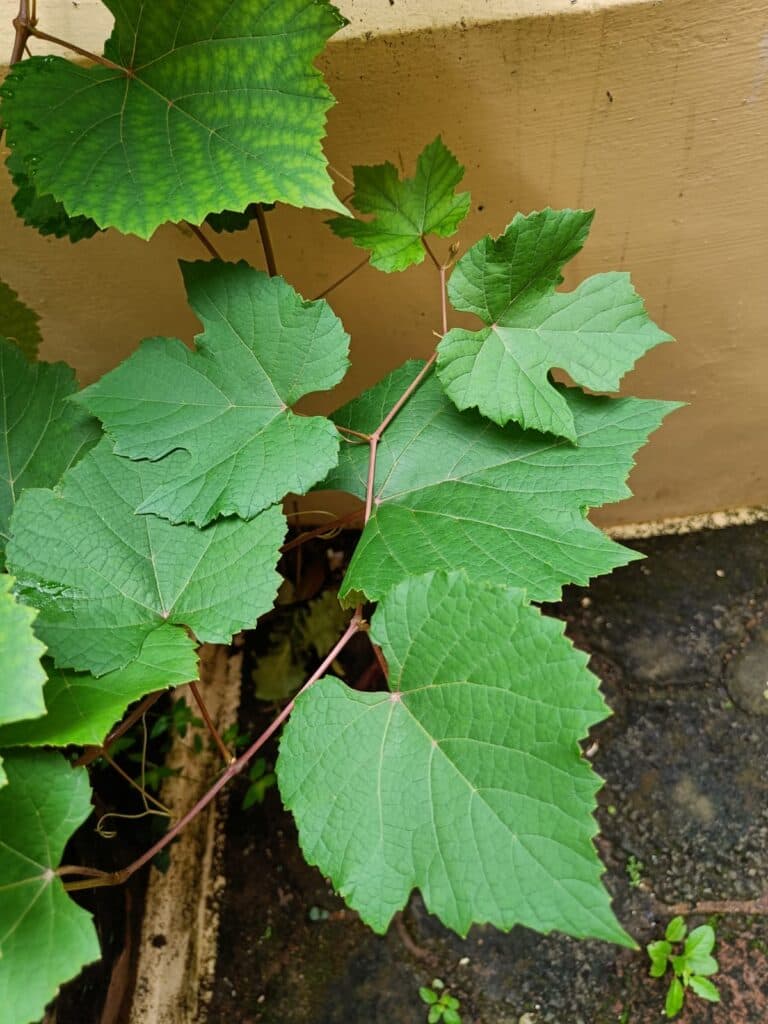
A large deciduous climber.
Vitis vinifera · Vitaceaeae
A large deciduous climber.
Scientific Name
Vitis vinifera
Family
Vitaceaeae
Hindi Name
Angur, Munakka
Used Part
Fruit
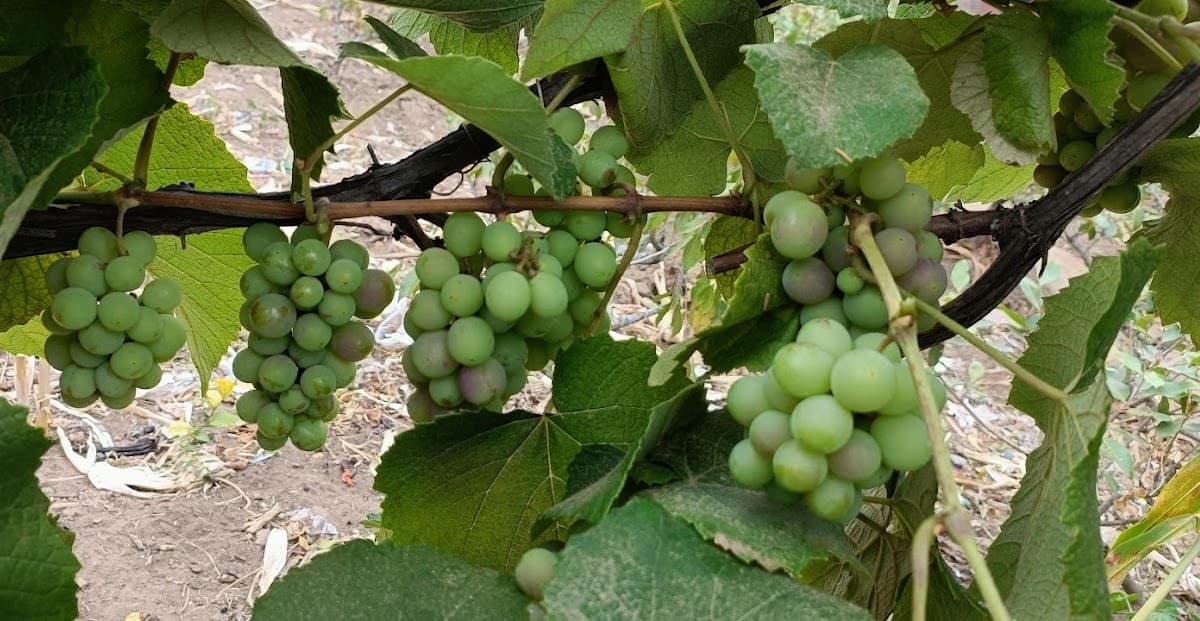
Morphology and field-identification notes as documented in our Dravyaguna library.
A large deciduous climber. Leaves are orbicular-codate in glabrous or nearly so above and clothed with grey tomentum below. Flowers: panicled shape, more or less deeply 5-lobed, margin is irregularly and coarsely toothed, surface is cyme. Fruit is a Berry. Bluish black or greenish. Seeds are 2-4, pear shaped
The five-fold framework Ayurveda uses to describe a drug — Rasa, Guna, Vipaka, Veerya and its effect on the doshas.
Madhura
The primary taste perceived on the tongue.
Guru , Snigdha, Mridu
Physical and energetic attributes of the dravya.
Madhura
Taste that emerges after complete digestion.
Vatapitta Shamak
Effect on Vata, Pitta and Kapha doshas.
Sheeta
Heating (ushna) or cooling (sheeta) energy.
Jeevaniya, Balya, Bringhaniya, Raktapittahar Dahprashaman, Mutrakrichrahar, Kanthya, Rasayana, Mridurechak, Hridya, Trishnaghna
How modern science maps onto the classical understanding of this dravya.
Pharmacological Action
Rejuvenating, Nourishing, Strengthening, Cooling, Laxative, Cardiotonic, Hematinic, Antioxidant, Aphrodisiac, Restorative.
Phytoconstituents
Fruits contain grape sugar (glucose), gum, astringent substances, tartaric acid, citric acid, racemic acid, and malic acid, sodium chloride, potassium chloride, potassium sulfate, tartrate of lime, magnesium, alum, iron, some albumin, and acid tartrate of potassium.Tartaric acid is the main acid present in the fruits.
Classical Ayurvedic indications drawn directly from the Dravyaguna tradition — paired with the preparations recommended in shastra.
01
Boil10 raisins (Munakka) in 250 grams of milk. Then add one teaspoon of unrefined sugar (Khand) to the milk and drink it in the morning. It helps in relieving disorders of semen (virya vikara). Its use is also beneficial for disorders of the heart, intestines, and blood. It also relieves constipation.
02
People who suffer from persistent throat irritation should chew 4–5 raisins thoroughly in the morning and evening and swallow them without drinking water afterward.
03
Children who wet the bed at night should be given two seedless raisins at bedtime for one week.
Always consult a qualified Ayurvedic physician before using any herb therapeutically. Dose, anupana and Prakriti-specific suitability matter.
Yoga / Kalpana
Common Ayurvedic preparations where Draksha is a key ingredient.
Shastra Pramana
‘द्राक्षा पक्वा सरा शीता चक्षुष्या वृंहणी गुरुः ।स्वादुपाकरसा स्वर्या तुबरा सृष्टमूत्रविद् ।।कोष्ठमारुतहृद् वृप्या कफपुष्टिरुचिप्रदा। हन्ति तृष्णाज्वरश्वासबातवातास्रकामलाः ।।कृच्छ्राखपित्तसम्मोहदाहशोषमदात्ययान् ।' (भा. प्रा.)