Rasa (Taste)
Kashaya, Katu
The primary taste perceived on the tongue.

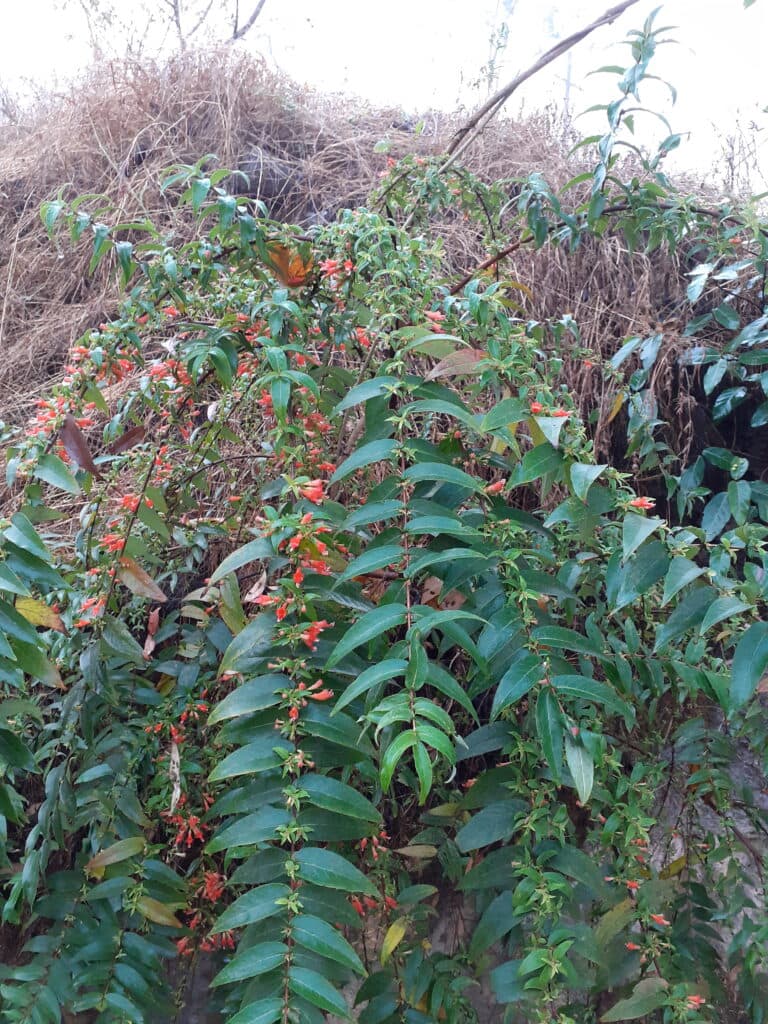
Dhataki plant is common in hilly regions of India.
Woodfordia fruticosa kurz. · Lythraceae
Dhataki plant is common in hilly regions of India.
Scientific Name
Woodfordia fruticosa kurz.
Family
Lythraceae
Hindi Name
Dhai
Used Part
Pushpa (Flowers)
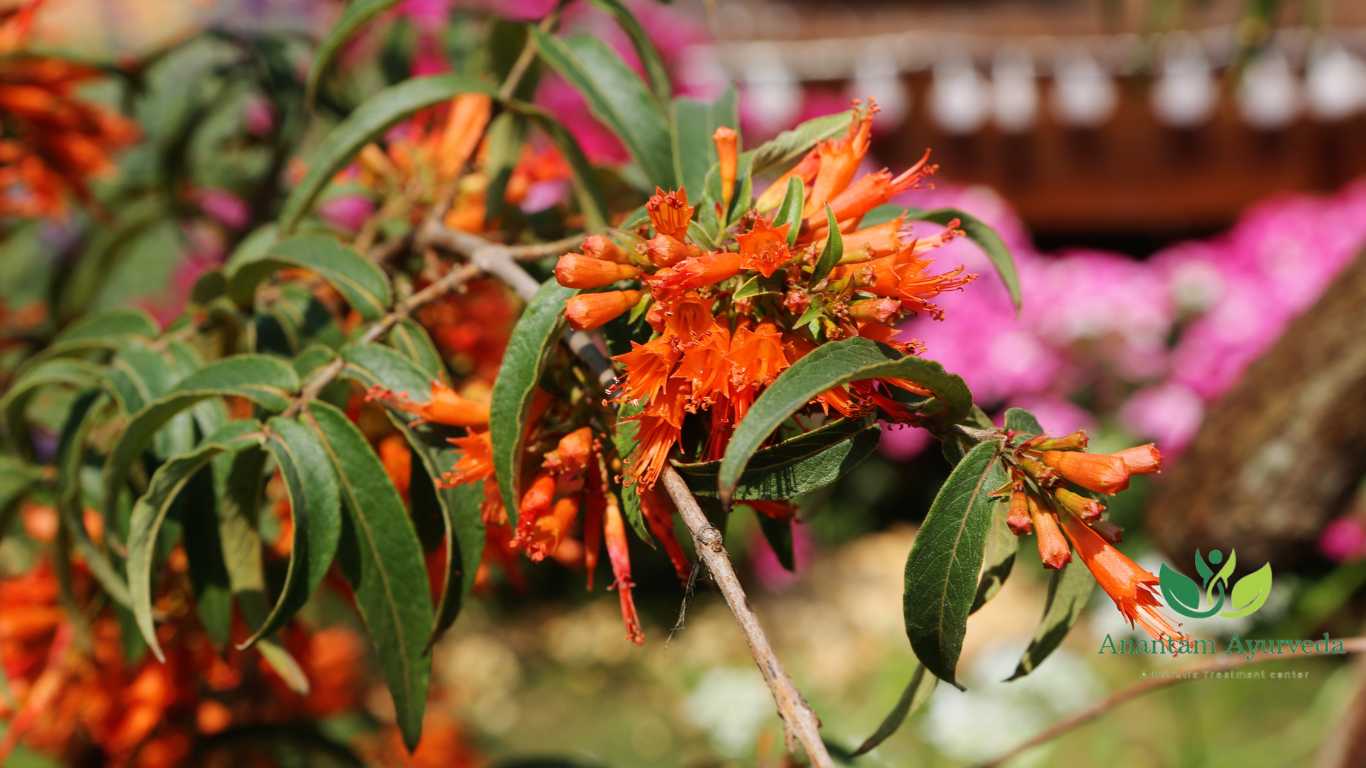
Morphology and field-identification notes as documented in our Dravyaguna library.
Dhataki plant is common in hilly regions of India. Habit-A struggling leafy shrub grows upto 10 ft.in height. Branches-Long, spreading Bark-Smooth, ashy brown, peeling off in fibres young shoots-are terete, often clothed with fine white pubescence. Leaves-5 to 9 cm long and 1 to 3 cm wide, opposite or subopposite, sometimes in whorls of 3, sessile, ovate lanceolate, acute, softly velvety above, base is rounded or cordate. Inflorescence-2 to 15 flowered cymes. Flowers- Petals are slightly longer than sepals and bright red in colour. Petals are tubular and narrowly linear. Fruit-Capsulated.
The five-fold framework Ayurveda uses to describe a drug — Rasa, Guna, Vipaka, Veerya and its effect on the doshas.
Kashaya, Katu
The primary taste perceived on the tongue.
Laghu, Ruksha
Physical and energetic attributes of the dravya.
Katu
Taste that emerges after complete digestion.
Pitta Kapha Shamaka
Effect on Vata, Pitta and Kapha doshas.
Sheeta
Heating (ushna) or cooling (sheeta) energy.
Trashnahara, Stambhaka, Vishaghna, Krimighna, Visarpahara, Garbhasthapaka, Madakara, Vranahara, Sandhaniya, Mutravirajaniya
How modern science maps onto the classical understanding of this dravya.
Pharmacological Action
Astringent, Tonic, Stimulant, Haemostatic and wound healer.
Phytoconstituents
Gallic acid and ellagic acid, ẞ-sitoserol, tannins, sugar (glucose), ursolic acid, kaempferol, lawsone, octacosanaol & mesoinositol.
Classical Ayurvedic indications drawn directly from the Dravyaguna tradition — paired with the preparations recommended in shastra.
01
Combination of Dhataki pushpa, sugar and Laja are mixed and administered to child, will check Atisara(diarrhoea) . 2 . Juice of Dhataki pushpa, Badari patra, Kapittha mixed with Lodhra churna, honey and butter milk will cure Pravahika .
02
The paste prepared from Lodhra, Dhataki ,Vatsaka bija, Karanja bija and Malati is efficacious as an ointment in Kustha.
03
Churna of Dhataki and Candana mixed with Stanya is applied as Anjana in case of Pittabhisyanda (inflammatory eye disease).
Always consult a qualified Ayurvedic physician before using any herb therapeutically. Dose, anupana and Prakriti-specific suitability matter.
Yoga / Kalpana
Common Ayurvedic preparations where Dhataki is a key ingredient.
Shastra Pramana
धातकी ताम्रपुष्पी च स्यादग्निज्वालिनी तथा।धातकी मधुरा तिक्ता कषाया शीतला लघुः।संग्राहिणी तृषाहृत्स्याद्वातपित्तकफापहा। (Bha.P.Ni.)