Rasa (Taste)
Katu
The primary taste perceived on the tongue.

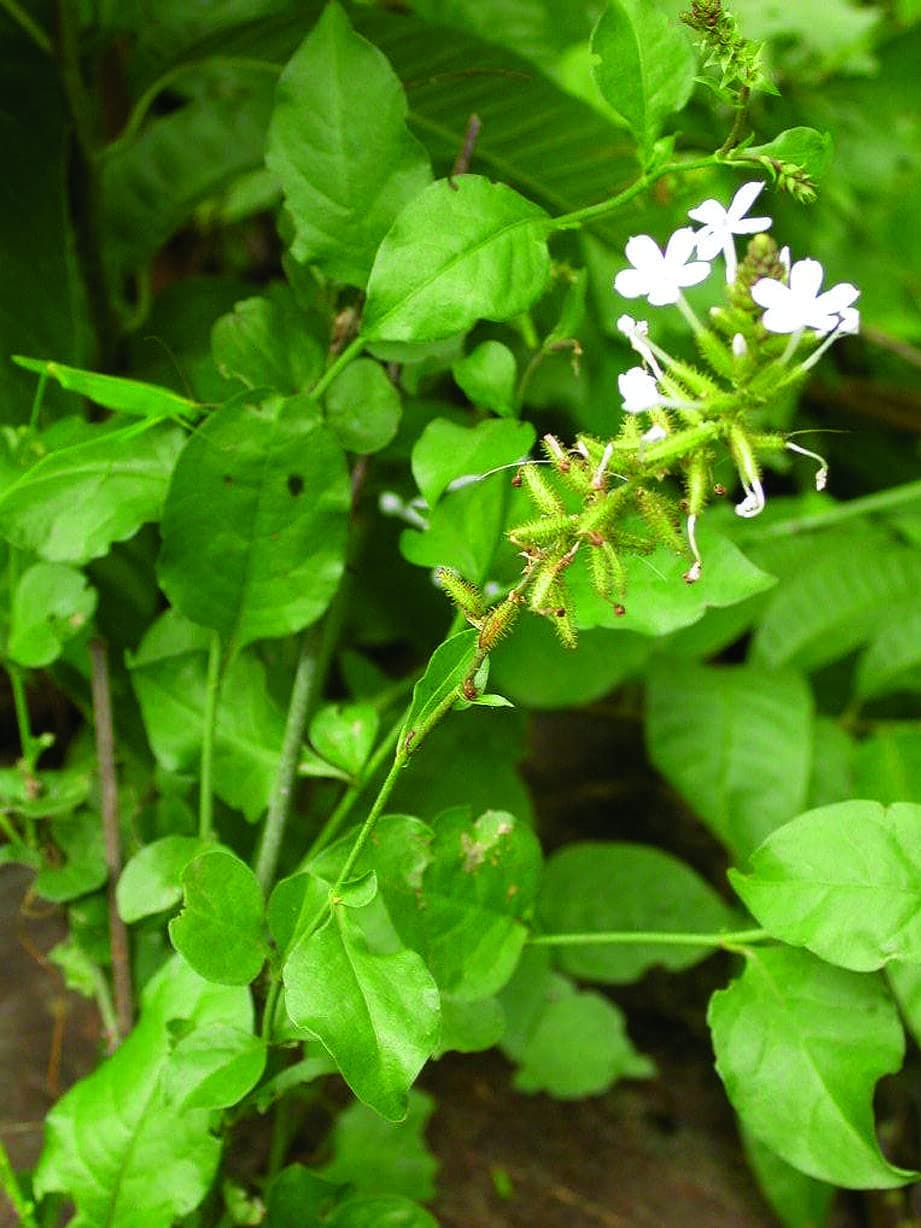
Chitrak, also known as "Leadwort" or "Doctorbush," is a perennial shrub with lance-shaped leaves and vibrant white flowers.
Plumbago zeylanica · Plumbaginaceae
Chitrak, also known as "Leadwort" or "Doctorbush," is a perennial shrub with lance-shaped leaves and vibrant white flowers.
Scientific Name
Plumbago zeylanica
Family
Plumbaginaceae
Hindi Name
Chitrak or Chita
Used Part
Roots and the root bark.
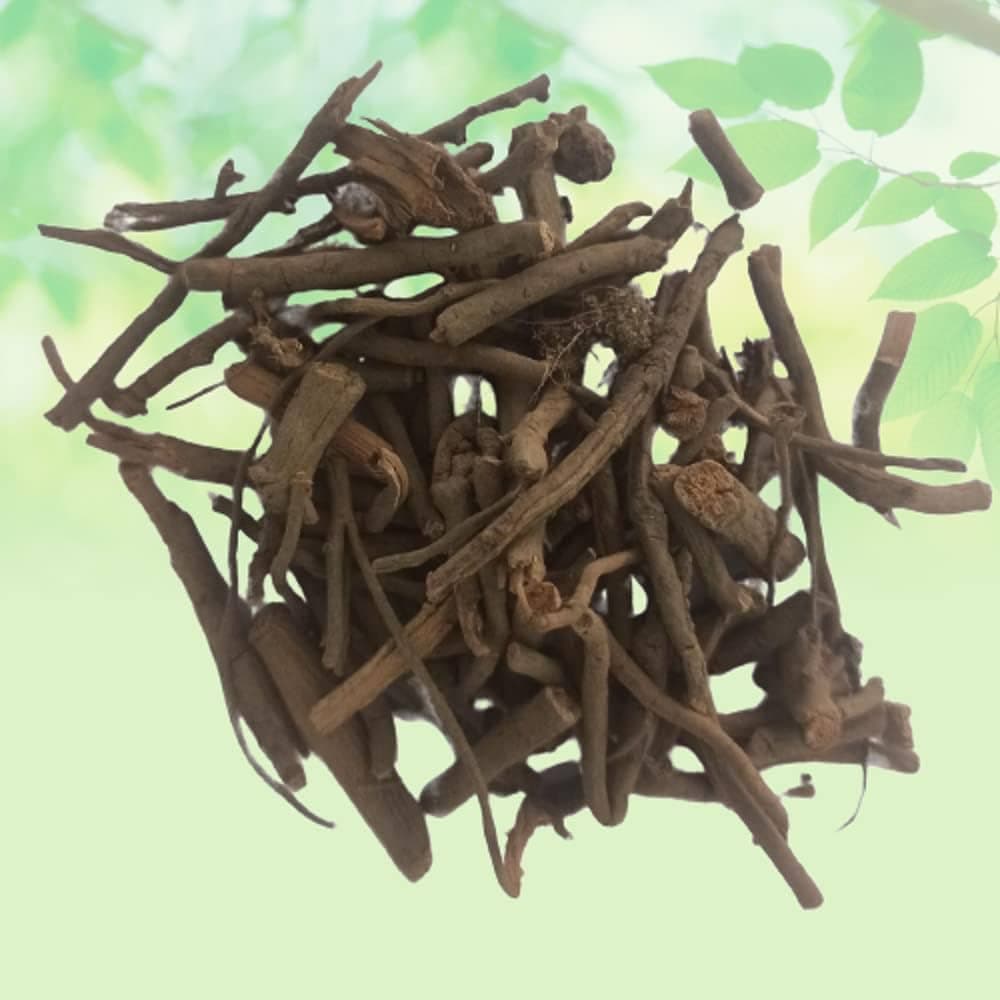
Morphology and field-identification notes as documented in our Dravyaguna library.
Chitrak, also known as "Leadwort" or "Doctorbush," is a perennial shrub with lance-shaped leaves and vibrant white flowers. It is native to tropical and subtropical regions of Asia. The plant typically reaches a height of 1-1.5 meters and has a woody stem. The leaves are arranged alternately, and the flowers are tubular with five petals, forming clusters at the end of branches. Chitrak is known for its thick, fleshy roots, which are the part used in traditional medicine.
The five-fold framework Ayurveda uses to describe a drug — Rasa, Guna, Vipaka, Veerya and its effect on the doshas.
Katu
The primary taste perceived on the tongue.
Tikshna, Ruksha, Laghu
Physical and energetic attributes of the dravya.
Katu
Taste that emerges after complete digestion.
Shulahar, Shothhar, KaphaVatahar, Dipana, Pachana, Arshhar, Grahi
Effect on Vata, Pitta and Kapha doshas.
Ushna
Heating (ushna) or cooling (sheeta) energy.
Digestive disorders, Skin diseases, Respiratory issues, and Inflammatory conditions
How modern science maps onto the classical understanding of this dravya.
Pharmacological Action
Chitrak contains various bioactive compounds, including plumbagin, a quinone derivative responsible for many of its medicinal properties. It also contains alkaloids, flavonoids, and tannins. Plumbagin is the primary constituent associated with Chitrak's therapeutic effects.
Phytoconstituents
In Ayurveda, Chitrak is described as having "Deepana" and "Pachana" properties, meaning it stimulates digestion and helps in the assimilation of nutrients. It is often referred to as "Agnivardhani" and its roperties are : Acrid, hot, corrosive, appetizer, digestive, cholesterol reducing, anti-cancer etc.
Classical Ayurvedic indications drawn directly from the Dravyaguna tradition — paired with the preparations recommended in shastra.
01
Chitrak is highly regarded in Ayurveda for its digestive and detoxifying properties. It is commonly used to improve appetite, stimulate digestion, and alleviate conditions like indigestion and flatulence. Chitrak's ability to kindle the digestive fire (Agni) makes it beneficial for weight management and enhancing metabolism.
Always consult a qualified Ayurvedic physician before using any herb therapeutically. Dose, anupana and Prakriti-specific suitability matter.
Yoga / Kalpana
Common Ayurvedic preparations where Chitrak is a key ingredient.
Shastra Pramana
चित्रकोऽनलनामा च पाठी व्यालस्तथोषतः।