Rasa (Taste)
Tikta, Katu, Kashaya
The primary taste perceived on the tongue.

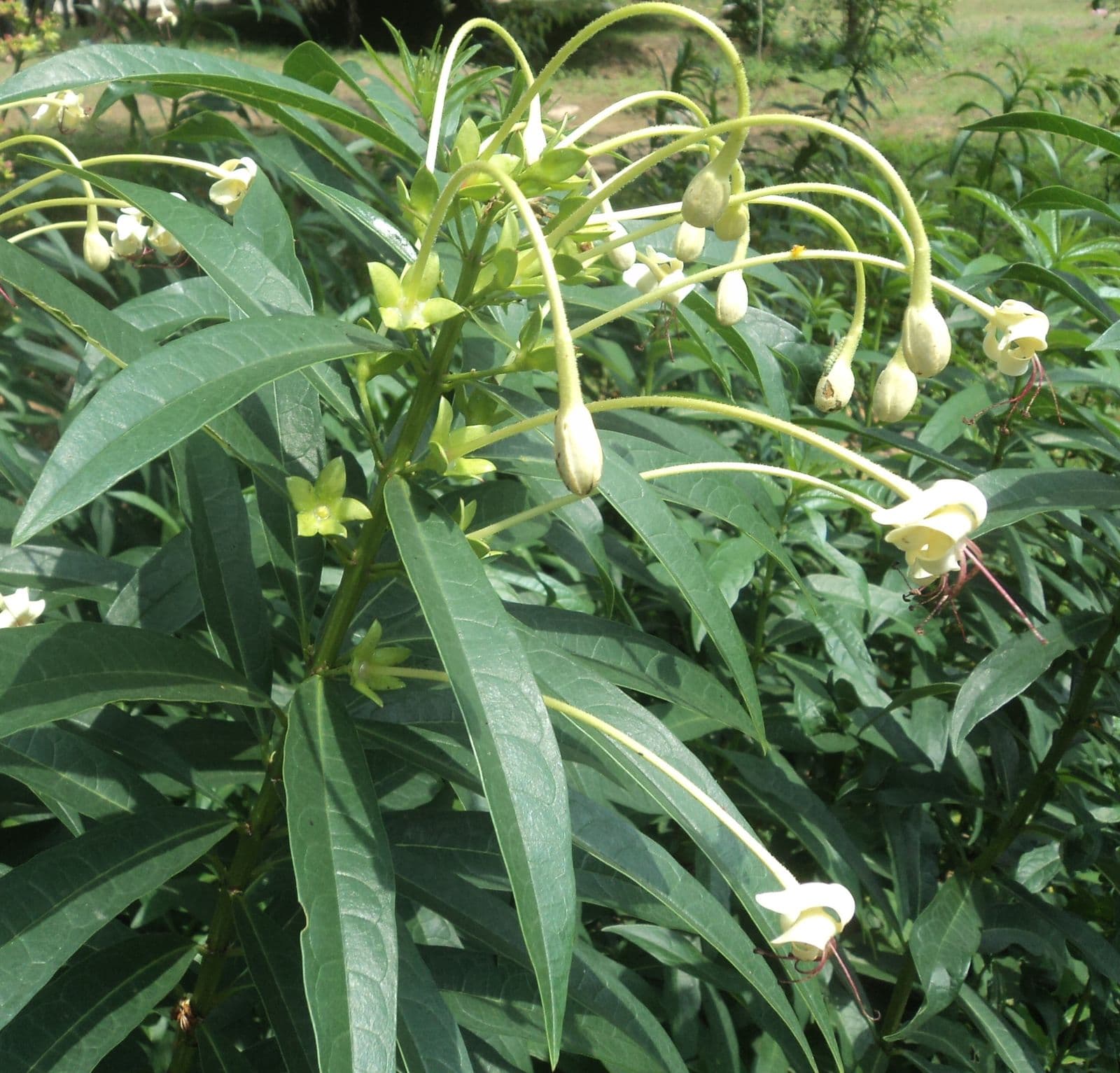
Habit - Shrub grows upto 7 ft.
Clerodendrum serratum · Verbenaceae
Habit - Shrub grows upto 7 ft.
Scientific Name
Clerodendrum serratum
Family
Verbenaceae
Hindi Name
Bharangi
Used Part
Moola (Root)
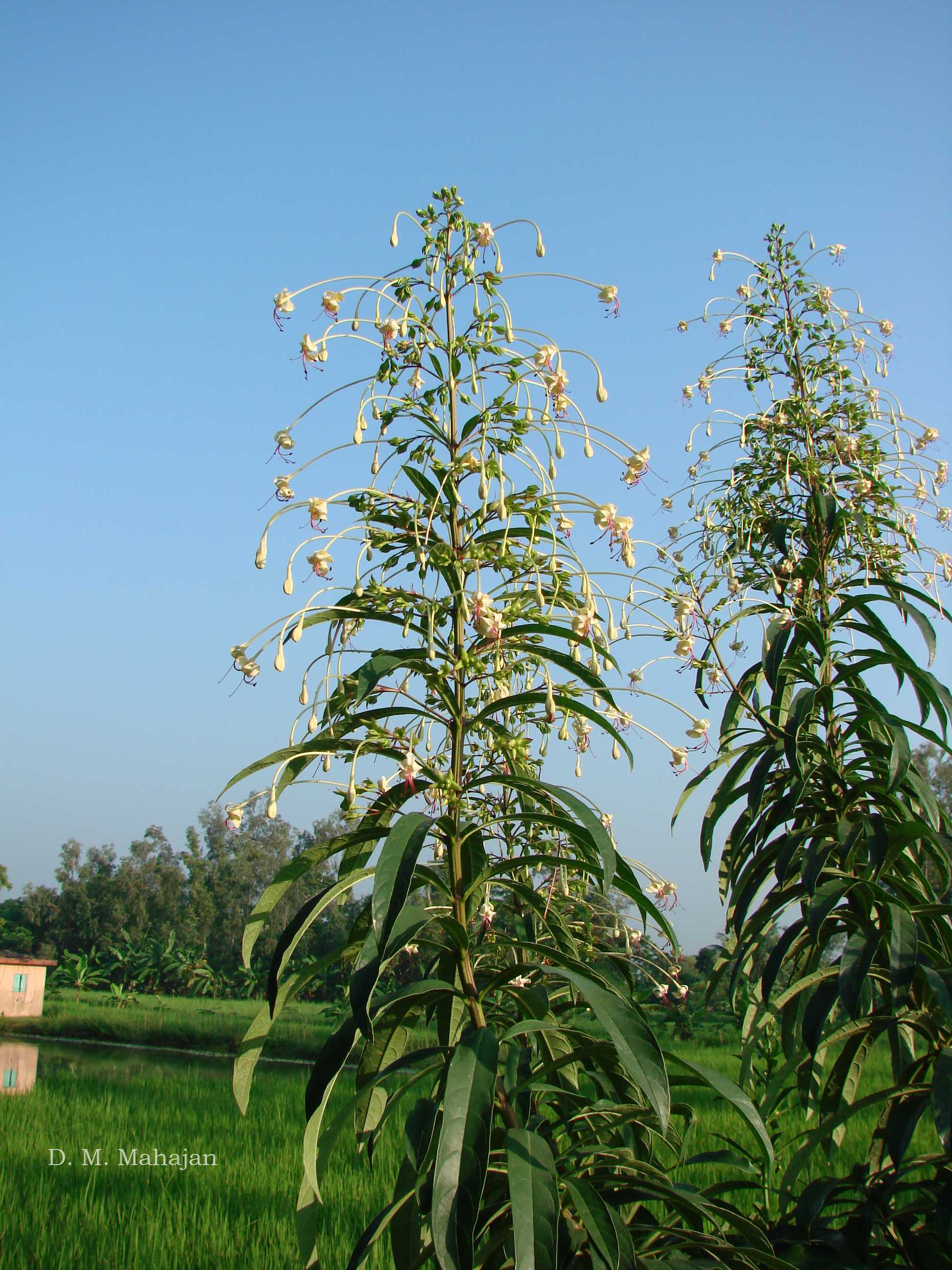
Morphology and field-identification notes as documented in our Dravyaguna library.
Habit - Shrub grows upto 7 ft. in height.Stem - Bluntly quadrangular, young parts glabrous.Leaves-Opposite, big, upto 28 cm long but usually 15-25 cm in length, 3-6 cm wide, oblong or petioles are very stout. Inflorescence-Panicle, 15-20 cm long. Flowers-Numerous, flowers are bluish to dark purple in colour. Fruit-Drupe, 6 mm long, somewhat succulent.
The five-fold framework Ayurveda uses to describe a drug — Rasa, Guna, Vipaka, Veerya and its effect on the doshas.
Tikta, Katu, Kashaya
The primary taste perceived on the tongue.
Ruksha, Laghu
Physical and energetic attributes of the dravya.
Katu
Taste that emerges after complete digestion.
Kaphavata Shamaka
Effect on Vata, Pitta and Kapha doshas.
Ushna
Heating (ushna) or cooling (sheeta) energy.
Shwasahara, Kasahara, Pachana, Dipana, Shothahara, Jwaraghna, Krimighna, Dahahara, Vranahara, Ruchikara, Arshoghna.
How modern science maps onto the classical understanding of this dravya.
Pharmacological Action
Bronchodilator, Expectorant, Anti-inflammatory, Antioxidant, and anti- allergic effects.
Phytoconstituents
D-mannitol, oleanolic acid, serratagenic acid, and sterols.
Classical Ayurvedic indications drawn directly from the Dravyaguna tradition — paired with the preparations recommended in shastra.
01
Paste prepared from Bharangi and Nagara or Maricha and Yavakshara is taken with kwatha of Pitadaru, Chitraka and Murva is much beneficial in Shwasa (Bronchial asthma).
02
Paste of Bharangi prepared with ghee and honey should be given for licking in case of Shwasa (Asthma).
03
Butter milk processed with Bharangi, Yava, Amalaki and Guduchi is to be given for drinking in case of Arshas (piles). Decoction prepared from Bharangi is used to take bath. This will cure Madatyaya (alcoholism).
04
Powder of bharangi and nagar is used with lukewarm water in case of Kasa roga.
Always consult a qualified Ayurvedic physician before using any herb therapeutically. Dose, anupana and Prakriti-specific suitability matter.
Yoga / Kalpana
Common Ayurvedic preparations where Bharangi is a key ingredient.
Shastra Pramana
भार्गी रुक्षा कटुस्तिक्ता रुच्योष्णा पाचनी लघुुः । दीपनी तुवरा र्गुल्मरक्तनुन्नाशयेद् ध्रुवम् ॥ शोधकासकफञ्श्वासपीनस ज्वरमारुतान् ।। (भा.प्र. हरीतक्यादद वर्गग /8s-/8/)