01
Unripe banana
Constipative ,Cures pitta and rakta diseases

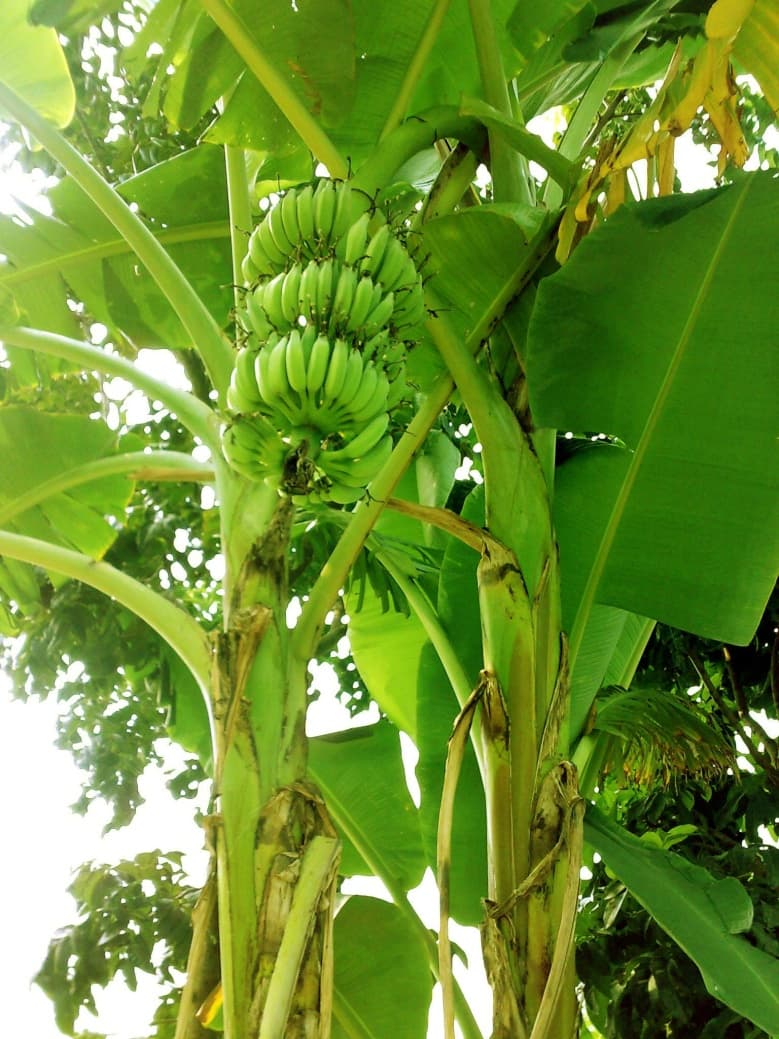
Theone or more pseudostems (upright, trunk-like structures) formed by tightly packed concentric layers of leaf sheaths, an underground rhizome, and a fibrous root system.
Theone or more pseudostems (upright, trunk-like structures) formed by tightly packed concentric layers of leaf sheaths, an underground rhizome, and a fibrous root system.
Theone or more pseudostems (upright, trunk-like structures) formed by tightly packed concentric layers of leaf sheaths, an underground rhizome, and a fibrous root system. The entire plant is called a mat. fruit is variable in size, color, and firmness, but is usually elongated and curved, with soft flesh rich in starch covered with a rind, which may be green, yellow, red, purple, or brown when ripe. The fruits grow upward in clusters near the top of the plant. In cultivated bananas, the ovary develops into a seedless fruit by parthenocarpy (without being pollinated). As it lifts, the bract (a modified leaf associated with a reproductive structure) exposes a cluster of female flowers that are normally arranged in two rows. These flowers will develop into a hand of fruit.
Scientific Name
Musa
Family
Musaceae
Common Name
Banana
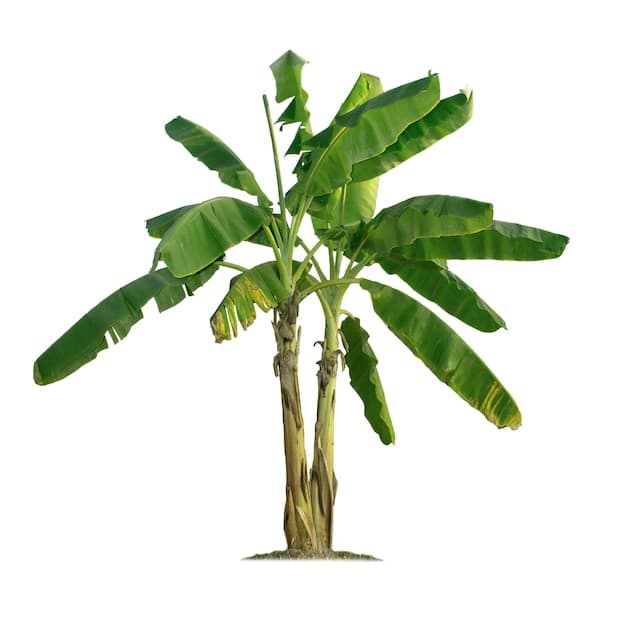
Theone or more pseudostems (upright, trunk-like structures) formed by tightly packed concentric layers of leaf sheaths, an underground rhizome, and a fibrous root system. The entire plant is called a mat. fruit is variable in size, color, and firmness, but is usually elongated and curved, with soft flesh rich in starch covered with a rind, which may be green, yellow, red, purple, or brown when ripe. The fruits grow upward in clusters near the top of the plant. In cultivated bananas, the ovary develops into a seedless fruit by parthenocarpy (without being pollinated). As it lifts, the bract (a modified leaf associated with a reproductive structure) exposes a cluster of female flowers that are normally arranged in two rows. These flowers will develop into a hand of fruit.
Unripe Banana Vipak: Katu , 2.Ripe Banana Guna heavy Vipak: Amla
Rasa
Kshaya ,
Kshaya ,
Guna
laghu
laghu
Virya
Shita ,
Shita ,
Rasa
Madhura,
Madhura,
Virya
Ushna
Ushna
| Sanskrit | Sanskrit Value | English | Value |
|---|---|---|---|
| Rasa | Kshaya , | Rasa | Kshaya , |
| Guna | laghu | Guna | laghu |
| Virya | Shita , | Virya | Shita , |
| Rasa | Madhura, | Rasa | Madhura, |
| Virya | Ushna | Virya | Ushna |
Banana leaves can be used as a raw material for obtaining different bioproducts. It is mainly composed of cellulose (21.90–32.56%), hemicellulose (25.80–12.00%), and lignin (39.10–17.00%), expressed as a percentage of dry weight [35,45,46].
The nutritional value of banana (/100g) were: energy 90 kcal, carbohydrates 22.84 g, protein 1.09 g, total fat 0.33 mg, cholesterol 0 mg, dietary Fiber 260 mg, vitamins (folates 20 μg, niacin 0.66 mg, pantothenic acid 0.33 mg, pyridoxine 0.36 mg, riboflavin 0.07 mg, thiamin 0.031 mg, vitamin A 64 IU, vitamin C 8.7 mg.
From classical Ayurvedic indications to modern phytotherapeutic insights — explore the spectrum of wellness benefits this herb has to offer.
01
Constipative ,Cures pitta and rakta diseases
02
Aphrodisiac , Kapha enhancing , Demulcent ,Controls appetite , Promotes taste ,Supports muscle tissue , Cures emaciation ,Relieves problems with urination.
03
mash the banana with raw sugar and cardamom to neutralize its pitta aggravating properties. Wonderful with rose petal jam.
04
Eat two unripe bananas.
05
eat a ripe banana in the evening before bed.
06
Dry skin, wrinkles: Nourish skin with a mashed banana face pack mixed with a little milk.
07
Apply mashed banana to the cracked area.
08
Tape banana peel over the wart each night for a week. Choose peel from a ripe banana—the riper the banana, the higher the antioxidant level.
09
Tape banana peel over the wart each night for a week. Choose peel from a ripe banana—the riper the banana, the higher the antioxidant level.
10
Eat a banana with a teaspoon of honey and two pinches of black pepper twice daily.