Rasa (Taste)
Kashaya, Amla, Madhura
The primary taste perceived on the tongue.

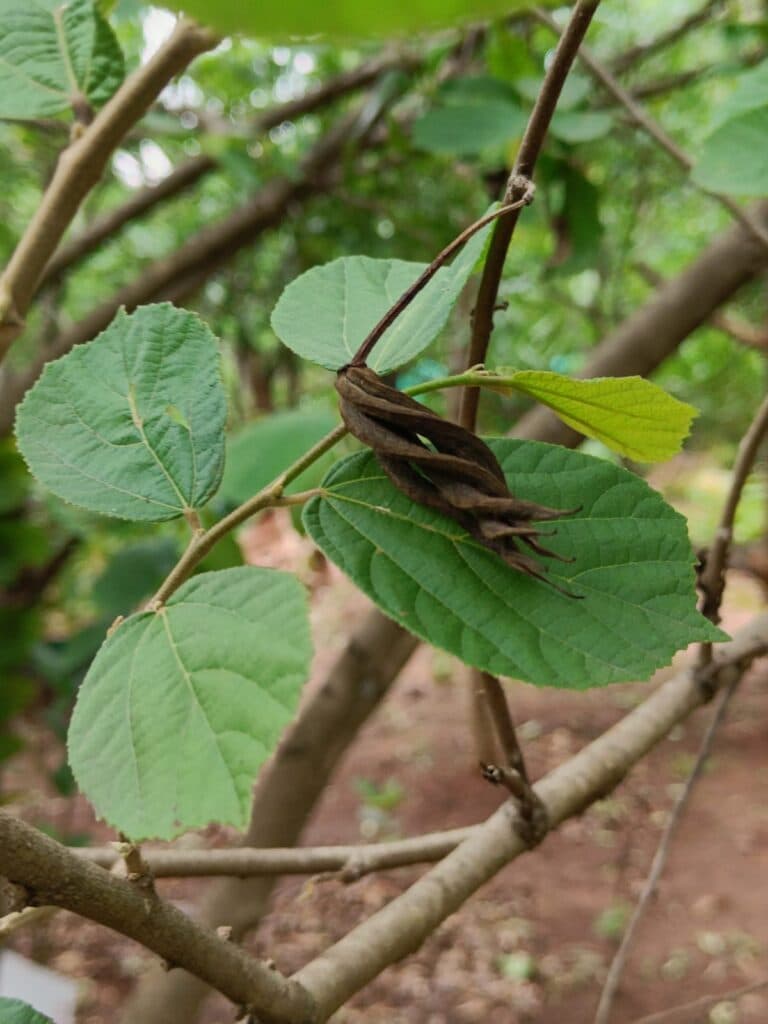
Avartini is a large shrub or small deciduous tree growing up to 3–5 meters in height.
Helicteres isora Linn. · Sterculiaceae
Avartini is a large shrub or small deciduous tree growing up to 3–5 meters in height.
Scientific Name
Helicteres isora Linn.
Family
Sterculiaceae
Hindi Name
Marodafali
Used Part
Fruit, Bark, Leave
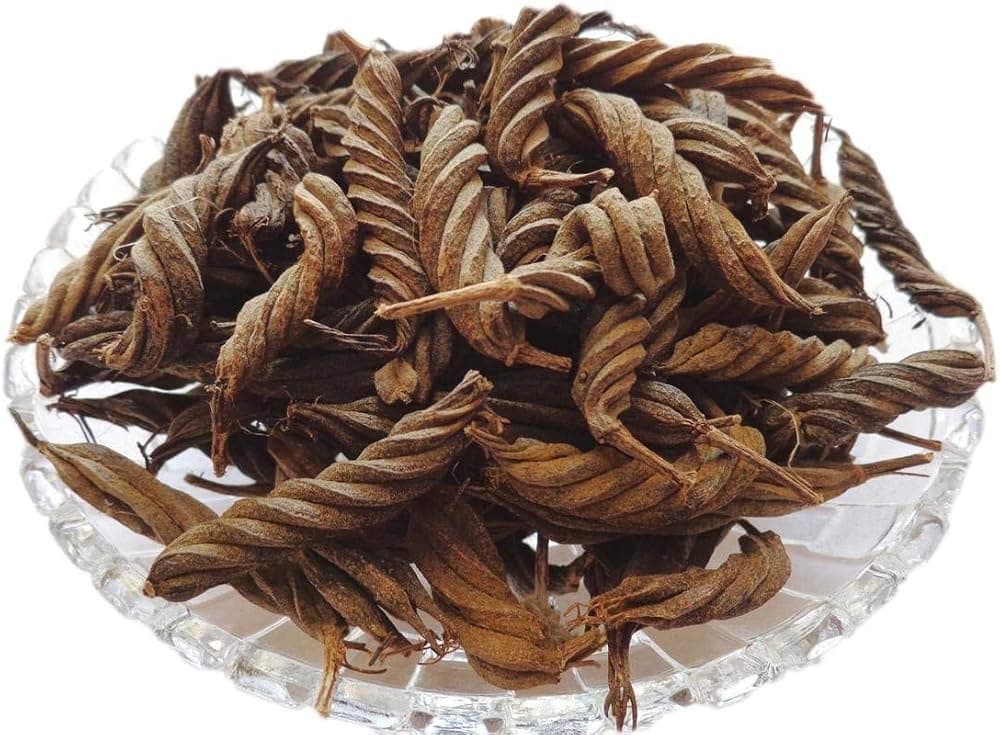
Morphology and field-identification notes as documented in our Dravyaguna library.
Avartini is a large shrub or small deciduous tree growing up to 3–5 meters in height. Leaves are simple, ovate and serrated with rough upper surface and hairy underside. Flowers are reddish or pinkish, arranged in axillary clusters. The fruits are characteristic screw-shaped twisted follicles, greenish brown in colour when mature. Seeds are numerous, black and enclosed inside fibrous fruits. The plant is commonly found in dry deciduous forests and tropical regions of India.
The five-fold framework Ayurveda uses to describe a drug — Rasa, Guna, Vipaka, Veerya and its effect on the doshas.
Kashaya, Amla, Madhura
The primary taste perceived on the tongue.
Laghu, Ruksha
Physical and energetic attributes of the dravya.
Katu
Taste that emerges after complete digestion.
Kapha pitta shamaka
Effect on Vata, Pitta and Kapha doshas.
Sheeta
Heating (ushna) or cooling (sheeta) energy.
Grahi, Krimighna, Atisarahara, Shoolahara, Pittahara
How modern science maps onto the classical understanding of this dravya.
Pharmacological Action
Antidiabetic, Antimicrobial, Antidiarrheal, Antioxidant and Antispasmodic.
Phytoconstituents
Contains cucurbitacin B, gallic acid, vanillin, diosgenin and various tannins and flavonoids
Classical Ayurvedic indications drawn directly from the Dravyaguna tradition — paired with the preparations recommended in shastra.
01
Fruit powder is used in diarrhea and dysentery.
02
Root powder is beneficial in diabetes management.
03
Decoction of bark is useful in abdominal colic and flatulence.
04
Used traditionally in worm infestation and skin diseases.
05
Helpful in hemorrhoids and wound healing.
Always consult a qualified Ayurvedic physician before using any herb therapeutically. Dose, anupana and Prakriti-specific suitability matter.
Yoga / Kalpana
Common Ayurvedic preparations where Avartani is a key ingredient.
Shastra Pramana
मुरा गन्धकुटी दैत्या सुरभिः शालपर्णिका ॥ मुरा तिक्ता हिमा स्वाद्वी लघ्वी पित्तानिलापहा। ज्वरासृग्भूतरक्षोघ्नी कुष्ठकासविनाशिनी|| (Bh.Ni. Guduchyadi varga 97-98)