Rasa (Taste)
Madhura
The primary taste perceived on the tongue.

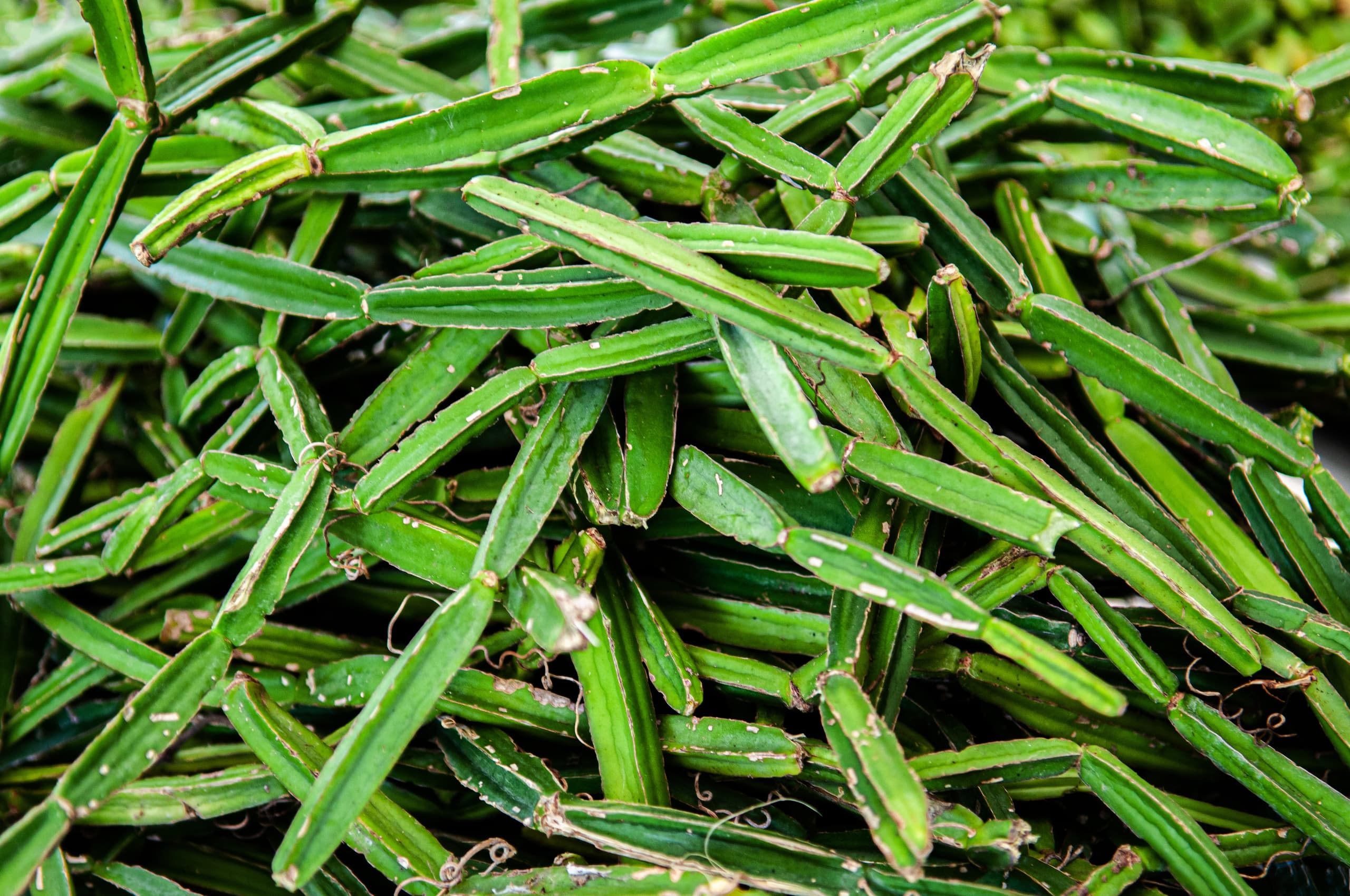
Asthishrunkhala commonly grows in South India.
Cissus quadrangularis Linn · Vitaceae
Asthishrunkhala commonly grows in South India.
Scientific Name
Cissus quadrangularis Linn
Family
Vitaceae
Hindi Name
Harjora
Used Part
Kanda (Stem)
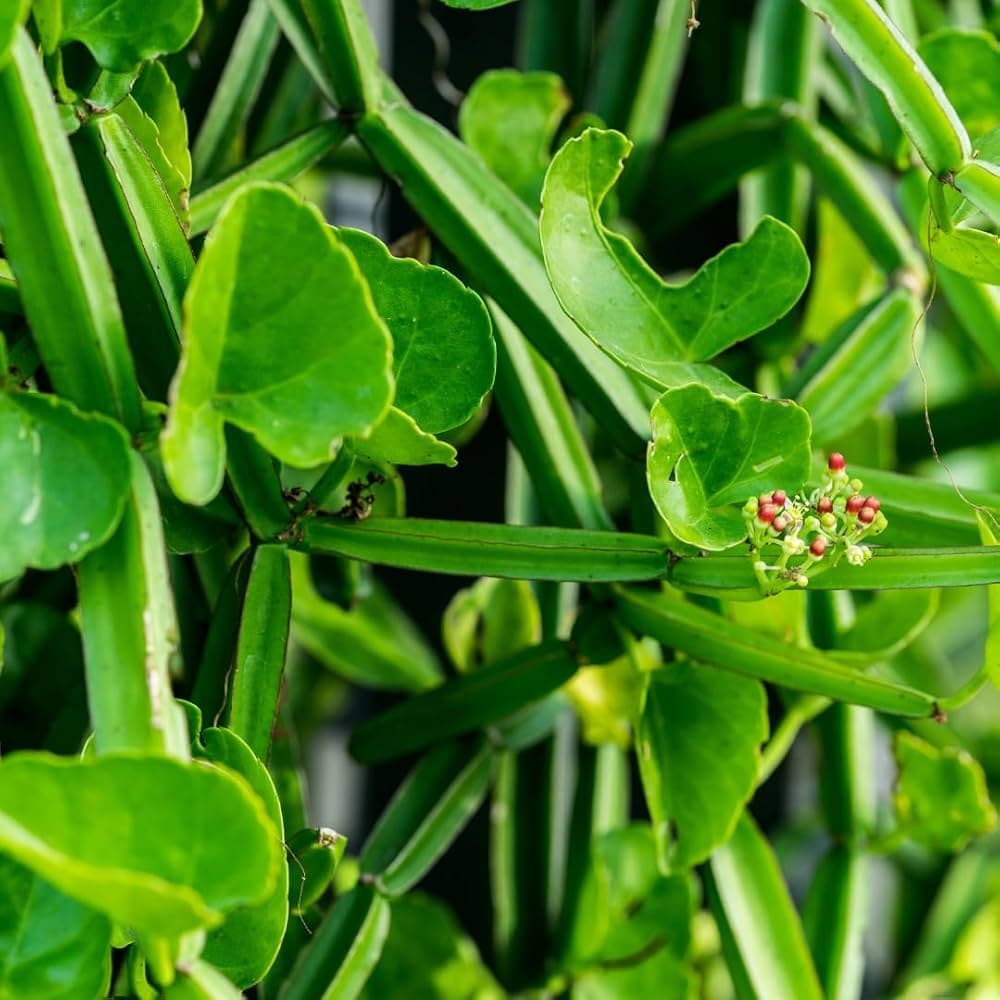
Morphology and field-identification notes as documented in our Dravyaguna library.
Asthishrunkhala commonly grows in South India.
A tendril climber with stout fleshy jointed quadrangular stems.
Leaves are simple, broadly reniform, entire or toothed.
Flowers are small and greenish. Fruits are ovoid or globose red berries with ellipsoid seeds.
The five-fold framework Ayurveda uses to describe a drug — Rasa, Guna, Vipaka, Veerya and its effect on the doshas.
Madhura
The primary taste perceived on the tongue.
Laghu, Ruksha
Physical and energetic attributes of the dravya.
Madhura
Taste that emerges after complete digestion.
Vata Kaphahara.
Effect on Vata, Pitta and Kapha doshas.
Ushna
Heating (ushna) or cooling (sheeta) energy.
Bhagna Sandhanakara, Arshoghna, Krimighna, Netrarogahara, Pachana, Vrishya, Balya.
How modern science maps onto the classical understanding of this dravya.
Pharmacological Action
Laxative, Anthelmintic, Carminative, Digestive, Stomachic, Haemostatic, Aphrodisiac and Ophthalmic.
Phytoconstituents
Stem contains two Tetracyclic Triterpenoids, β-sitosterol, β-amyrin and β-amyron.
Classical Ayurvedic indications drawn directly from the Dravyaguna tradition — paired with the preparations recommended in shastra.
01
In case of Bhagna (Fracture) one should take milk processed with Asthisamhara, ghee, lac, wheat and Arjuna.
02
To achieve conception, lady after having seasonal bath should consume juice and paste of Vajra vallari mixed with oil.
Always consult a qualified Ayurvedic physician before using any herb therapeutically. Dose, anupana and Prakriti-specific suitability matter.
Yoga / Kalpana
Common Ayurvedic preparations where Asthishrinkhala is a key ingredient.
Shastra Pramana
अस्थिसंहारकः प्रोक्तो वातश्लेष्महरोऽस्थिरुक् । उष्णः सरः कृमिघ्नश्चदुर्नामघ्नोऽक्षिरोगजित् ।। रुक्षः स्वादुर्लघुर्वृष्यः पाचनः पित्तलः स्मृतः ॥ (भा.प्र. गुडूच्यादि वर्ग-226-227) वज्रवल्ली सरा रुक्षा कृमिदुर्नमनाशिनी। दीपत्युष्णा विपाके च स्वाद्वी वृष्या बलप्रदा ॥ अस्थि सन्धानजननी वातश्लेष्महरा गुरुः ॥ (कै.नि. ओषधि वर्ग-1594-1595)