Rasa (Taste)
Tikta
The primary taste perceived on the tongue.

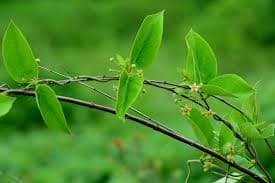
It is a perennial, twining herb with long hairy stem that climbs with the help of tendrils.
Tylophora indica · Asclepiadaceae
It is a perennial, twining herb with long hairy stem that climbs with the help of tendrils.
Scientific Name
Tylophora indica
Family
Asclepiadaceae
Hindi Name
Anantamool, Dambel
Used Part
Root, Leave
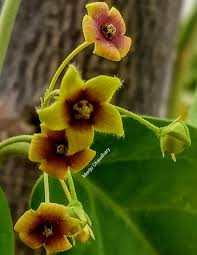
Morphology and field-identification notes as documented in our Dravyaguna library.
It is a perennial, twining herb with long hairy stem that climbs with the help of tendrils. Leaves are oblong, ovate to elliptical, arranged in opposite decussate pattern with 12mm long petioles. Flowers are small, greenish-yellow to the greenish-purple in color and arranged into umbellate cymes at the end of hairy peduncles of leaf axils.Fruits a glabrous fusiform follicle, 5-8.5 cm long,
The five-fold framework Ayurveda uses to describe a drug — Rasa, Guna, Vipaka, Veerya and its effect on the doshas.
Tikta
The primary taste perceived on the tongue.
Ushna
Physical and energetic attributes of the dravya.
Katu
Taste that emerges after complete digestion.
Kaphashamaka
Effect on Vata, Pitta and Kapha doshas.
Ushna
Heating (ushna) or cooling (sheeta) energy.
Vamaka , Swedajanana , Pachaka , Sthambaka, Rakthashodaka
How modern science maps onto the classical understanding of this dravya.
Pharmacological Action
Anti-asthmatic, Antibacterial, Anti-psoriasis, Antimicrobial, Antiallergic, Hypolipidemic, Antidiabetic, Anti-tumor, Antioxidant, and Diuretic activities.
Phytoconstituents
Tylophorine, Tylophorinine, Tylophorinidine, Septicine, Isotylocrebrine, Tylophoricine, sterols, flavanoids, wax, resins and tannins , alkaloids tylophorine, tylophorinine and tylophrinidine
Classical Ayurvedic indications drawn directly from the Dravyaguna tradition — paired with the preparations recommended in shastra.
01
Fine paste of the leaves and roots in gouty arthritis
02
Hot infusion of the roots for syphilis and blood borne disorders.
03
Fine powder of the leaf for inducing vomiting in food poisoning and in asthma.
04
Fine powder of roots of Arkaparni and liquorice for phlegm, cough, asthma.
05
Leaf powder with the decoction of Guduchi for gouty arthritis
Always consult a qualified Ayurvedic physician before using any herb therapeutically. Dose, anupana and Prakriti-specific suitability matter.
Yoga / Kalpana
Common Ayurvedic preparations where Arkaparni (Dambel) is a key ingredient.
Shastra Pramana
अर्को वसुकस्तूलफलः सदापुष्पो विकीरणः । अलर्कः प्रतापश्च श्वेतार्को रक्त एव च ॥(Bha. P. Ni. guduchyadi varga 181-182)