Rasa (Taste)
Madhura, Tikta
The primary taste perceived on the tongue.

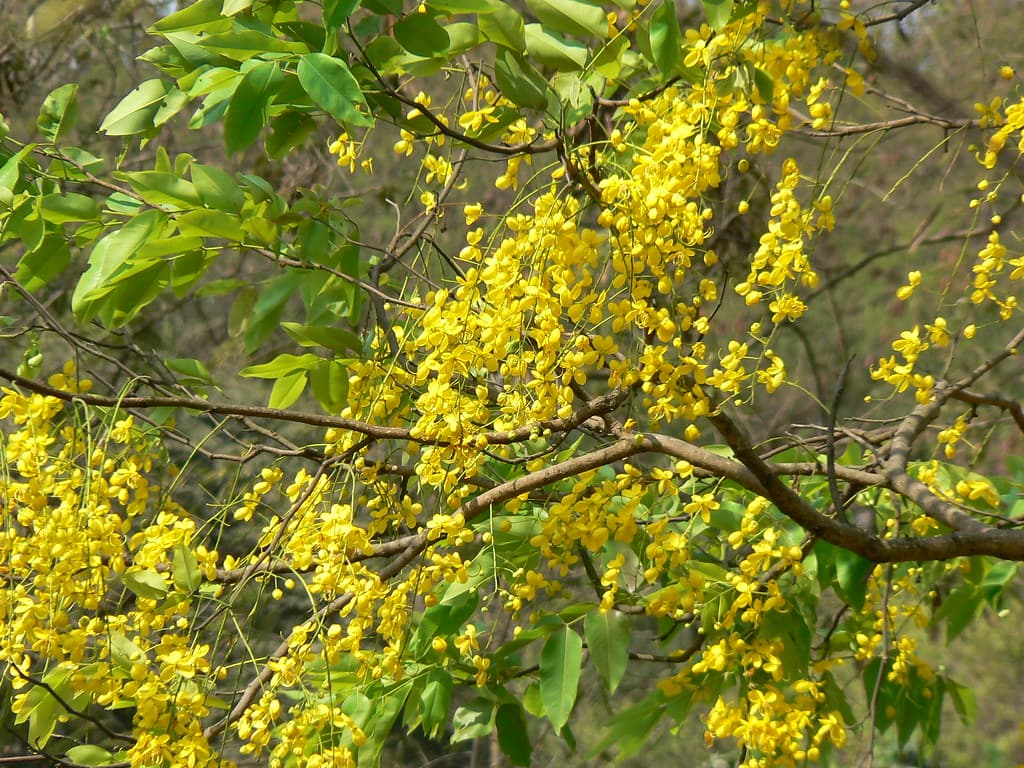
Aragwadh is cultivated extensively all over India.It is a medium sized perennial tree.Stem is erect, branched, cylindrical, woody, solid, bark greenish grey...
Cassia fistula Linn. · Caesalpiniaceae
Aragwadh is cultivated extensively all over India.It is a medium sized perennial tree.Stem is erect, branched, cylindrical, woody, solid, bark greenish grey...
Scientific Name
Cassia fistula Linn.
Family
Caesalpiniaceae
Hindi Name
Amaltas
Used Part
Phala (Fruit)
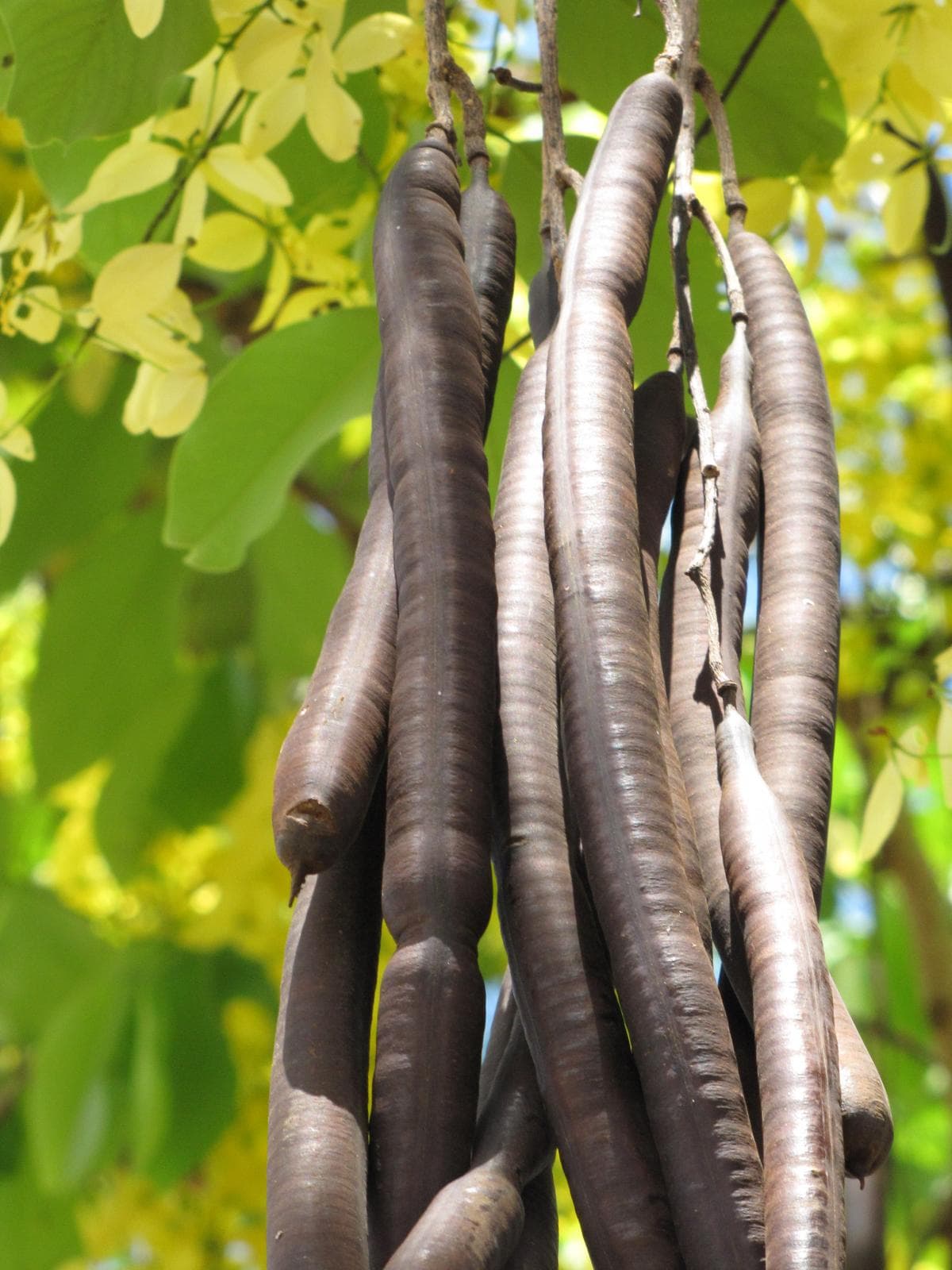
Morphology and field-identification notes as documented in our Dravyaguna library.
Aragwadh is cultivated extensively all over India.It is a medium sized perennial tree.Stem is erect, branched, cylindrical, woody, solid, bark greenish grey in colour.Leaves are alternate petiolate, compound, paripinnate, with pulvinus base, leaf lets 4-8 paris, stalked, ovate, wavy, acute, glabrous, entire, venation of the leaflets unicostate, reticulate.Inflorescence is long axillary pendulous racemes.Flowers are pedicellate, with long pedicles, bracteates, bisexual, complete, zygomorphic, yellow, hypogynous and pentamerous.
The five-fold framework Ayurveda uses to describe a drug — Rasa, Guna, Vipaka, Veerya and its effect on the doshas.
Madhura, Tikta
The primary taste perceived on the tongue.
Guru, Snigdha
Physical and energetic attributes of the dravya.
Madhura
Taste that emerges after complete digestion.
Vatapitta Shamak
Effect on Vata, Pitta and Kapha doshas.
Sheeta
Heating (ushna) or cooling (sheeta) energy.
Sramsana, Shulahara, Ruchya, Koshtha Shuddhikara, Krimighna, Pramehagna, jwaraghna, Kushtaghna.
How modern science maps onto the classical understanding of this dravya.
Pharmacological Action
Purgative
Phytoconstituents
- Pod pulp-Anthraquninone, sucrose, lignoceric acid, amino acids.Root bark- Anthroquninone derivatives, semnoside A&B, fistucacidin, g-sitosterol, volatile oil.Stem bark and leaves- Rhein glycoside
Classical Ayurvedic indications drawn directly from the Dravyaguna tradition — paired with the preparations recommended in shastra.
01
Paste of Aragwadha leaves and Shleshmataka bark is mixed with ghee and applied in all types of Visarpa (Erysipelas).
02
In Amavaat leaves of Aragwadha are fried with mustard oil. These leaves are chewed after evening meal.
03
Triturate leaves of Aragwadha and Kakamachi with buttermilk. The paste thus obtained is applied over skin lesions (the part should be anointed prior to this application).
04
In Pittodara (ascites caused by aggravated Pitta), milk processed with the paste (kalka) of the pulp of Amaltas fruit is used for Virechana.
05
In fever, for the purpose of Virechana, the pulp of the Amaltas fruit is administered along with milk or grape juice.
Always consult a qualified Ayurvedic physician before using any herb therapeutically. Dose, anupana and Prakriti-specific suitability matter.
Yoga / Kalpana
Common Ayurvedic preparations where Amaltas is a key ingredient.
Shastra Pramana
आरग्वधोगुरुः स्वादुः शीतलः स्त्रंसनोत्तमः । ज्वरहृद्रोगपित्तास्त्रवातोदावर्त्तशूलनुत् ॥ तत्फलं स्त्रंसनं रुच्यं कुष्ठपित्तकफापहम् । ज्वरे तु सततं पथ्यं कोष्ठशुद्धिकरं परम् ॥ (भा.प्र.नि. हरीक्यादि वर्ग 149-50)