Rasa (Taste)
Madhura
The primary taste perceived on the tongue.

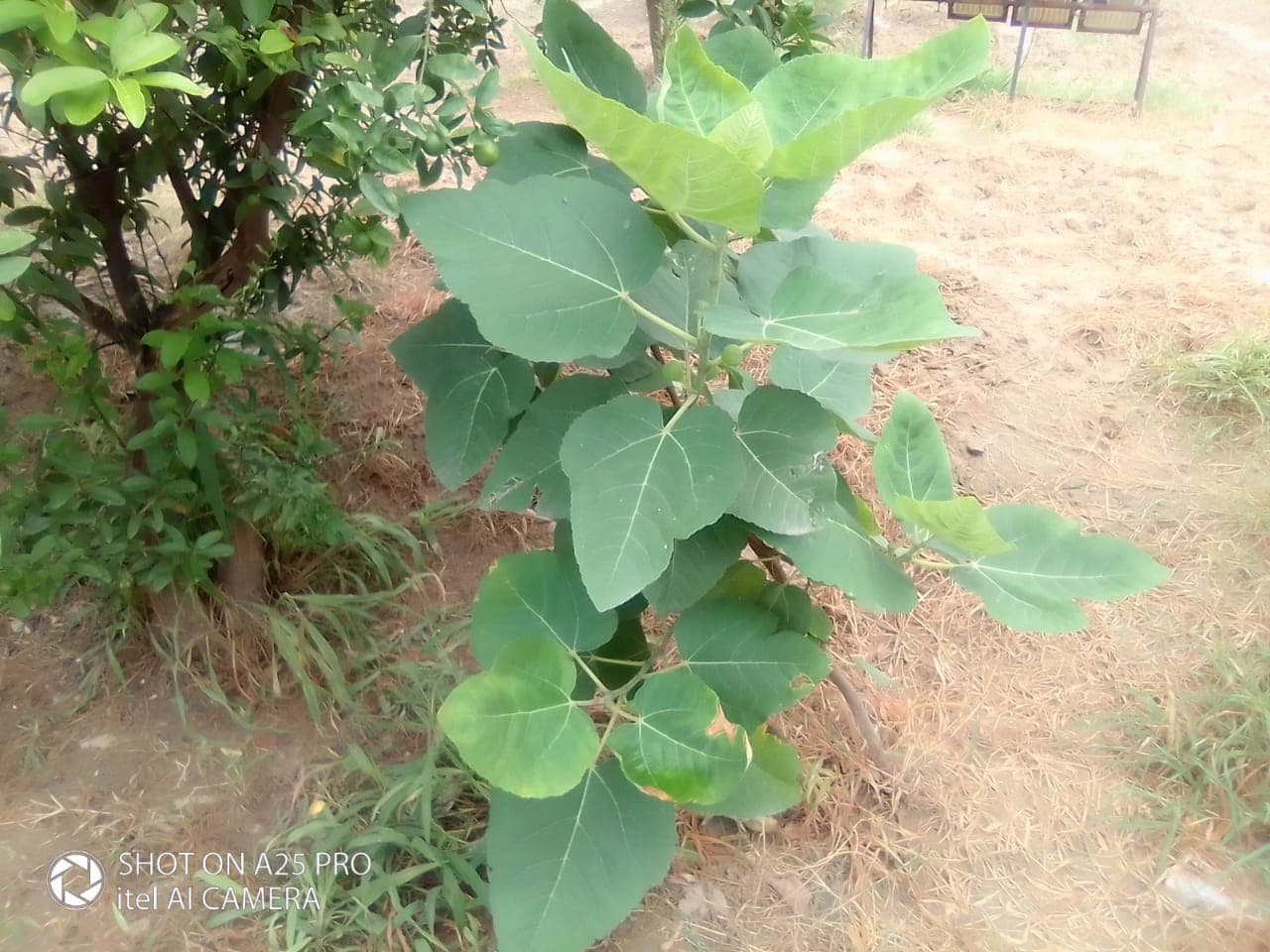
It is a deciduous tree or large shrub that grows upto 7-10 m(23-33ft) tall, with smooth white bark.
Ficus carica · Moraceae
It is a deciduous tree or large shrub that grows upto 7-10 m(23-33ft) tall, with smooth white bark.
Scientific Name
Ficus carica
Family
Moraceae
Hindi Name
Anjeer
Used Part
Fruit, Leaves, Root
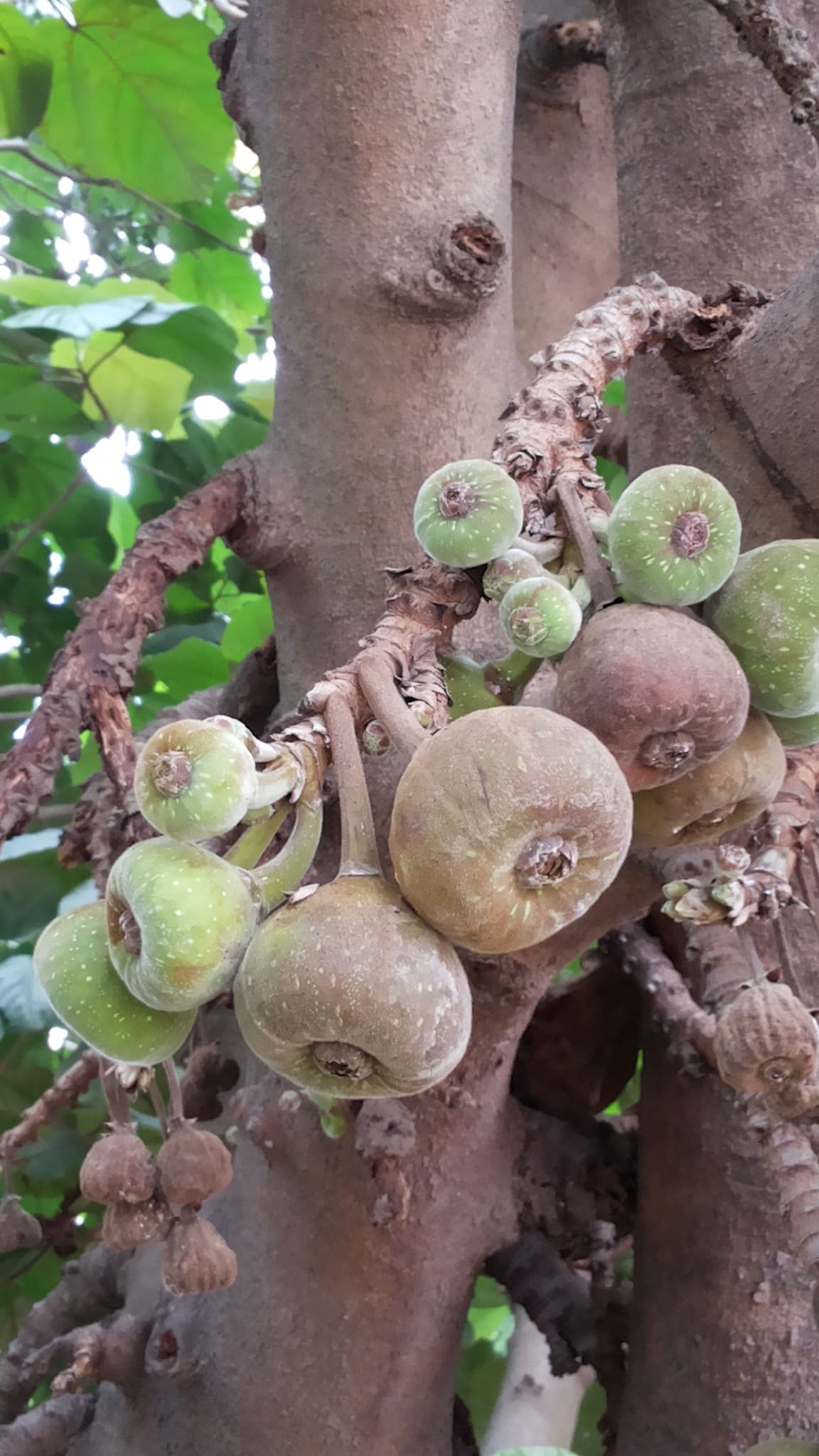
Morphology and field-identification notes as documented in our Dravyaguna library.
It is a deciduous tree or large shrub that grows upto 7-10 m(23-33ft) tall, with smooth white bark. It's fragrant leaves are 12-25cm (4+1/2-10 in0 long and 10-18 cm (4-7 in) wide, and are deeply lobed (three or five lobes). The fig fruit develops as a hollow, fleshy struture called the syconium that is lines internally with numerous unisexual flowers. The tiny flowers bloom inside this cup-like strutrue.
The five-fold framework Ayurveda uses to describe a drug — Rasa, Guna, Vipaka, Veerya and its effect on the doshas.
Madhura
The primary taste perceived on the tongue.
Guru, Snigdha.
Physical and energetic attributes of the dravya.
Madhura (Sweet)
Taste that emerges after complete digestion.
Vatapitta Shamak
Effect on Vata, Pitta and Kapha doshas.
Sheeta
Heating (ushna) or cooling (sheeta) energy.
Anulomana, Tarpana, Mutrala.
How modern science maps onto the classical understanding of this dravya.
Pharmacological Action
Antioxidant, Anti-inflammatory, Hypoglycemic (blood sugar-lowering), and natural laxative.
Phytoconstituents
It contain numerous volatile compounds: benzyl aldehyde, benzyl alcohol, furanoid, linalool, pyranoid (trans), cinnamic aldehyde, indole, cinnamic alcohol, eugenol, and transcaryophyllenes sesquiterpene: germacrene D, hydroxyl caryophyllene, angelicin, and bergapten.
Classical Ayurvedic indications drawn directly from the Dravyaguna tradition — paired with the preparations recommended in shastra.
01
-Diabetes and glucose control 2-Erectile dysfunction 3-Skin health 4-Hair health 5-Digestive health 7- Anticancer Activity
Always consult a qualified Ayurvedic physician before using any herb therapeutically. Dose, anupana and Prakriti-specific suitability matter.
Yoga / Kalpana
Common Ayurvedic preparations where Anjeer is a key ingredient.
Shastra Pramana
अञ्जीरं शीतलं स्वादु गुरु पित्तास्रवातजित् ।तस्मादल्पगुणं ज्ञेयमञ्जीरं लघु तद्गुणम् ॥(भा० प्र० नि०, आम्रादिफलवर्ग)