01
Indigestion
Amla helps manage indigestion by improving the Pachak Agni (digestion fire). It also helps in easy expulsion of stool due to its Rechana (mild laxative) property.

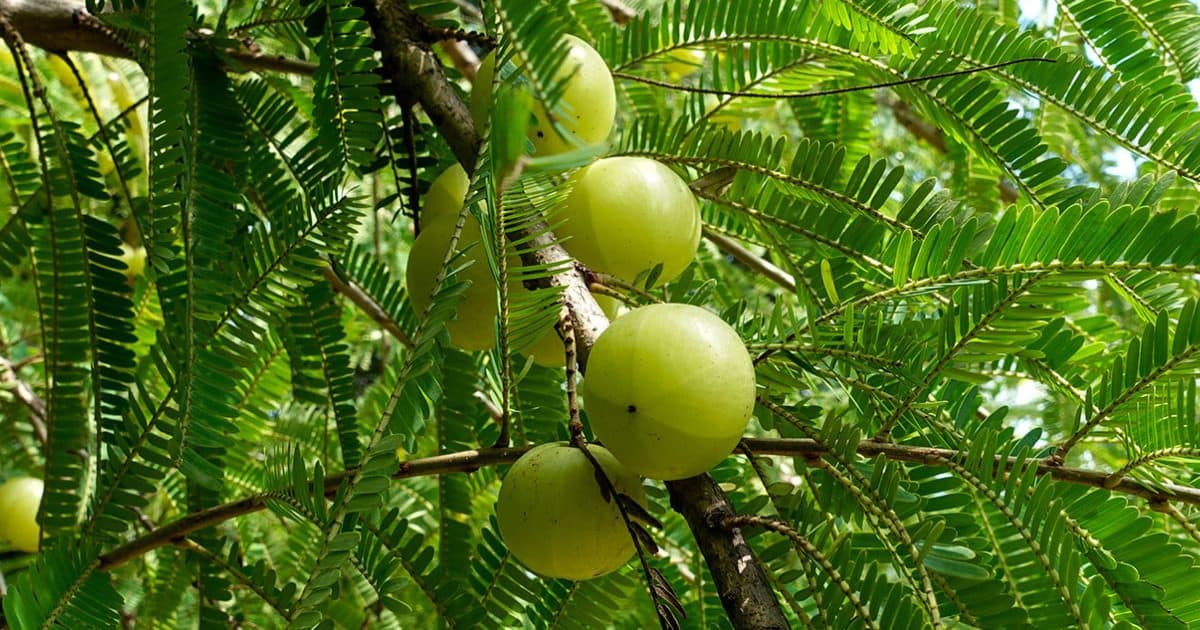
The tree is small to medium in size, reaching 1–8 m (3 ft 3 in – 26 ft 3 in) in height.
The tree is small to medium in size, reaching 1–8 m (3 ft 3 in – 26 ft 3 in) in height.
The tree is small to medium in size, reaching 1–8 m (3 ft 3 in – 26 ft 3 in) in height. The branchlets are finely pubescent (not glabrous), 10–20 cm (3.9–7.9 in) long, usually deciduous. The leaves are simple, subsessile and closely set along branchlets, light green, resembling pinnate leaves. The flowers are greenish-yellow. The fruit is nearly spherical, light greenish-yellow, quite smooth and hard on appearance, with six vertical stripes or furrows. The fruit is up to 26 mm (1.0 in) in diameter, and, while the fruit of wild plants weigh approximately 5.5 g (0.19 oz), cultivated fruits average 28.4 g (1.00 oz) to 56 g (2.0 oz)
Scientific Name
Phyllanthus emblica
Family
Phyllanthaceae
Common Name
Indian Gooseberry
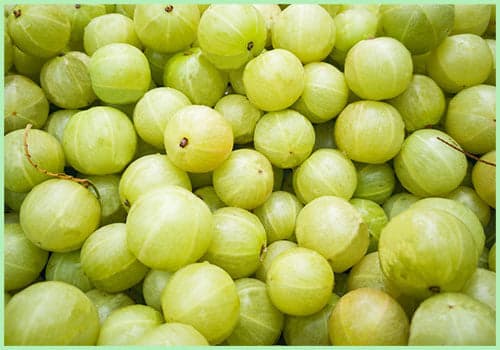
The tree is small to medium in size, reaching 1–8 m (3 ft 3 in – 26 ft 3 in) in height. The branchlets are finely pubescent (not glabrous), 10–20 cm (3.9–7.9 in) long, usually deciduous. The leaves are simple, subsessile and closely set along branchlets, light green, resembling pinnate leaves. The flowers are greenish-yellow. The fruit is nearly spherical, light greenish-yellow, quite smooth and hard on appearance, with six vertical stripes or furrows. The fruit is up to 26 mm (1.0 in) in diameter, and, while the fruit of wild plants weigh approximately 5.5 g (0.19 oz), cultivated fruits average 28.4 g (1.00 oz) to 56 g (2.0 oz)
Rasa
Amla
Amla
Guna
Ruksha,Kashaya
Ruksha,Kashaya
Virya
Shita
Shita
Vipaka
Madhura
Madhura
| Sanskrit | Sanskrit Value | English | Value |
|---|---|---|---|
| Rasa | Amla | Rasa | Amla |
| Guna | Ruksha,Kashaya | Guna | Ruksha,Kashaya |
| Virya | Shita | Virya | Shita |
| Vipaka | Madhura | Vipaka | Madhura |
These fruits contain high amounts of ascorbic acid (vitamin C),and have a bitter taste that may derive from a high density of ellagitannins,such as emblicanin A (37%), emblicanin B (33%), punigluconin (12%), and pedunculagin (14%).[9] Amla also contains punicafolin and phyllanemblinin A, phyllanemblin other polyphenols, such as flavonoids, kaempferol, ellagic acid, and gallic acid.
From classical Ayurvedic indications to modern phytotherapeutic insights — explore the spectrum of wellness benefits this herb has to offer.
01
Amla helps manage indigestion by improving the Pachak Agni (digestion fire). It also helps in easy expulsion of stool due to its Rechana (mild laxative) property.
02
Amla helps control weight by improving the metabolism due to its Deepan (appetizer) and Pachan (digestive) property.
03
Amla helps manage bloody diarrhea (dysentery) due to its Kashaya (astringent) property. It helps control bleeding and reduce contraction of the smooth muscles of the gastrointestinal tract.
04
Amla helps to control joint pains and swelling due to an aggravated Vata. Amla has Vata balancing property and relieves pain and improves mobility.
05
Amla shows a protective action by fighting against the free radicals and reducing the number of inflammatory mediators.
06
Vitamin C in Amla is known to increase the activity of natural killer cells leading to toxicity and breakdown of the cancerous cells. Amla also inhibits the growth and multiplication of cancer cells to some extent by inhibiting the enzymes topoisomerase and cdc25 tyrosine phosphatase.
07
Amla helps to improve the glucose metabolism in diabetic patients therefore reducing the fasting and postprandial blood glucose levels in the body.
08
Excessive contraction of the smooth muscles of the gastrointestinal tract causes diarrhea with abdominal pain and cramping. Amla has antispasmodic property and helps relax the smooth muscles of the abdomen.
09
Amalaki is popularly known to be a natural source of antioxidants due to its rich phytochemistry with the presence of ascorbic acid (vitamin C) and polyphenol content. Some sources even suggest the small, tart amalaki fruit has one of the highest known concentrations of vitamin C in the plant kingdom.
10
Amalaki, generally considered safe for most people when consumed in moderation.however,there can be certain contradictions or precautions to consider : Allergies, Medication interactions,Gastrointestinal issues,pregnancy and brest feeding.