Rasa (Taste)
Tikta and Kashaya
The primary taste perceived on the tongue.

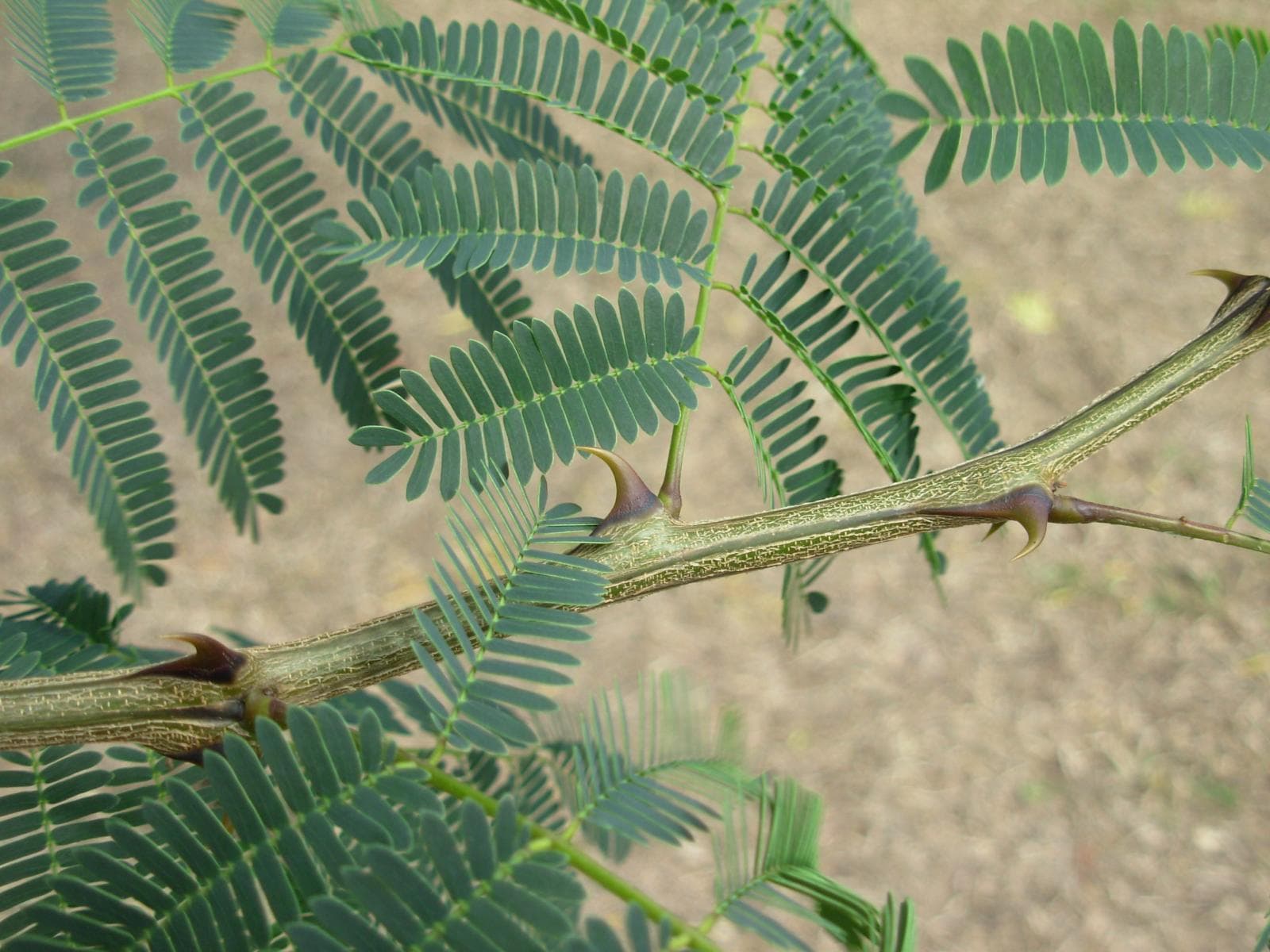
Khadira is a deciduous tree which reaches the height up to 9 to 12 meters.
Acacia catechu · Fabaceae (Leguminosae)
Khadira is a deciduous tree which reaches the height up to 9 to 12 meters.
Scientific Name
Acacia catechu
Family
Fabaceae (Leguminosae)
Hindi Name
Catechu, khair
Used Part
Heartwood , Stem bark
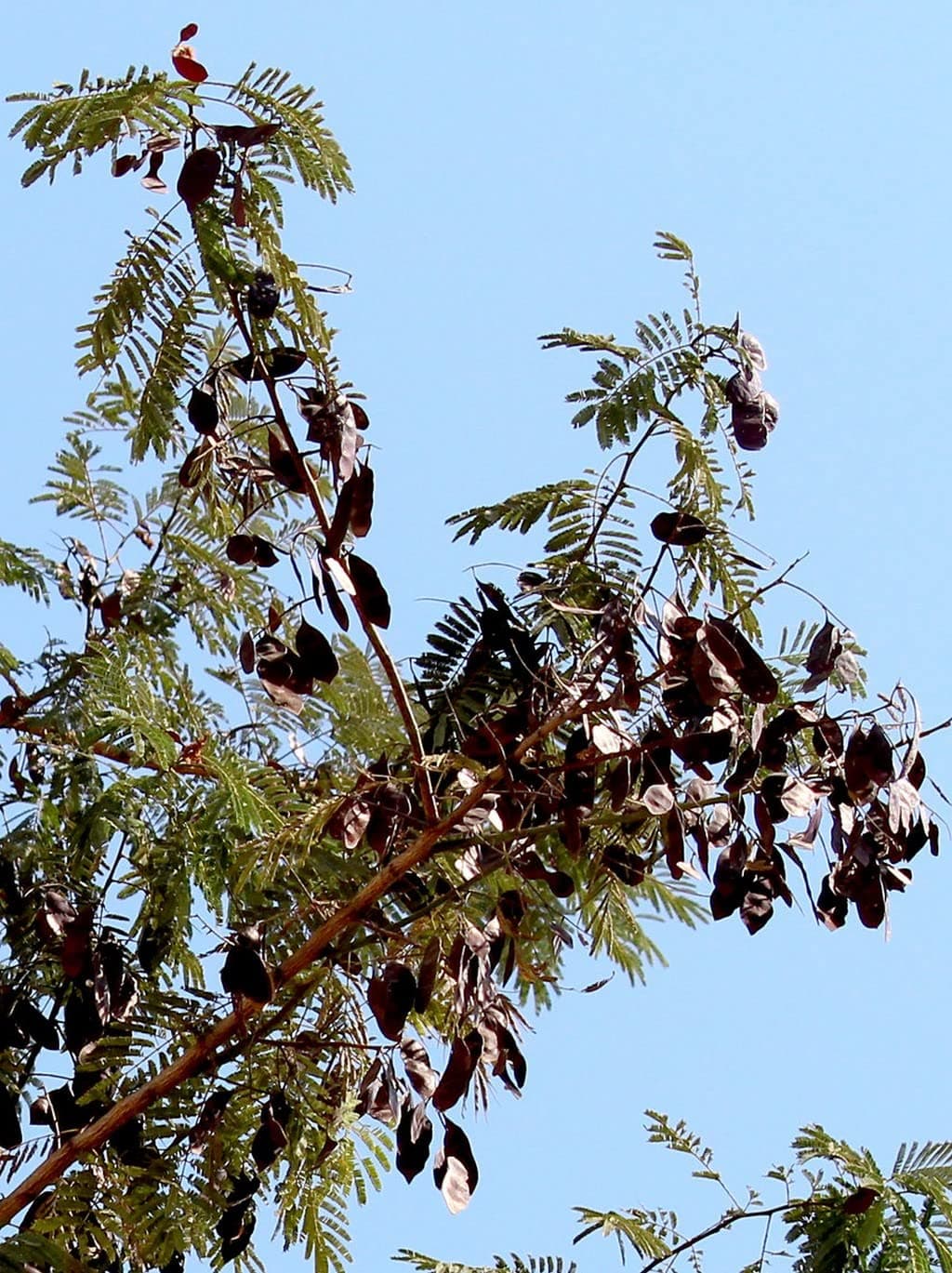
Morphology and field-identification notes as documented in our Dravyaguna library.
Khadira is a deciduous tree which reaches the height up to 9 to 12 meters. This plant has short hooked spines and green leaves are bipinnately compounds with 50 pairs of leaflets which look like beautiful feathers. Color of the bark is greyish brown that exfoliate into long and narrow strips
The five-fold framework Ayurveda uses to describe a drug — Rasa, Guna, Vipaka, Veerya and its effect on the doshas.
Tikta and Kashaya
The primary taste perceived on the tongue.
Laghu, Ruksha
Physical and energetic attributes of the dravya.
Katu
Taste that emerges after complete digestion.
Kapha-Pitta Shamak
Effect on Vata, Pitta and Kapha doshas.
Sheeta, Ushna
Heating (ushna) or cooling (sheeta) energy.
Kashaya, Shita, Kaphapittahara
How modern science maps onto the classical understanding of this dravya.
Pharmacological Action
Treat skin ailments, Soothe oral tissues, and fight infections
Phytoconstituents
Khadir, or Acacia catechu, is known for containing various chemical constituents, with the most notable being catechins and tannins. Catechins are flavonoid compounds, while tannins are polyphenolic compounds.: Catechins: These are a type of flavonoid, with (-)-epicatechin and (-)-epicatechin-3-gallate being among the prominent catechins found in Acacia catechu. Tannins: Khadir is rich in tannins, particularly condensed tannins (proanthocyanidins). These tannins give Khadir its astringent properties and are used for their medicinal and dyeing properties. Alkaloids: Khadir also contains small amounts of alkaloids, such as catechinamine, which contribute to its pharmacological properties.
Classical Ayurvedic indications drawn directly from the Dravyaguna tradition — paired with the preparations recommended in shastra.
01
Khadir, or Acacia catechu, is known for containing various chemical constituents, with the most notable being catechins and tannins. Catechins are flavonoid compounds, while tannins are polyphenolic compounds.:
02
Catechins: These are a type of flavonoid, with (-)-epicatechin and (-)-epicatechin-3-gallate being among the prominent catechins.
03
Tannins: Khadir is rich in tannins, particularly condensed tannins (proanthocyanidins). These tannins give Khadir its astringent properties and are used for their medicinal and dyeing properties.
04
Alkaloids: Khadir also contains small amounts of alkaloids, such as catechinamine, which contribute to its pharmacological properties.
Always consult a qualified Ayurvedic physician before using any herb therapeutically. Dose, anupana and Prakriti-specific suitability matter.
Yoga / Kalpana
Common Ayurvedic preparations where Khadir is a key ingredient.
Shastra Pramana
खदिरो रक्तसारश्च गायत्री दन्तधावनः । कण्टकी बालपत्रश्च बहुशल्यश्च यज्ञियः ॥ खदिरः शोतलो दन्त्यः कण्डूकासारुचिप्रणुत् । तिक्तः कषायो मेदोघ्नः कृमिमेहज्वरव्रणान् ।। श्वित्रशोधामपित्तास्त्रपाण्डुकुष्ठकफान् हरेत् ।' (भा. प्र.)