
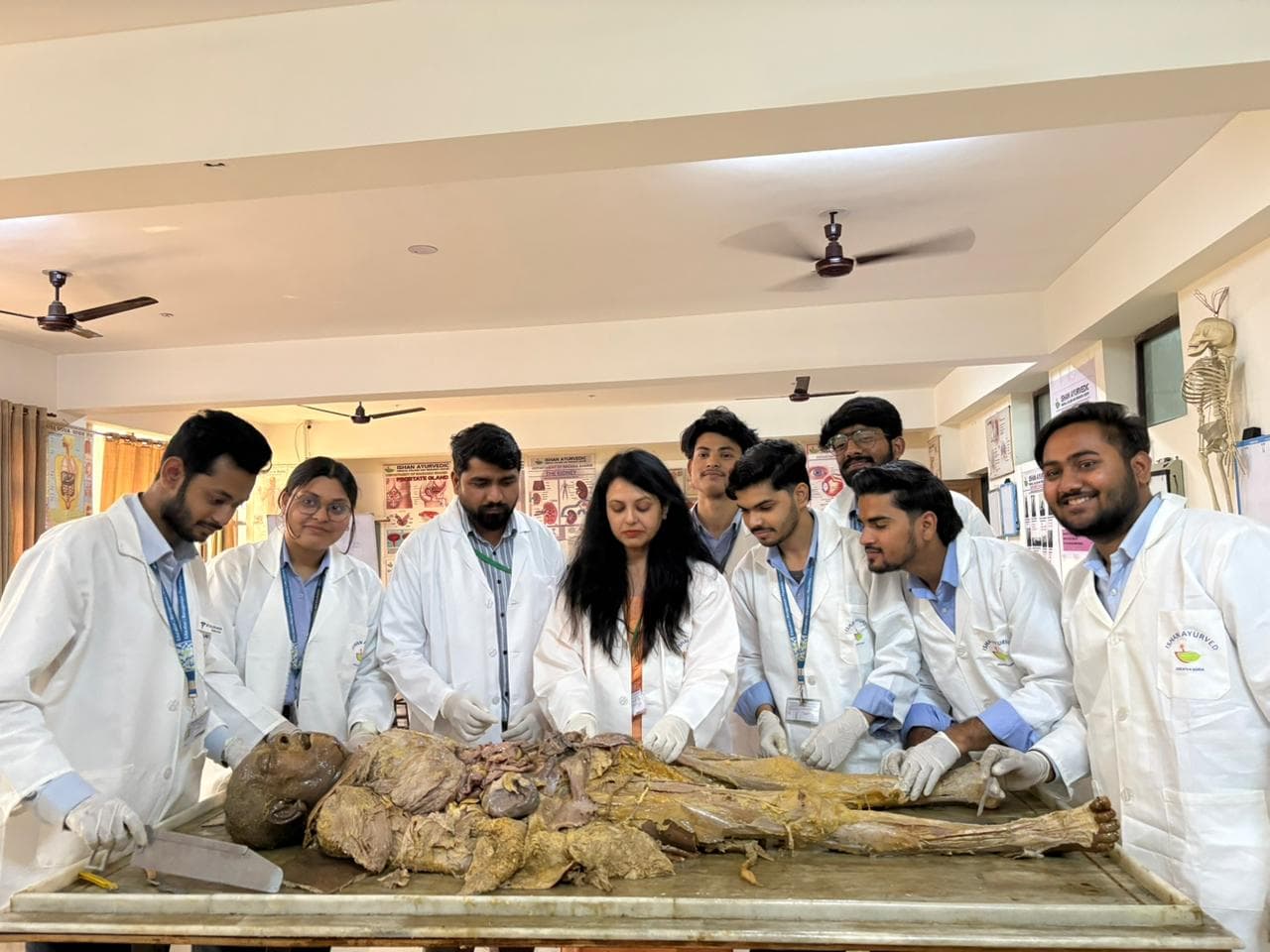
Department of Rachana Sharir
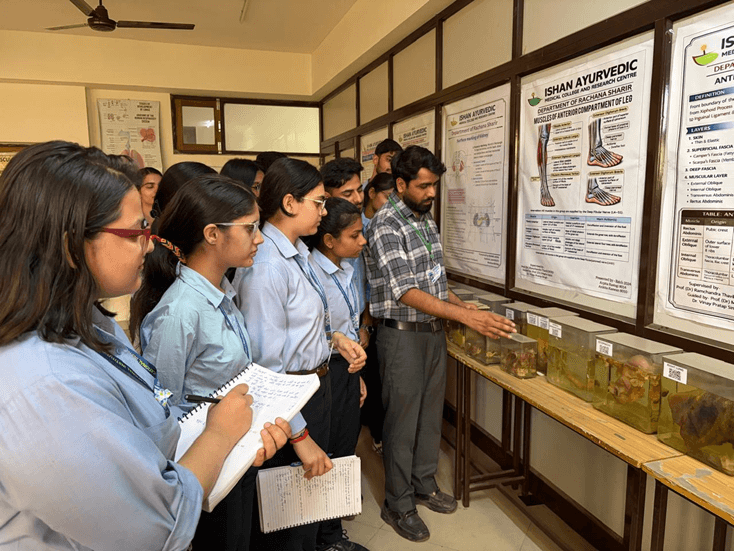
About the Department
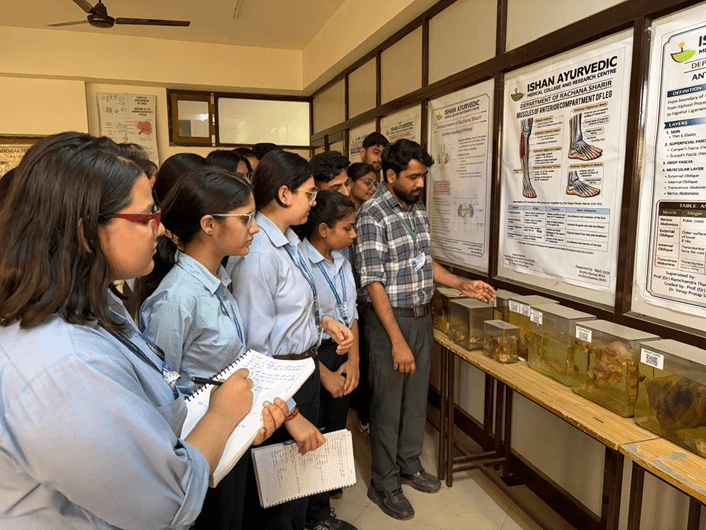
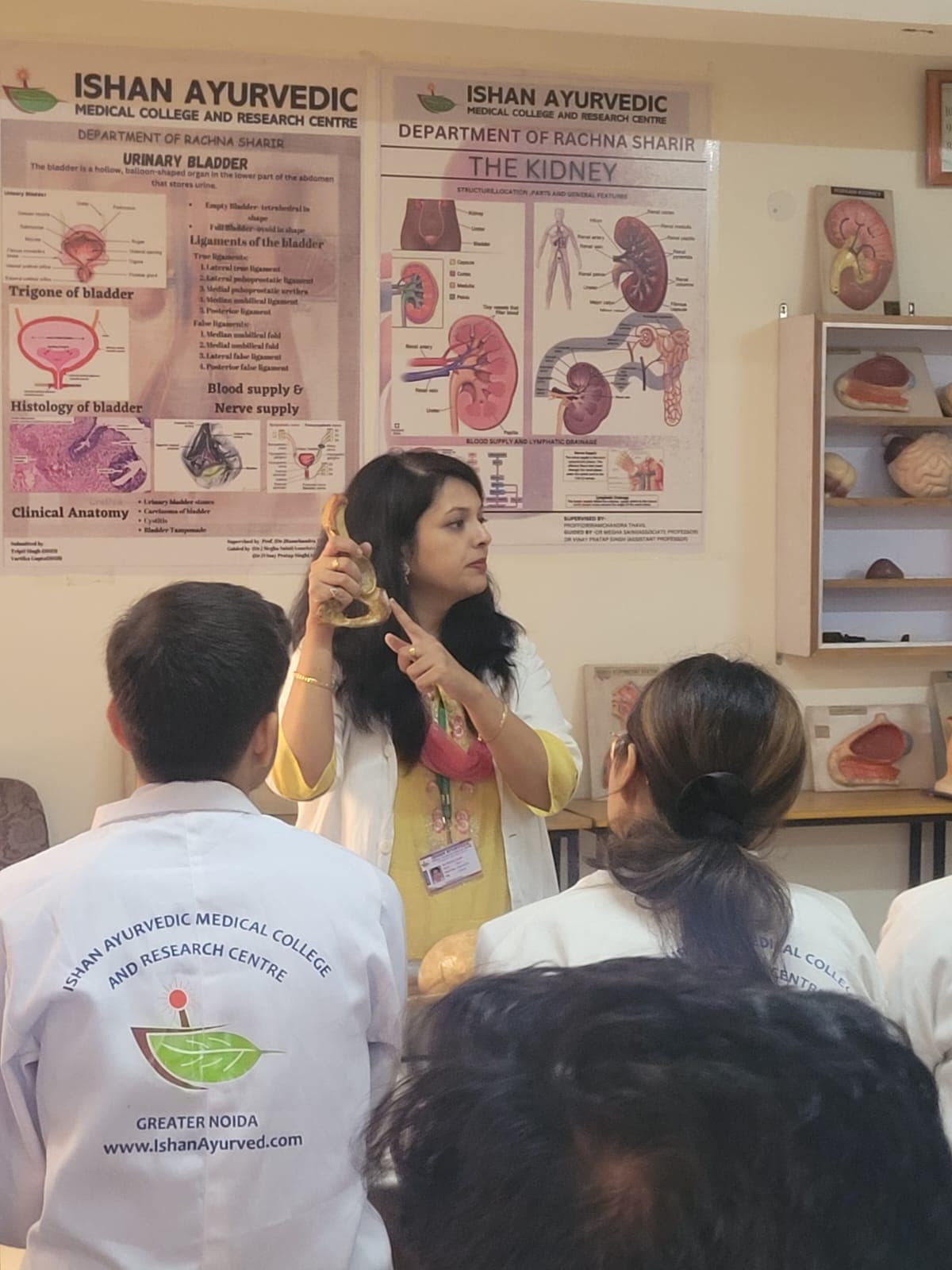
The Department of Rachana Sharira provides a comprehensive understanding of the human body structure through both classical Ayurvedic texts and modern anatomy. It covers concepts like Dhatu, Srotas, Marma, and Anga-Pratyanga along with detailed study of body systems. Through cadaver dissection, osteology, and use of models and charts, students gain practical knowledge that bridges traditional Ayurvedic wisdom with contemporary anatomical science, forming a strong foundation for clinical practice.
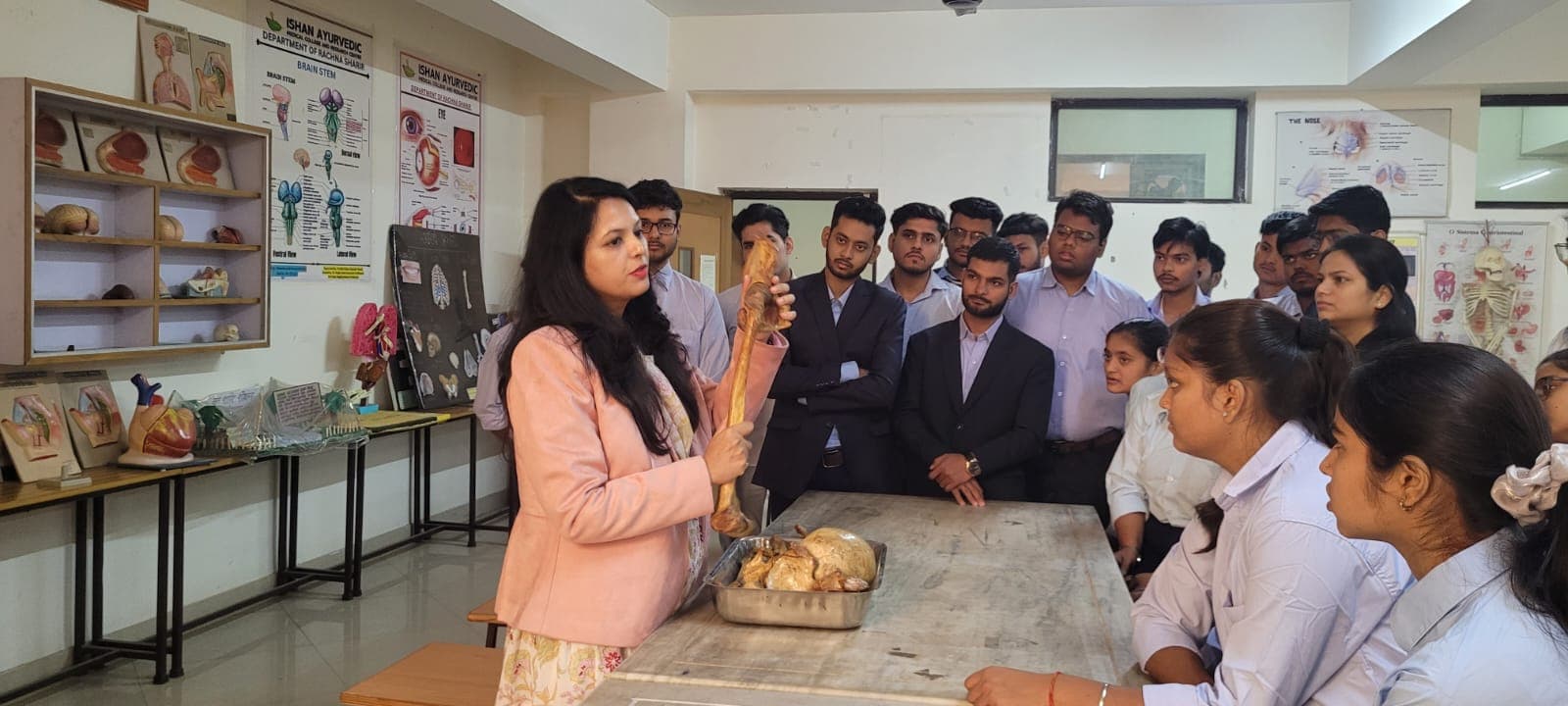
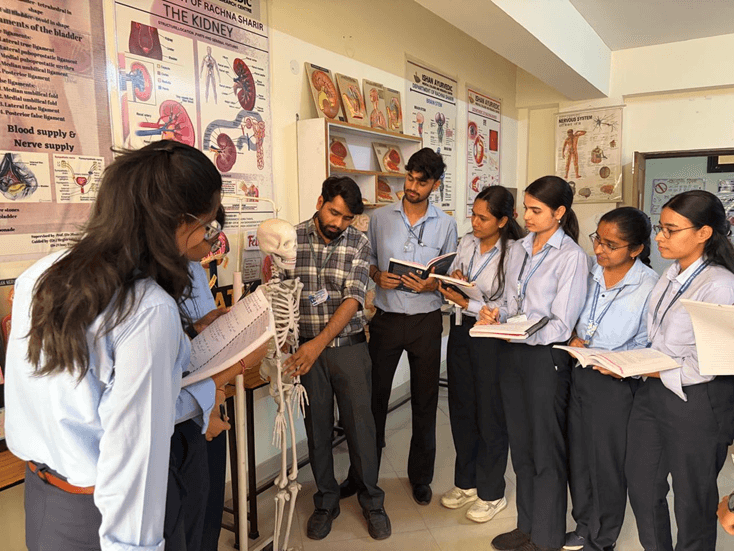
Key Areas of Study
Classical Ayurvedic anatomy (Sharir Rachana)
Dhatu, Srotas, Marma, and Anga-Pratyanga
Modern anatomy of body systems
Gross, microscopic, and clinical anatomy
Marma Sharir and embryology
Clinical significance of Marma and Garbha Sharir
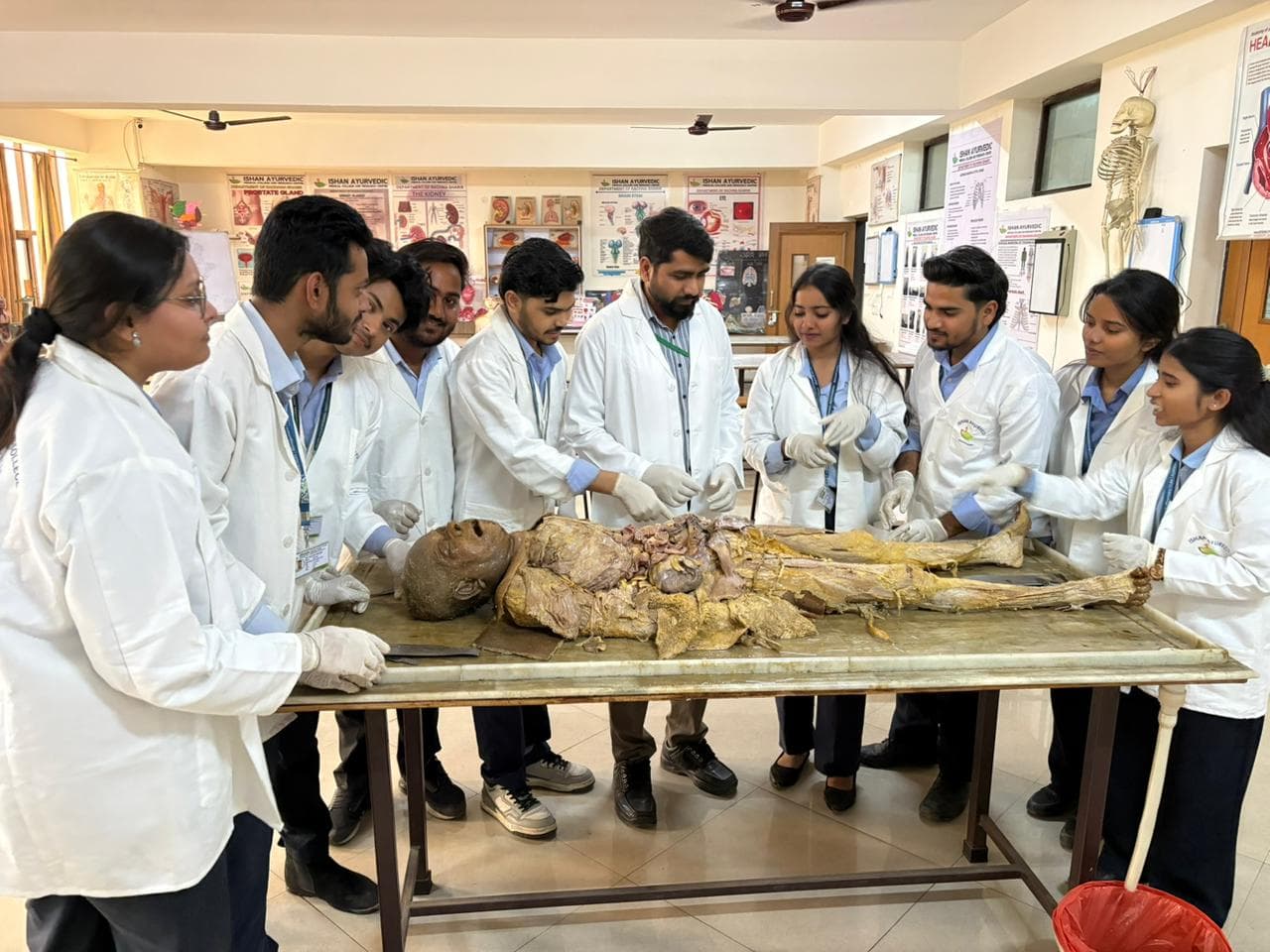
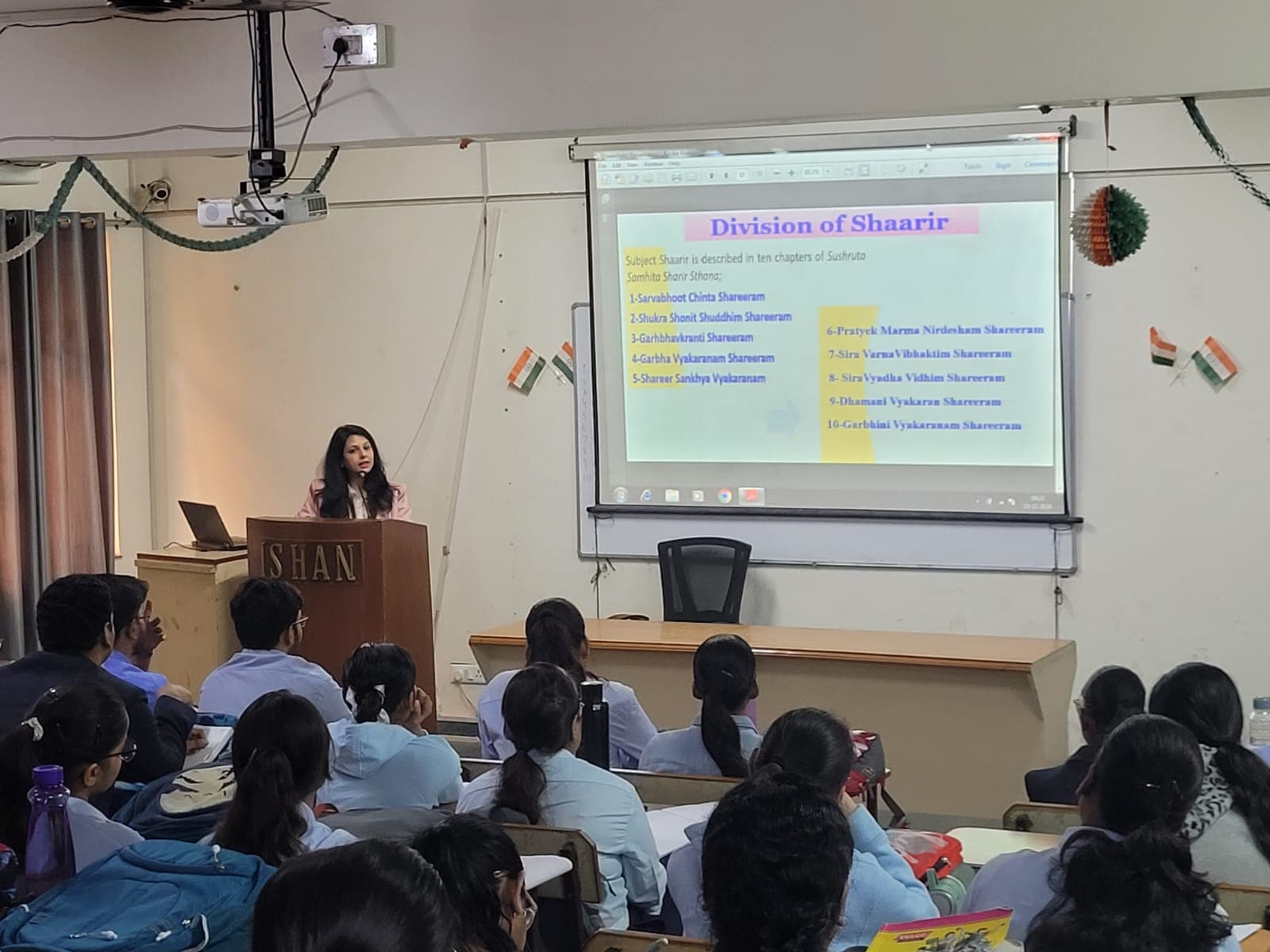
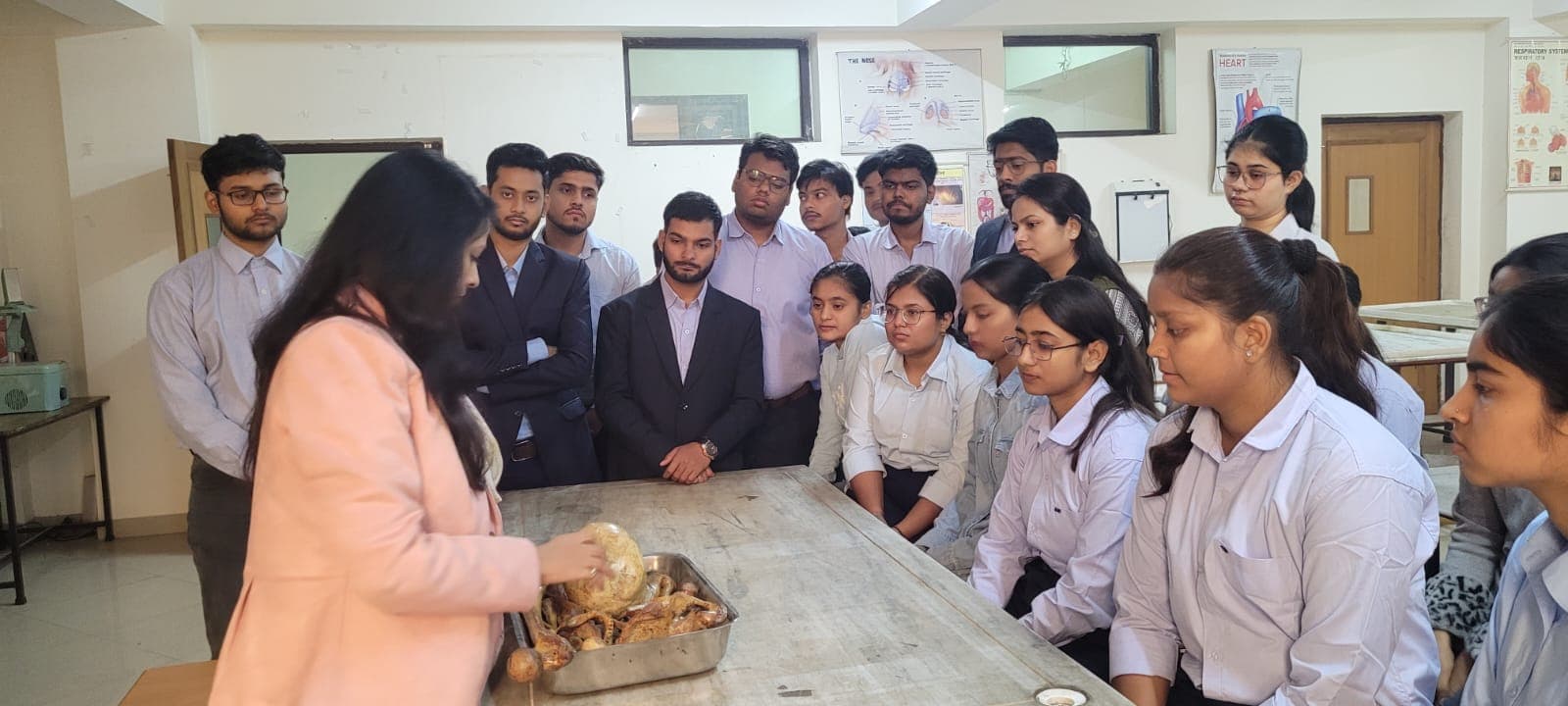
Departmental Lab
(for Clinical and Practical Training)
Cadaver dissection and osteology
Identification of anatomical structures
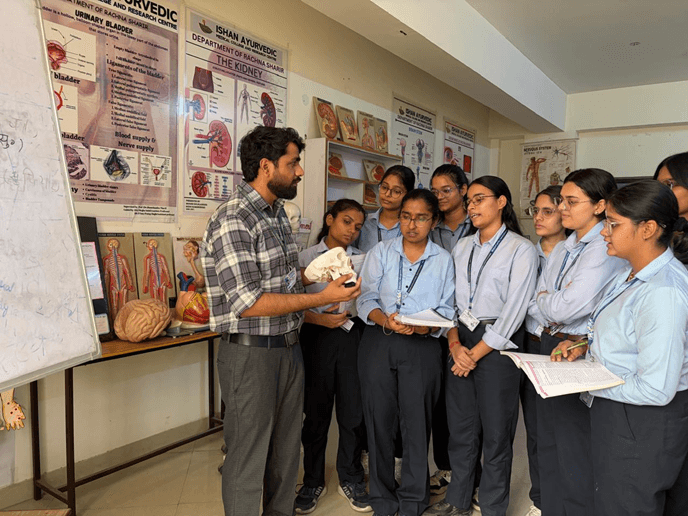
Study through models, charts, and specimens
Programme Learning Outcomes (POs)
Demonstrate comprehensive knowledge and application of the Trisutra concept to explore root causes, identify clinical manifestations of disease to treat ailments and maintain healthy status.
Demonstrate knowledge and skills in Ayurveda, acquired through integration of multidisciplinary perspectives and keen observation of clinical and practical experiences.
Demonstrate proficiency in holistic, unique assessment of an individual for rational approach and decision-making in management of disease and maintenance of health.
Perform procedures and therapeutic maneuvers with skill and dexterity in a variety of situations.
Demonstrate knowledge, skills and attitudes to provide holistic quality care and preparedness to practice.
Demonstrate agility, virtuous and ethical behaviour and compassion to improve the well-being of individuals and society.
Demonstrate self-directedness in pursuit of knowledge and skills, which is required for advancing health care and wellbeing of society.
Demonstrate the ability to effectively communicate with patients, families, community and peers.
Demonstrate an understanding of qualities and required skills as a practitioner, researcher and academician and an aspirations to become one.
Course Outcomes (COs)
Rachana Sharir
Describe the fundamentals of Rachana Sharir, interpret and analyze it in relevant context and recognize its significance in Ayurveda.
Explain Garbha Sharir and Embryology in Ayurveda and modern science respectively with clinical significance.
Describe and demonstrate all the bones and joints with attachments of associated structures and its clinical application.
Explain the concept of Sira-Dhamani-Strotas, their organization in the human body and its applied aspect.
Identify the Marmas and understand its classification along with its importance in preventive and therapeutic aspect.
Explain and demonstrate the gross anatomy of the organs of various systems and their applied anatomy in perspective of Ayurveda and Modern science.
Explain the Indriya Sharir and Sensory organs with its application in preventive and therapeutic domain.
Identify and locate all the structures of body and mark the topography of the living Sharir.
Respect the cadaver and perform dissection with commitment to reiterate the theoretical aspect of Ayurved Rachana Sharir and contemporary sciences.
Describe the basic principles of imaging technologies and identify the anatomical structures in the radiograph.
Our Esteemed Faculty
Scholars who guide the next generation with depth, dedication, and lived expertise.


Access detailed syllabus and curriculum structure
Get the complete academic blueprint—course outlines, learning outcomes, reading lists, and assessment frameworks.