
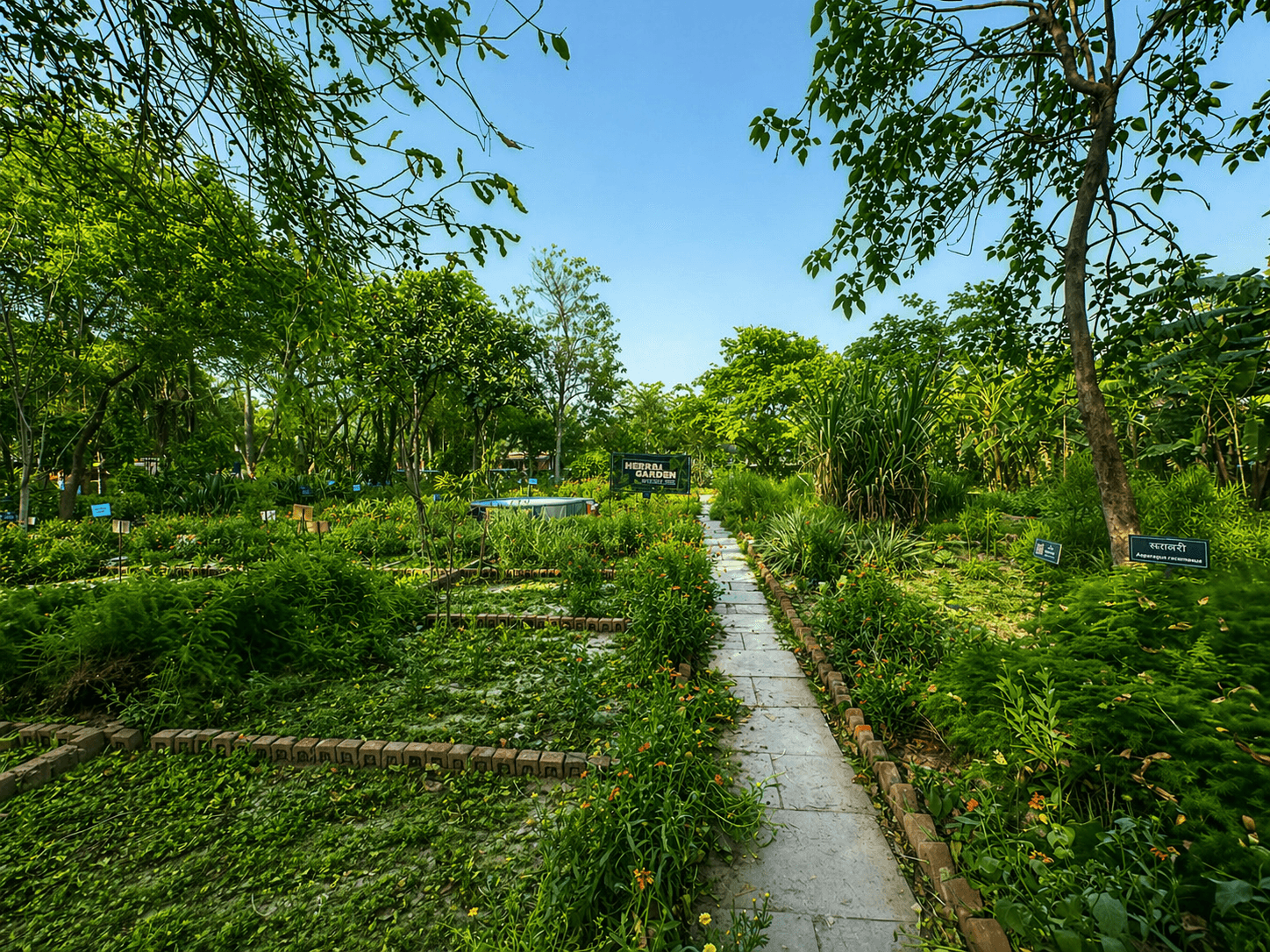
Herbal Garden
A Living Classroom of 200+ Medicinal Plants — Where Shastra Meets Prakriti
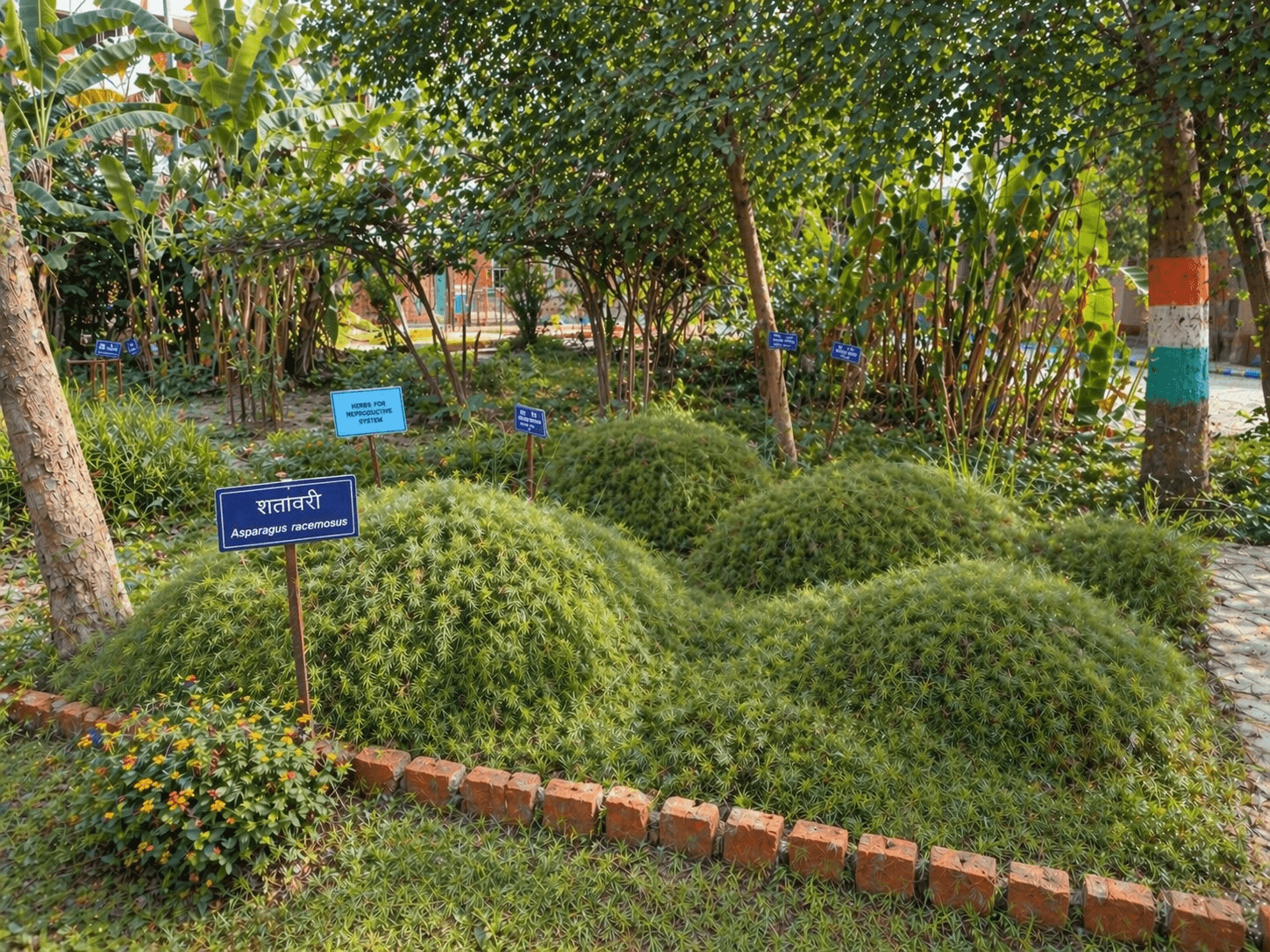
Explore Our MedicinalPlants Monograph
Every herb in our garden has a story — Sanskrit identity, classical Rasa-Panchaka, modern phytochemistry and therapeutic indications. Dive into a curated library built for BAMS scholars and Ayurveda seekers.
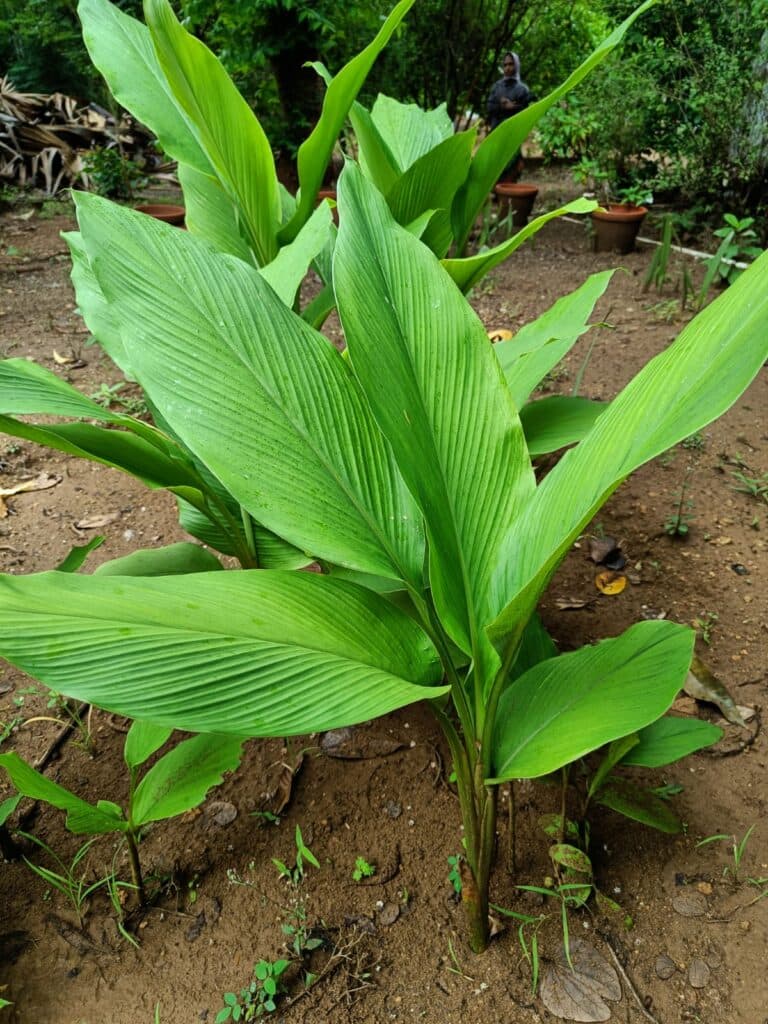 Featured
Haridra
Curcuma longa
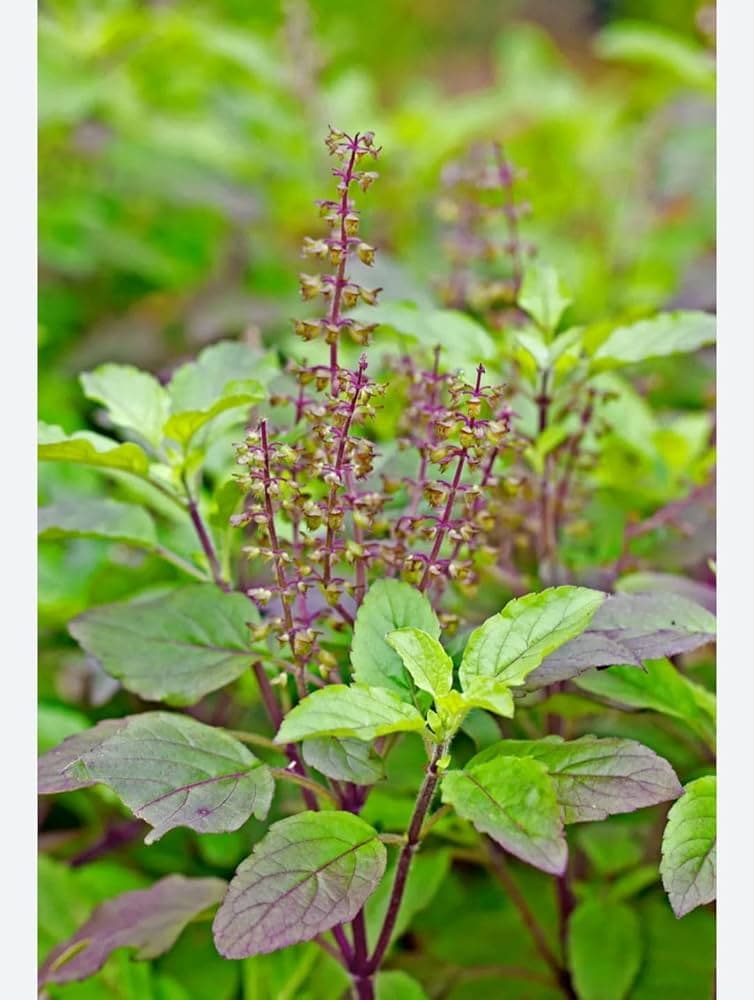 Featured
Tulsi
Ocimum sanctum
Where Shastra Meets Prakriti
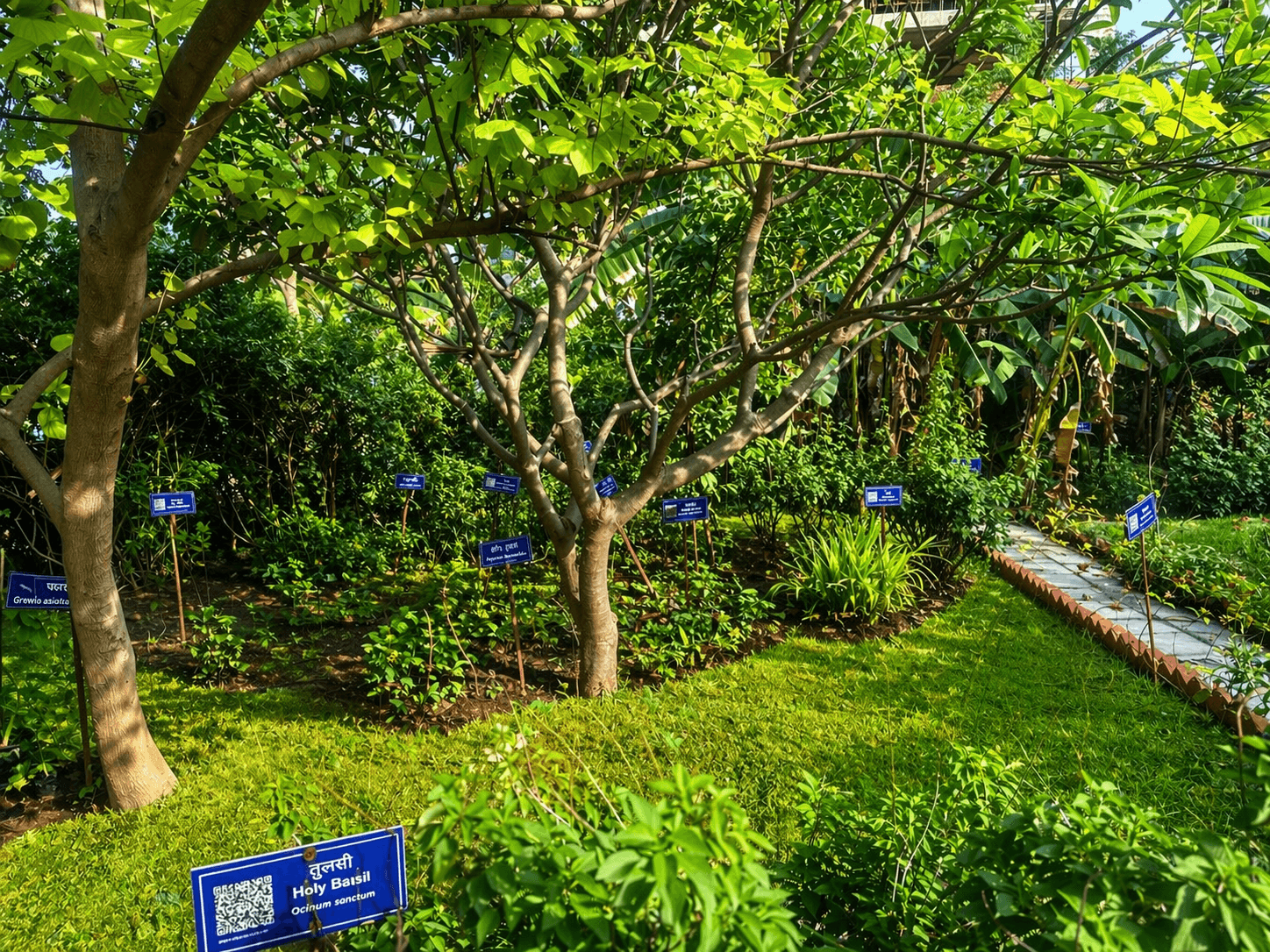
A curated sanctuary of over 200 medicinal plant varieties — a living classroom where BAMS students connect ancient Ayurvedic wisdom with the natural world.
The Ishan Ayurved Herbal Garden is not merely a botanical collection — it is a living textbook. Established to fulfil the curriculum requirements of NCISM and affiliated university guidelines, our garden provides students with direct sensory experience of the plants they study in Dravyaguna Vigyan, Rasa Shastra, and Panchakarma.
Every plant is labelled with its common name, Sanskrit name, botanical name, family, and key therapeutic properties, making it easy to correlate theoretical knowledge with real specimens.
NCISM Compliant Garden
Meets all regulatory standards set by the Central Council of Indian Medicine for Ayurvedic colleges.
Rare & Endangered Species
Dedicated conservation zone housing over 30 endangered medicinal plants including Jatamansi, Nagkesar, and Kutki.
Year-Round Availability
Seasonal planning ensures students have access to fresh specimens throughout the academic year.
200+
Plant Varieties
8
Themed Zones
3
Acres of Garden
Organised by Therapeutic Use
Our 200+ varieties are systematically arranged into thematic zones, allowing students to study plants in context of their clinical application — mirroring the structure of Dravyaguna Vigyan curriculum.
01
Rasayana Dravyas
Rejuvenating and immunomodulatory herbs central to Ayurvedic longevity medicine.
02
Panchakarma Herbs
Plants used in classical detoxification procedures: Vamana, Virechana, Basti, Nasya, Raktamokshana.
03
Dinacharya Herbs
Daily-use Ayurvedic plants for oral hygiene, skin care, and everyday preventive health.
04
Mahakashaya Plants
Plants from Charaka's 50 Mahakashaya groups, forming the backbone of classical formulation study.
05
Rare & Endangered
Conservation-priority medicinal plants in a protected microclimate zone.
06
Ksharsutra Herbs
Plants used in preparation of Kshara and alkaline therapeutic formulations in Shalya Tantra.
07
Rasa Shastra Plants
Medicinal plants used as adjuvants in metal-mineral preparations and shodhana processes.
08
Kitchen Herbs & Spices
Commonly used herbs that serve dual roles in culinary and therapeutic Ayurvedic applications.
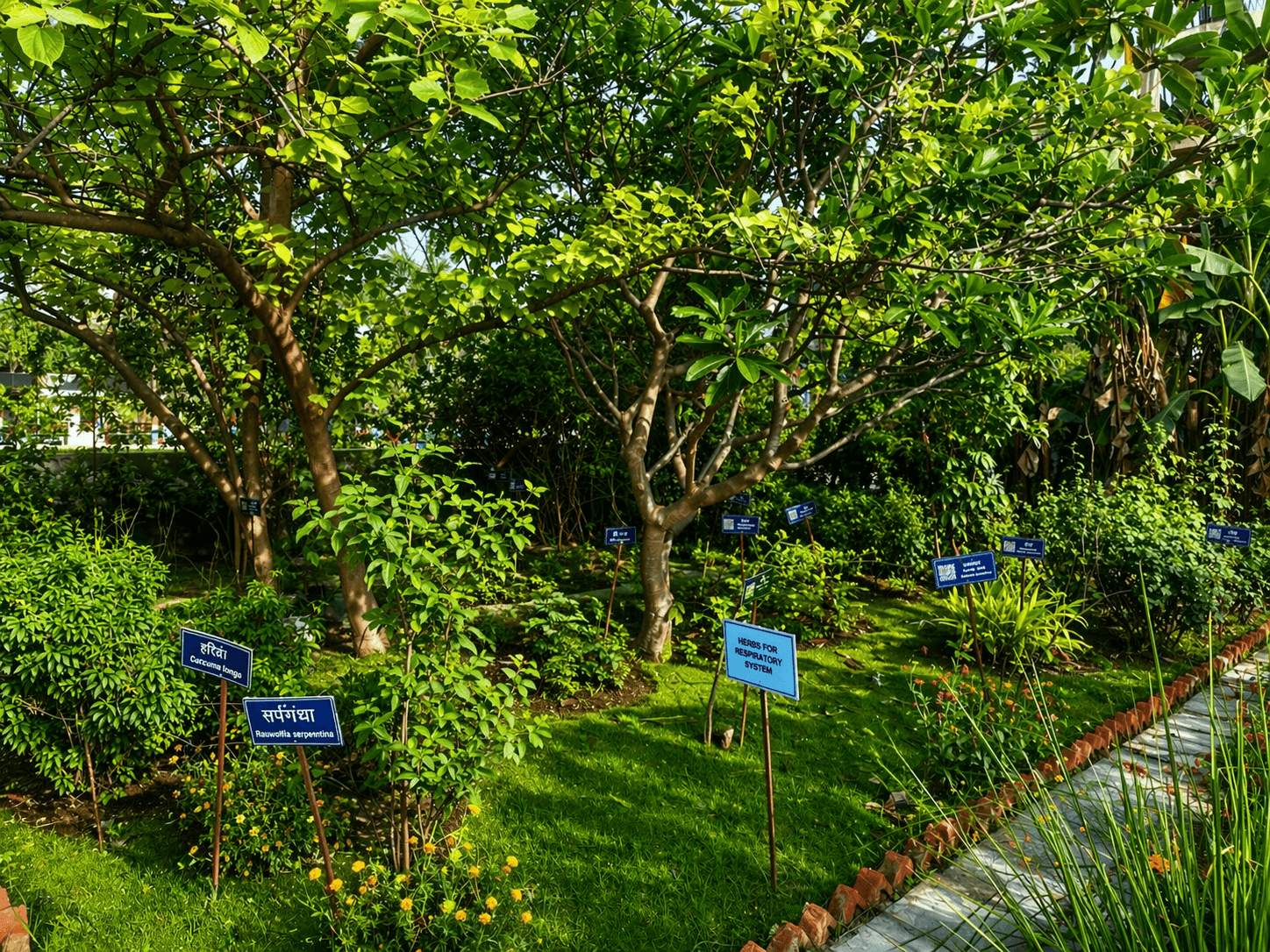
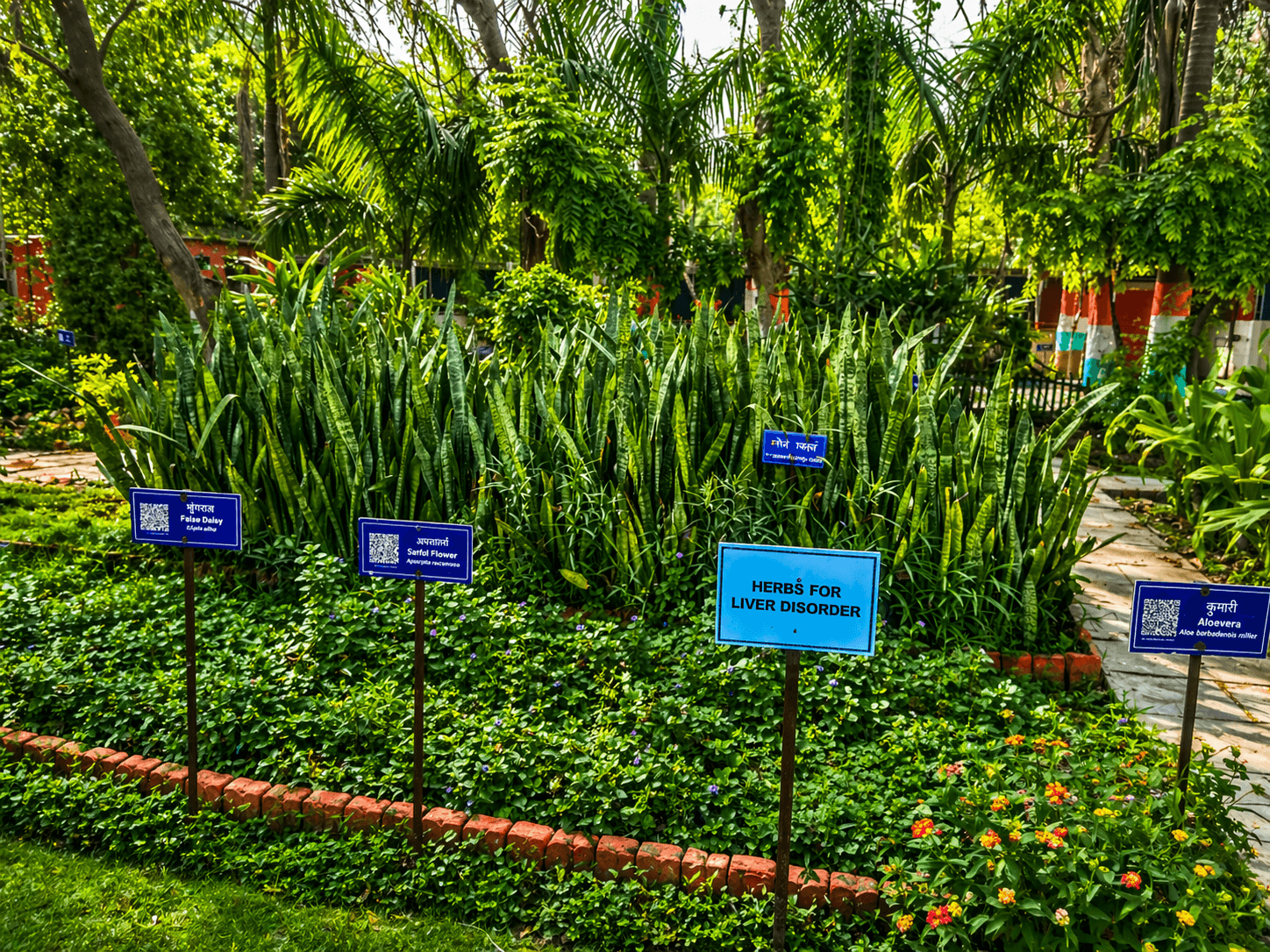
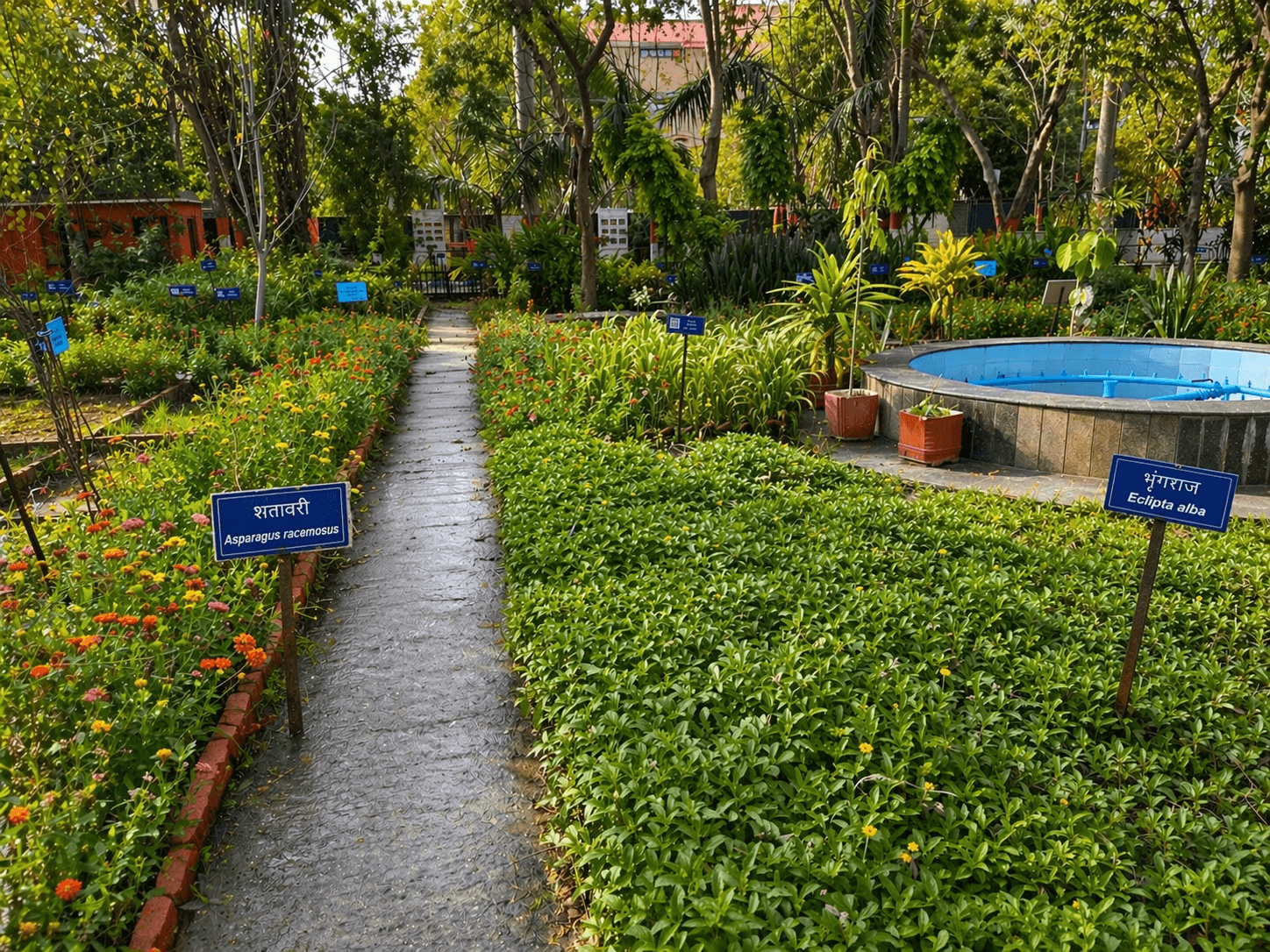
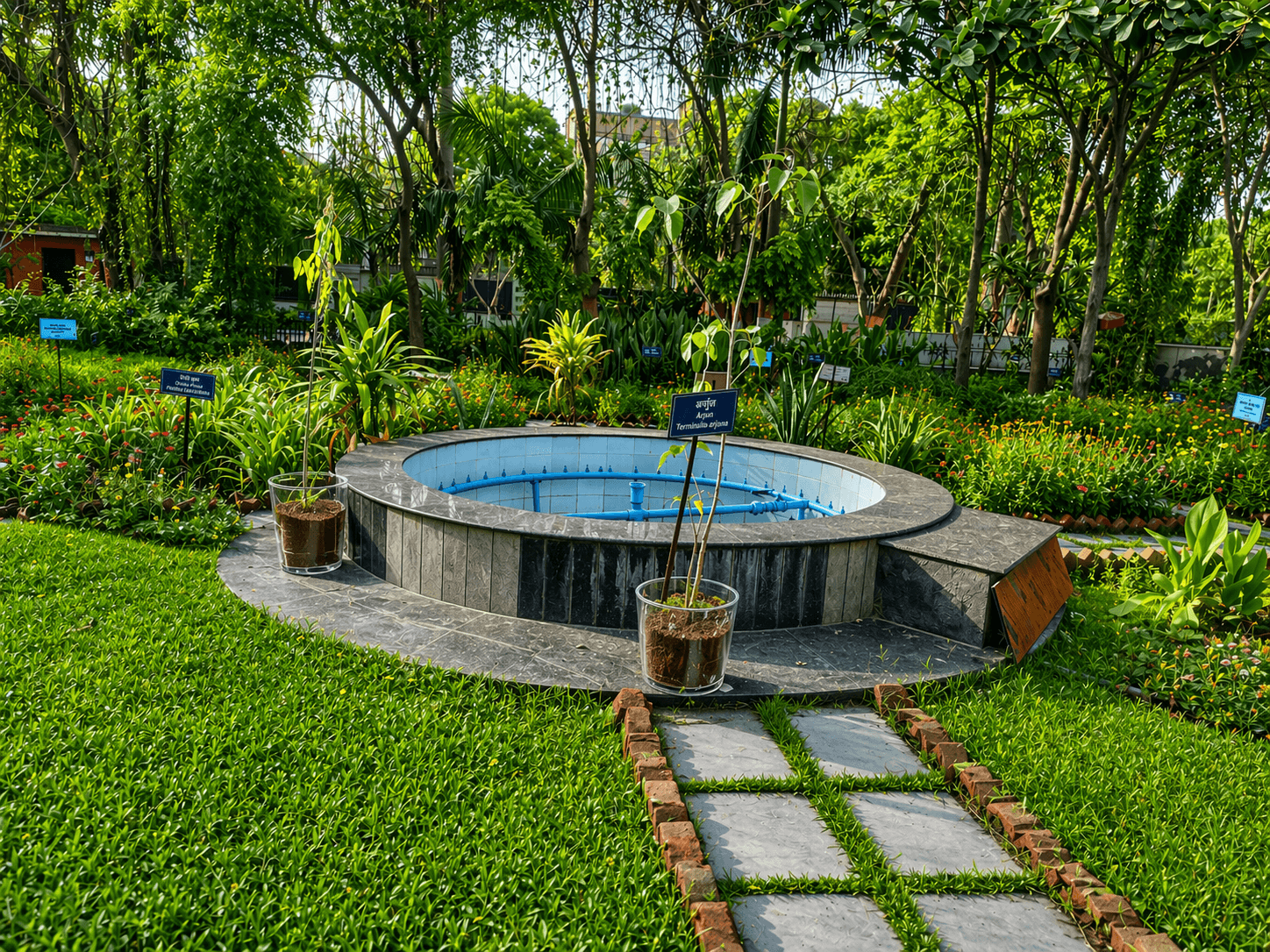
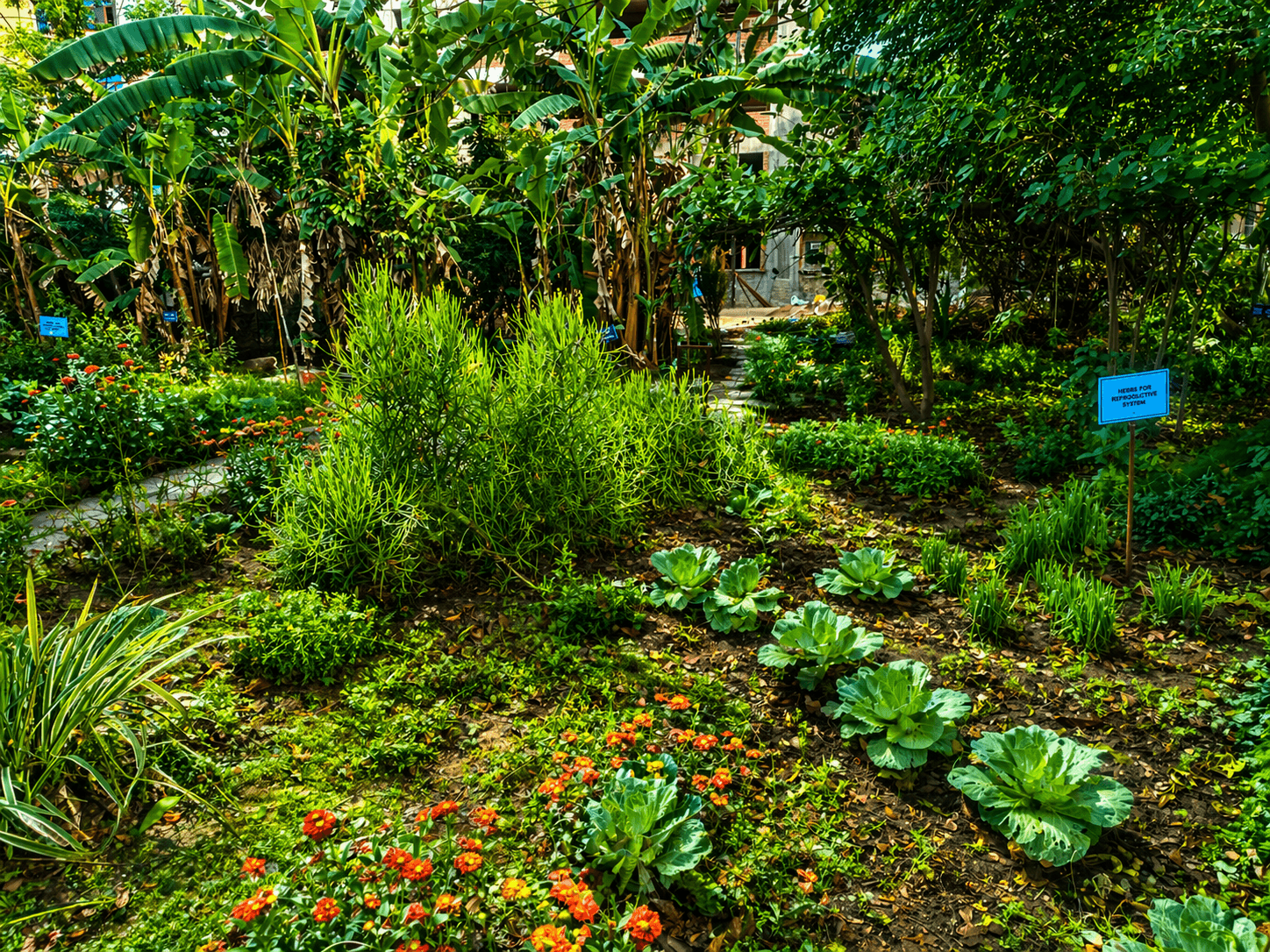
A Glimpse Into Our Garden
Step into a living pharmacy — a visual journey across our zones, rare plant collections, and student field study sessions.
Five Classical Shodhana Procedures
Dedicated plant zones mapped to the five classical Panchakarma cleansing procedures — giving students direct visual and sensory exposure to the dravyas used in each.
01
Vamana Karma
Emetic Therapy
Plants used to induce therapeutic emesis for Kapha-dominant disorders. Key herbs include those with Tikta, Katu rasa and Ushna virya.
Madanaphala · Vacha · Saindhava · Ikshvaku
02
Virechana Karma
Purgation Therapy
Herbs promoting downward purgation to eliminate Pitta dosha. Characterised by Rechana property and Ushna guna.
Trivrit · Eranda · Haritaki · Senna
03
Basti Karma
Enema Therapy
Considered the most important Panchakarma procedure for Vata disorders. Plant decoctions administered rectally.
Dashamoola · Bala · Shatavari · Guduchi
04
Nasya Karma
Nasal Administration
Herbal preparations administered through the nasal route, purifying the head and neck region.
Vacha · Pippali · Brahmi · Anu Taila herbs
05
Raktamokshana
Bloodletting Therapy
Plant-based adjuncts and leech therapy herbs for managing blood-borne disorders and skin conditions.
Manjistha · Neem · Khadira · Sariva
+
Purvakarma Plants
Snehana & Swedana
Preparatory procedure herbs for oleation and sudation, essential preconditions for all five main procedures.
Sesame · Eranda · Dashamoola · Bala
Learning Beyond the Classroom
The garden is deeply woven into the BAMS curriculum — supporting field study, herbarium preparation, practical formulation, and recognition walks throughout the academic year.
Dravyaguna Field Study
BAMS 2nd & 3rd year students identify live specimens, observe Rasa-Guna-Virya-Vipaka characteristics and cross-reference with texts by Charaka, Sushruta, and Ashtanga Hridayam.
Herbarium & Specimen Collection
Students prepare pressed and mounted herbarium specimens as part of practical examination requirements, building a permanent reference library of authenticated medicinal plants.
Seasonal Plant Recognition Walks
Monthly guided walks led by faculty where students observe seasonal changes, identify plants at different phenological stages, and learn collection and storage guidelines (Grahya Dravya).
Practical Formulation Lab
Adjacent formulation laboratory uses fresh plant material harvested from the garden for preparing classical formulations: Kwatha, Churna, Taila, Ghrita — giving students authentic source material.
Expert & Industry Visits
The garden hosts periodic visits by AYUSH practitioners, botanists, and pharmaceutical industry experts who conduct live identification sessions and discuss commercial cultivation practices.
Digital Plant Index
A QR-code-based garden map allows students to instantly access each plant's full Dravyaguna monograph — Sanskrit shlokas, pharmacological action, indications, dose, and classical references — from their phones.
Featured Medicinal Plants
A selection from our 200+ varieties — each documented with Ayurvedic properties for student reference. The complete plant directory is available in our academic resource centre.
Ashwagandha
Winter Cherry
Withania somnifera
Rasa · Guna · Virya
Karma (Action)
Key Use: Adaptogen, Immunity, Strength
Guduchi
Giloy / Heart-leaved Tinospora
Tinospora cordifolia
Rasa · Guna · Virya
Karma (Action)
Key Use: Immunity, Fever, Liver
Haridra
Turmeric
Curcuma longa
Rasa · Guna · Virya
Karma (Action)
Key Use: Anti-inflammatory, Skin, Wound
Shatavari
Asparagus
Asparagus racemosus
Rasa · Guna · Virya
Karma (Action)
Key Use: Women's health, Lactation, Tonic
Brahmi
Waterhyssop
Bacopa monnieri
Rasa · Guna · Virya
Karma (Action)
Key Use: Brain tonic, Memory, Anxiety
Amalaki
Indian Gooseberry
Emblica officinalis
Rasa · Guna · Virya
Karma (Action)
Key Use: Rejuvenation, Vitamin C, Eyes
Neem · Nimba
Indian Lilac
Azadirachta indica
Rasa · Guna · Virya
Karma (Action)
Key Use: Skin diseases, Antimicrobial
Tulsi
Holy Basil
Ocimum sanctum
Rasa · Guna · Virya
Karma (Action)
Key Use: Respiratory, Immunity, Fever
Eranda
Castor Plant
Ricinus communis
Rasa · Guna · Virya
Karma (Action)
Key Use: Virechana, Joint disorders
Arjuna
Arjun Tree
Terminalia arjuna
Rasa · Guna · Virya
Karma (Action)
Key Use: Cardiac tonic, Haemostatic
| Sanskrit / Common Name | Botanical Name | Rasa · Guna · Virya | Karma (Action) | Key Use |
|---|---|---|---|---|
Ashwagandha Winter Cherry | Withania somnifera | TiktaMadhuraSnigdhaUshna | RasayanaBalyaVajikara | Adaptogen, Immunity, Strength |
Guduchi Giloy / Heart-leaved Tinospora | Tinospora cordifolia | TiktaKashayaUshna | Tridosha-shamakaRasayana | Immunity, Fever, Liver |
Haridra Turmeric | Curcuma longa | TiktaKatuLaghuUshna | VarnyaKandughnaShothahara | Anti-inflammatory, Skin, Wound |
Shatavari Asparagus | Asparagus racemosus | MadhuraTiktaSheetaSnigdha | StanyaGarbhasthapanaRasayana | Women's health, Lactation, Tonic |
Brahmi Waterhyssop | Bacopa monnieri | TiktaKashayaLaghuSheeta | MedhyaRasayanaAyushya | Brain tonic, Memory, Anxiety |
Amalaki Indian Gooseberry | Emblica officinalis | Pancha RasaLaghuSheeta | RasayanaVayasthapanaChakshushya | Rejuvenation, Vitamin C, Eyes |
Neem · Nimba Indian Lilac | Azadirachta indica | TiktaKashayaLaghuSheeta | KandughnaKrimighnaKushthaghna | Skin diseases, Antimicrobial |
Tulsi Holy Basil | Ocimum sanctum | KatuTiktaLaghuUshna | KasaharaShwasaharaDipana | Respiratory, Immunity, Fever |
Eranda Castor Plant | Ricinus communis | MadhuraKatuUshnaSnigdha | VataharaRechanaShothahara | Virechana, Joint disorders |
Arjuna Arjun Tree | Terminalia arjuna | KashayaTiktaLaghuSheeta | HridyaKshayajitVishaghna | Cardiac tonic, Haemostatic |
Complete Plant Catalogue: The above is a sample of our collection. Our full directory of 200+ medicinal plants — including Gana classification, Shodhana procedures, and classical shloka references — is available to BAMS students through the college library and campus intranet. Request the printed Dravyaguna Handbook at the college reception.
Ritu-Based Plant Calendar
Ayurveda emphasises the seasonal collection of medicinal plants (Grahya Dravya). Our garden follows the six classical Ritus to optimise potency of harvested material.
Herbal Garden FAQs
Yes! The garden is open to patients visiting the OPD, school groups, and general visitors on working days from 9 AM to 5 PM. Prior appointment is recommended for group visits. Please contact the college reception to schedule.
Yes. Fresh decoctions and plant material for Panchakarma procedures are sourced directly from our garden wherever seasonal availability permits, ensuring authentic, traceable medicinal quality.
Every plant has a bilingual signboard (Sanskrit + English) showing common name, botanical name, family, part used, and key therapeutic indication. A QR code links to the full digital monograph on our intranet.
Absolutely. Under faculty supervision, students can collect specimens for herbarium projects, pharmacognosy practicals, and short research studies. All collection must follow the college's sustainable harvesting protocol.
Yes. Our endangered and Schedule 1 medicinal plants are maintained in a controlled microclimate zone with restricted access and specialist care to ensure their conservation and availability for study purposes.
The garden fulfils all requirements laid down by NCISM for Ayurvedic medical colleges, including minimum species count, labelling standards, availability of plants from all 50 Mahakashaya groups, and seasonal study access for students.
Yes. Our illustrated Dravyaguna Handbook covers all 200+ plants with photographs, Sanskrit shlokas, Rasa-Guna-Virya-Vipaka details, and formulation uses. Available to enrolled BAMS students from the college library.
Selected saplings are available for sale to support home garden initiatives and patient education. Speak to the garden incharge for seasonal availability. We do not supply raw commercial quantities.
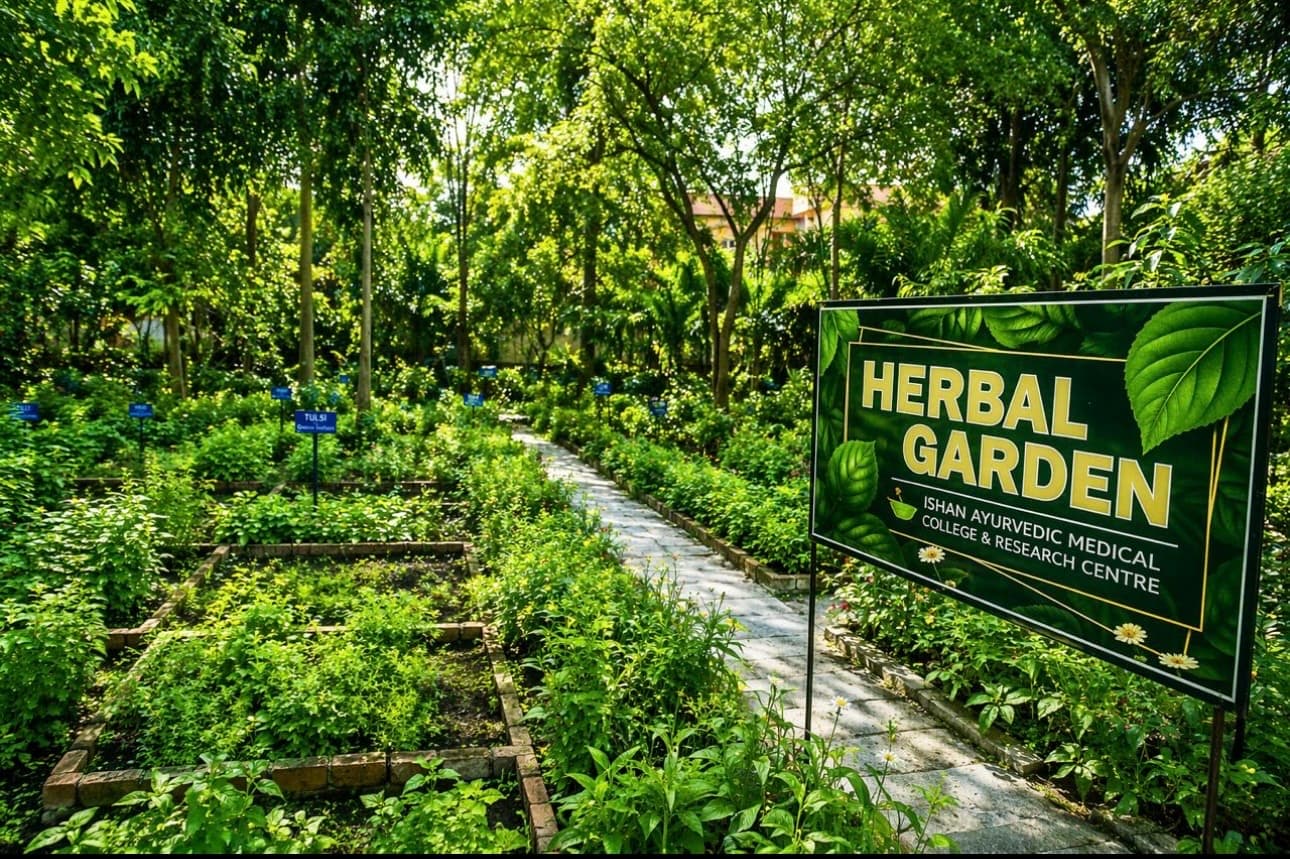
Come Experience the Living Pharmacy
Whether you are a prospective student, a healthcare professional, or simply curious about Ayurvedic herbs — our garden welcomes you during working days, 9 AM to 5 PM.